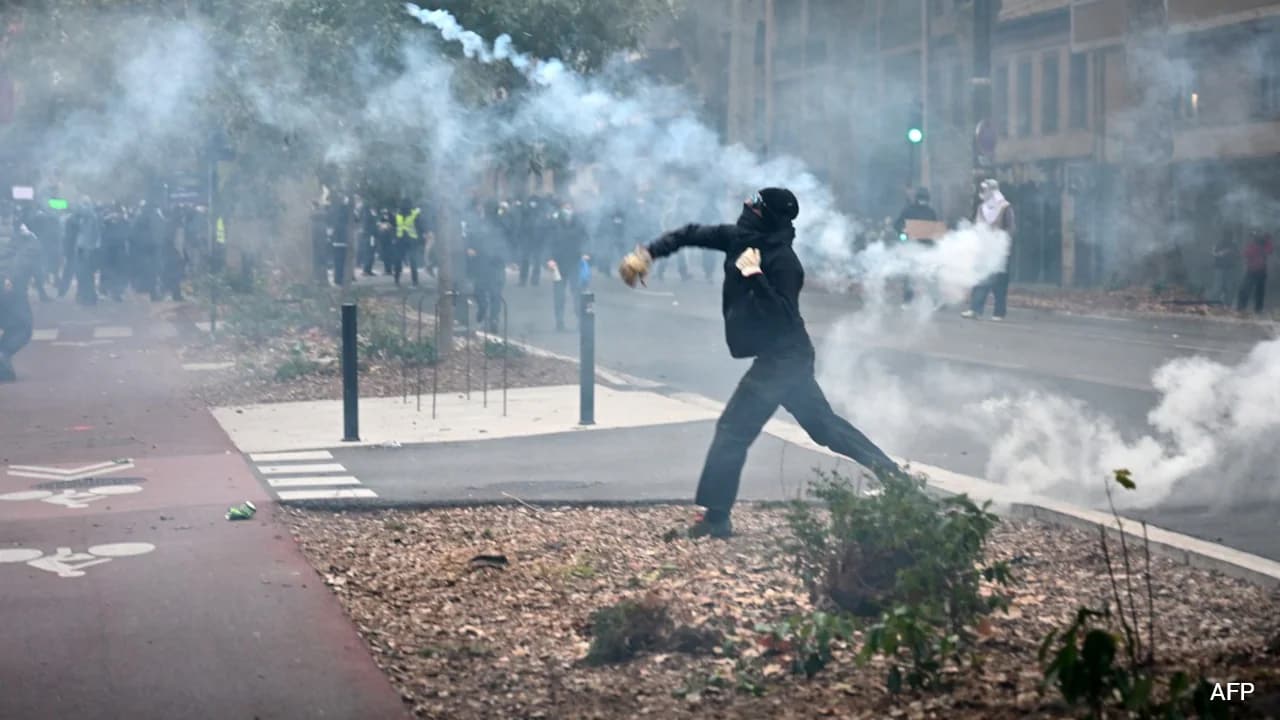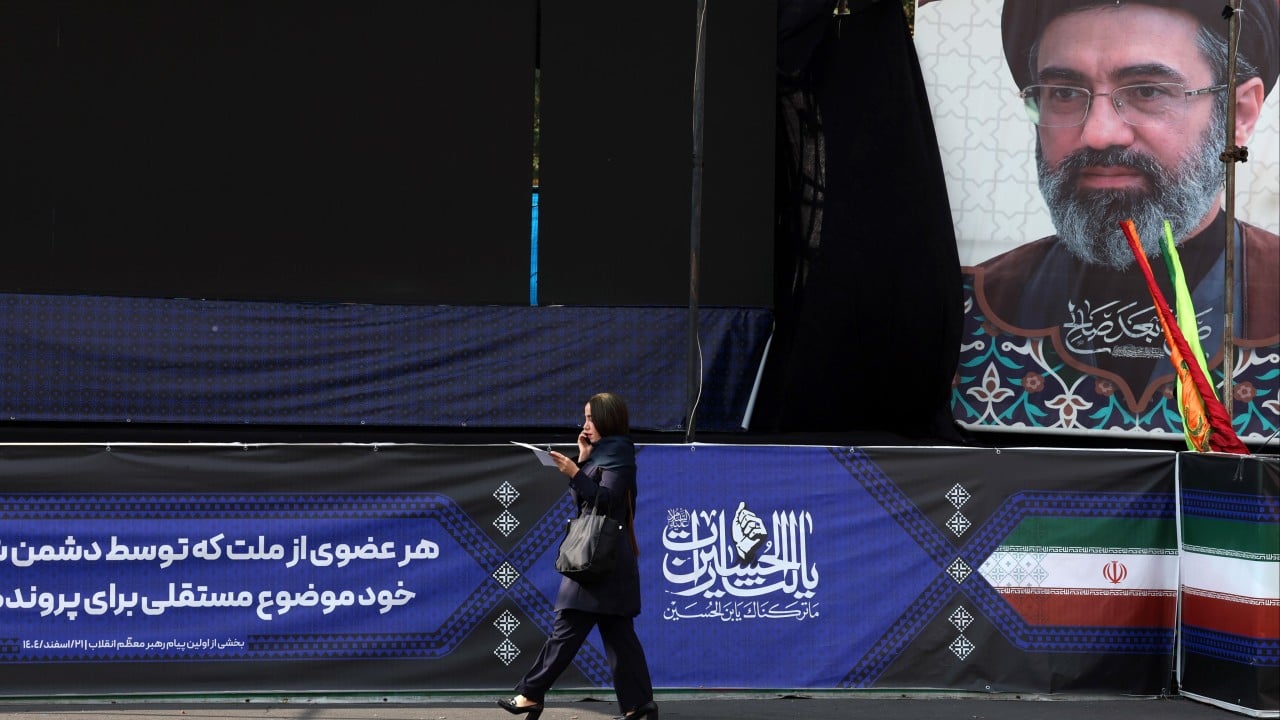
When Iran’s Supreme Leader Ayatollah Ali Khamenei issues a public warning to the United States and Israel against launching a direct war, international headlines treat it as another spike in Middle Eastern rhetoric. They miss the point. These statements are not impulsive outbursts from an isolated cleric; they are calculated calibration tools designed to manage domestic hardliners, reassure fractured regional proxies, and test the red lines of Western intelligence agencies without triggering an unwinnable conventional conflict.
To understand why Tehran speaks loudly when its strategic position is most precarious, you have to look past the podium. For decades, the Islamic Republic has relied on a doctrine of asymmetric deterrence—projecting overwhelming retaliatory capability through proxy networks and ballistic missile arsenals precisely because its conventional air force and naval defenses cannot survive a sustained, full-scale assault by American or Israeli forces. When Khamenei warns of "crushing responses" or regional conflagration, he is engaging in strategic signaling aimed at raising the perceived political and economic cost of intervention for decision-makers in Washington and Tel Aviv.
The Architecture of Strategic Ambiguity
Watch the phrasing carefully. Iranian leadership rarely commits to an exact operational timeline or a specific target list during these speeches. That omission is intentional.
In military strategy, strategic ambiguity forces an adversary to plan for every possible contingency simultaneously, draining resources and paralyzing political consensus. If Tehran explicitly states what would trigger a massive ballistic barrage, Washington and Tel Aviv can calibrate their covert operations, cyberattacks, or targeted strikes just below that threshold. By keeping the tripwires vague, Khamenei attempts to widen the psychological buffer zone around Iran’s nuclear infrastructure and domestic soil.
Consider how this plays out in practice. Over the past twenty years, Iran has built what military analysts call the Axis of Resistance—a decentralized network stretching from Hezbollah in Lebanon to the Houthis in Yemen and various militias in Iraq and Syria. When the Supreme Leader warns against war, he is reminding Western planners that a strike on Natanz or Fordow will not remain a localized bilateral exchange. Instead, Tehran’s playbook dictates horizontal escalation: threatening maritime chokepoints like the Strait of Hormuz, activating rocket arsenals along Israel’s northern border, and targeting American bases scattered across the Persian Gulf.
Yet there is a glaring vulnerability baked into this doctrine, one that veteran intelligence officers in the region know well. Deterrence only works if the adversary believes you are willing to pull the trigger—and that you can survive what happens five minutes later.
The Domestic Audience Nobody Mentions
Foreign correspondents often analyze Khamenei’s speeches as if they were written exclusively for the Pentagon or the Israeli Prime Minister's Office. They aren't. Half the audience sits inside Tehran’s own power centers.
Iran’s political ecosystem is far from a monolith. Beneath the Supreme Leader lies a constant, grinding friction between the Islamic Revolutionary Guard Corps (IRGC), the regular military (Artesh), the civilian administration, and an exhausted, inflation-battered public. Whenever Israel or the United States conducts a high-profile operation—whether it is the assassination of a senior IRGC commander, a sabotage campaign against missile production facilities, or tightened sanctions enforcement—hardline factions within the regime demand immediate, visible retaliation.
If the Supreme Leader stays silent, he looks weak to his own security apparatus. Weakness in an authoritarian system invites internal fracturing.
Therefore, fiery warnings serve as a domestic pressure valve. By delivering uncompromising rhetoric from the highest office in the land, Khamenei validates the anger of his ideological base and signals to IRGC commanders that the state has not capitulated, even when the regime chooses restraint on the battlefield. It buys time. It allows Tehran to absorb tactical blows while claiming moral and strategic superiority, avoiding the existential trap of an all-out war that could topple the regime from within.
Why Conventional War Is Tehran’s Worst Nightmare
Let’s look at the hard math of modern warfare. Iran possesses the largest and most diverse ballistic missile and drone arsenal in the Middle East. Its underground "missile cities" are hardened against standard bunker-busting munitions, and its swarm tactics can stress even the most sophisticated multi-layered air defense networks.
None of that wins a prolonged war against a superpower.
Iran’s air force still relies heavily on aging Cold War-era airframes—American F-14s and F-4s bought before the 1979 revolution, alongside older Russian MiGs. Its air defense grid, while upgraded with domestic systems like the Bavar-373 and Russian S-300 batteries, faces immense challenges against fifth-generation stealth aircraft, electronic warfare suites, and long-range standoff munitions. In a sustained campaign, the United States and Israel would systematically dismantle Iran’s electrical grid, petrochemical refineries, port infrastructure, and command-and-control nodes within weeks.
The Economic Fragility Factor
Worse still is the state of the Iranian economy. Years of systemic corruption, mismanagement, and crippling international sanctions have left the rial in freefall and inflation chronically high. A full-scale war would immediately halt Iran’s remaining oil exports—the lifeblood of the state budget—while triggering severe shortages of basic goods, fuel, and medicine.
Regime survival is the supreme directive of the Islamic Republic. Everything else, including regional ideological expansion, is secondary to keeping the clerical establishment in power. Khamenei and his inner circle understand that a devastating military defeat would likely ignite mass domestic uprisings far larger and more dangerous than the protests that have periodically shaken the country over the last decade. That is the central paradox of Iran’s posture: the louder Tehran threatens total war, the more desperate it actually is to avoid fighting one.
The Nuclear Threshold as Ultimate Insurance
If conventional forces cannot guarantee survival and proxy networks face degradation under sustained Israeli and American pressure, what card does Tehran have left? The nuclear threshold.
For years, Iran has operated as a threshold nuclear state. Under the constraints of a 2003 religious decree (fatwa) attributed to Khamenei banning the production of weapons of mass destruction, Tehran has officially maintained that its nuclear program is strictly peaceful. Yet technical reality tells a different story. By enriching uranium to 60 percent purity—a short technical step away from weapons-grade 90 percent—and deploying advanced centrifuges, Iran has compressed its "breakout time" to a matter of days or weeks, though building a deliverable warhead would still take longer.
When Khamenei warns Washington and Tel Aviv against war, there is an unspoken subtext hanging over every sentence. High-ranking Iranian officials and advisors to the Supreme Leader have increasingly floated the idea that the regime’s nuclear doctrine could change if Iran faces an existential threat.
This is brinkmanship of the highest order. By inching closer to weaponization capability without crossing the final line, Tehran tries to create a virtual nuclear deterrent. The message to Western capitals is simple: push us into a corner with a military invasion or existential bombing campaign, and we will sprint for the bomb. Conversely, Israeli military planners view that exact capability as an intolerable threat that might compel a preemptive strike before the window closes forever.
Reading Between the Lines of Escalation
So how do seasoned analysts separate genuine pre-war mobilization from routine political theater? You stop listening to the microphones and start watching logistics.
When Tehran is merely managing perception, its warnings are accompanied by televised military drills using pre-positioned assets, cyber probes against civilian infrastructure, and calibrated, deniable strikes by regional militias that cause limited casualties. The goal is to dominate news cycles while keeping the escalation ladder intact.
Real preparation for war looks entirely different. It involves:
- Dispersal of strategic assets: Moving mobile missile launchers out of garrisoned bases into pre-surveyed firing positions across rugged terrain.
- Naval posturing in the Persian Gulf: Deploying fast-attack craft, mini-submarines, and sea mines near the Strait of Hormuz while pulling high-value naval vessels back to hardened ports.
- Proxy synchronization: Shifting regional militias from harassing operations to radio silence and deep-cover dispersal in anticipation of heavy counter-strikes.
- Domestic civil defense: Quietly rationing fuel, stockpiling medical supplies, and hardening telecommunications networks against widespread outages.
Until those physical indicators align, fiery speeches from Tehran remain what they have been for decades—a high-stakes psychological shield.
The Miscalculation Trap
The danger in the Middle East has rarely been a rational decision by one leader to start a regional apocalypse. The real threat is miscalculation.
Deterrence relies on both sides accurately reading the other’s intentions, capabilities, and pain thresholds. Right now, the communication channels between Washington, Tel Aviv, and Tehran are heavily filtered through intermediaries like Oman, Qatar, and Switzerland, leaving massive room for distortion. When Khamenei warns against war to project strength, hawks in Washington or Tel Aviv may interpret that warning not as a defensive deterrent, but as confirmation that Iran is preparing a preemptive strike. Conversely, when the U.S. deploys carrier strike groups or bombers to the region to deter Iran, Tehran often views those moves as the final staging phase for an imminent attack.
Both sides lock themselves into a classic security dilemma, where every defensive measure taken by one party looks like offensive preparation to the other. In that environment, a single rogue drone strike, an unexpectedly lethal rocket barrage, or an intelligence failure can shatter decades of careful shadow warfare overnight.
Watch the movement of fuel trucks, satellite imagery of underground tunnel entrances, and the quiet evacuation of diplomatic personnel—because by the time a war in the Middle East is announced at a podium, the missiles are already in the air.