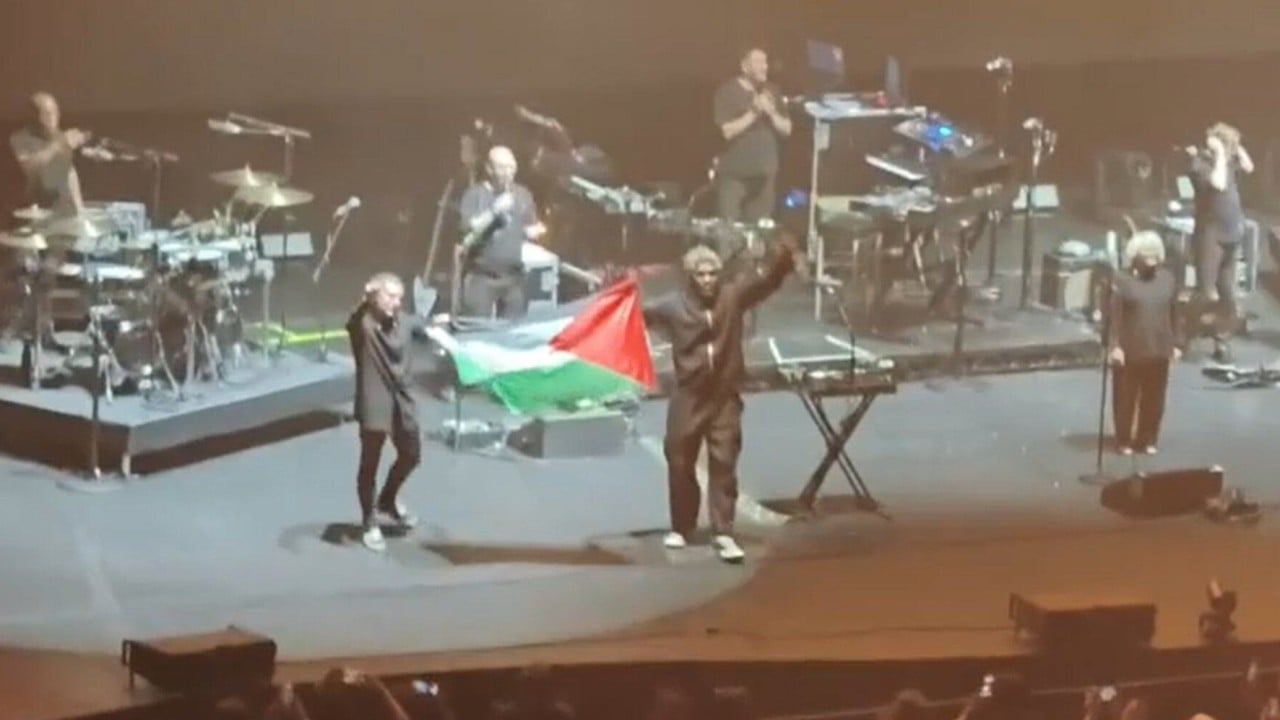
British trip-hop pioneers Massive Attack have been permanently barred from Singapore following a swift enforcement action by local authorities, turning a routine tour stop into a high-stakes collision between Western protest culture and Southeast Asian state regulation. Two members of the group unfurled a Palestinian flag and chanted political slogans during their July performance at The Star Theatre, triggering immediate investigations from the Singapore Police Force and the Infocomm Media Development Authority. The resulting entry bans and official warnings expose a widening chasm between touring international artists who view the stage as an extension of global activism and sovereign jurisdictions that fiercely police domestic civil order.
Singapore has rapidly established itself as the premier financial and commercial anchor for massive entertainment tours across Southeast Asia, drawing stadium-filling acts that traditionally bypass smaller regional markets. This economic ambition, however, operates alongside strict legal boundaries. The island nation enforces long-standing statutes that criminalize the unpermitted display of foreign national emblems or the promotion of external political causes in public venues. Local authorities have long maintained that safeguarding multi-ethnic and multi-religious harmony requires an absolute ban on importing geopolitical flashpoints into domestic arenas.
For decades, Massive Attack members Robert Del Naja and Grant Marshall have weaponized their platform, projecting fierce anti-establishment commentary and geopolitical critiques onto screens during live performances. That philosophy hit a wall in a regulatory environment designed to intercept civil friction before it takes root. Concert organizers had acknowledged licensing stipulations explicitly forbidding the promotion of political causes or the display of unauthorized banners. When those conditions were deliberately bypassed on stage, the state apparatus moved with institutional precision.
The immediate enforcement went beyond simple slaps on the wrist. Police issued formal stern warnings to the musicians under the Foreign National Emblems Control of Display Act and the Public Order Act, followed immediately by permanent bans on re-entering the country. Regulators confirmed that future performance applications involving the band will be summarily denied, and potential penalties for the local promoter remain under active review.
This confrontation highlights a growing operational hazard for international booking agents and tour managers navigating an increasingly polarized world stage. Artists accustomed to Western legal traditions regarding free expression often miscalculate the rigidity of foreign legal systems where public order supersedes individual platform rights. When global tours cross into jurisdictions with zero tolerance for external political friction, the friction turns catastrophic for future scheduling.
The episode forces a stark reckoning across the global touring circuit. Promoters must decide whether to tighten compliance vetting or accept that certain politically active acts can no longer safely route through tightly regulated territories. The music continues, but the boundaries have never been sharper.