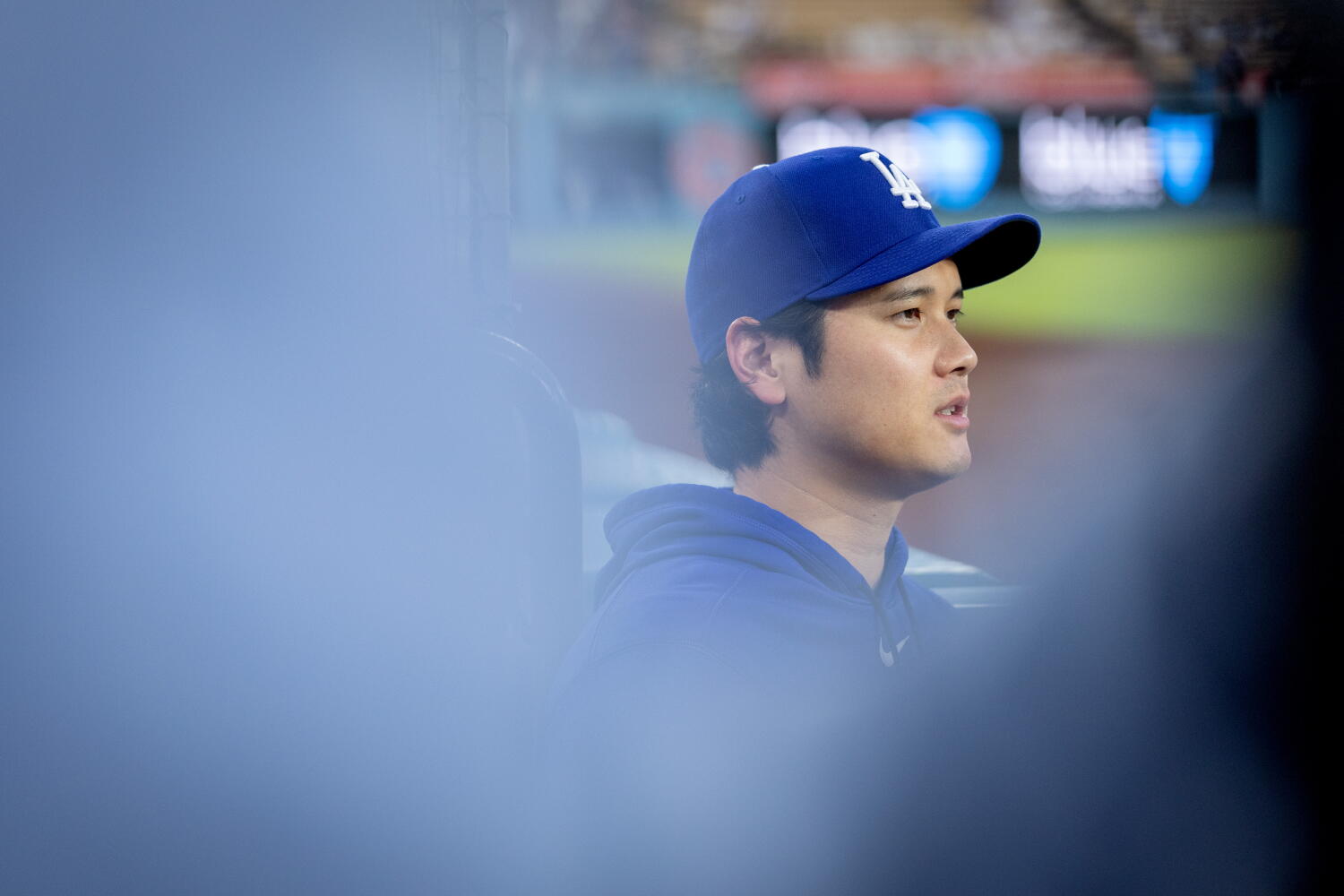
Shohei Ohtani is out of the Los Angeles Dodgers starting lineup once again, kept on ice after a brief return that exposed the fragile reality of his physical limits. While manager Dave Roberts maintains that the designated hitter remains available off the bench for pinch-hitting duties, the structural truth of the situation is far starker. The multibillion-dollar asset is breaking down under the dual weight of hitting everyday and attempting to rehab a pitching arm.
The friction point arrived not from a catastrophic snap, but from the quiet accumulation of lower-body and arm fatigue. Ohtani missed four consecutive games due to lingering discomfort in his left knee, neck, and right biceps before returning briefly against the Cincinnati Reds. That return yielded an uninspired night: zero-for-three with two strikeouts and a walk. More telling than the box score was the announcement that followed: Ohtani will almost certainly not pitch again for the remainder of the season.
This is the hidden cost of baseball's ultimate unicorn. For months, the front office and the player pursued the dream of a fully integrated two-way superstar operating at peak efficiency. Reality intervened. The human body demands recovery time that a 162-game schedule simply refuses to grant. When an athlete tries to accelerate a throwing program while logging over six hundred plate appearances, something has to give.
The Anatomy of a Compromise
Managing a generational talent requires a delicate calculus between competitive desire and biological preservation. Ohtani wants to pitch. He has stated repeatedly that his heart lies in maintaining his dual-threat identity. Yet, the Dodgers organization must protect their investment and their October aspirations.
The decision to shelve his pitching progression is an admission that the dual workload compromised his primary offensive output. His numbers tell the story of a player running on fumes. Since the All-Star break, his production dipped significantly, marked by a batting average hovering around the mid-two-hreds and a noticeable loss of barrel authority. Fatigue steals hand speed first. When a hitter loses a fraction of a second in reaction time, elite velocity exposes the deficit.
By reducing Ohtani to a pure hitter—and now, selectively managing even those appearances—the club is prioritizing damage control. They proved during his four-day absence that the roster possesses enough depth to tread water, sweeping series and maintaining their grip on the National League West. Tommy Edman and other utility pieces filled the offensive void admirably, granting the coaching staff the luxury of caution.
The Pinch-Hit Illusion
Keeping Ohtani available exclusively for high-leverage pinch-hitting moments sounds like a tactical masterstroke on paper. It keeps the opponent's bullpen awake at night. It forces managers to alter their late-inning relief mapping simply because the threat exists in the dugout.
The practical application is far messier. Asking a player dealing with knee and biceps soreness to jump cold from the bench into a ninety-mile-per-hour fastball is an invitation to further slump. Hitters thrive on timing, rhythm, and seeing live pitching across three or four sequential at-bats per night. Disjointed appearances off the bench rarely cure a mechanical funk born of physical exhaustion.
Roberts understands this trap. The move to sit him intermittently is designed to build a baseline of health for October, even if it sacrifices short-term offensive stability. The organization is playing a long, defensive game. They are wagering that a restricted, heavily managed Ohtani in the postseason is worth infinitely more than a fully extended Ohtani who breaks down completely by mid-September.
The Future of the Experiment
This juncture forces a broader industry reckoning regarding the limits of athletic optimization. The sports science community spent years convincing teams that human limits could be stretched through targeted recovery, custom workload monitoring, and biomechanical precision. Ohtani became the proof of concept. He shattered historical precedent by pitching on five days rest while leading his league in home runs.
Yet biology remains undefeated. The collision forces of a major league swing combined with the violent deceleration mechanics of modern pitching create structural stress that no amount of modern training can entirely eliminate. When the body signals distress through recurring inflammation in unrelated joints—the knee, the neck, the biceps all acting up simultaneously—it indicates systemic fatigue.
The Dodgers are altering the blueprint out of sheer necessity. Next spring will require a fundamental redesign of how his workload is structured, perhaps capping his innings permanently or enforcing strict DH days that exclude pitching entirely during rigorous divisional stretches.
For now, the focus narrows to the immediate horizon. The banner of the two-way player is furled for the year. Ohtani stands at the dugout rail, bat in hand, waiting for a single moment to impact a game without risking his entire physical future.