The physical frontline of the war in Ukraine has long been mapped across mud-soaked trenches in the Donbas and scorched fields in the south, but the perimeter of the conflict is shifting in ways Western capitals spent years pretending to ignore. When Estonian authorities intercepted a coordinated arson plot targeting a military drone manufacturer near Tallinn, they did not uncover a random act of urban vandalism. They exposed an operational footprint belonging directly to Russia’s military intelligence agency, the GRU.
This was not an isolated incident. Months prior, a similar sabotage attempt struck Milrem Robotics, a defense contractor supplying tactical hardware to Ukrainian forces. Moscow is no longer merely fighting a conventional campaign across eastern borders; it is running an active, decentralized sabotage network deep inside European territory.
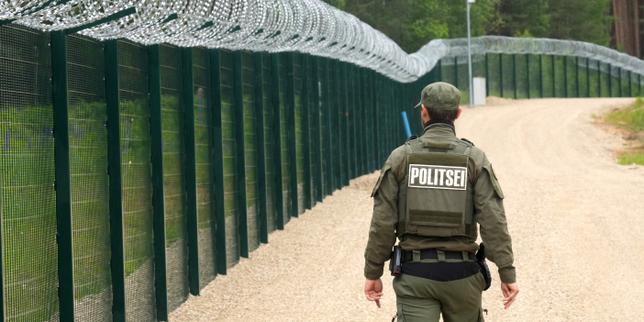
The response from Tallinn has been swift and severe. Officials announced the total closure of key border crossings with Russia, effectively slamming the door on decades of regional cross-border transit. For years, European security analysts warned that hybrid warfare would bypass traditional declarations of hostility, utilizing proxies, local criminal elements, and deniable operatives to test NATO's collective resolve. The events in Estonia prove that the testing phase is over. The shadow war is now open, operational, and hitting targets within arm's reach of the Baltic capitals.
While intelligence agencies scramble to secure domestic supply chains against subversion, Moscow continues to bank on brute economic endurance. The federal budget flowing into the military apparatus has reached staggering proportions, anchoring a war economy designed to outlast Western political attention spans. Defense spending now commands a historic share of Russia's gross domestic product, absorbing trillions of rubles to feed an insatiable industrial base. Munitions factories operate around the clock, state credit lines prioritize heavy manufacturing over consumer stability, and every fiscal lever available to the Kremlin has been welded to the demands of the front.
This financial mobilization is paired with an aggressive expansion of personnel pipelines. The integration of foreign combat units, including North Korean troops funneled into Russian training structures, highlights a grinding manpower deficit that Moscow continues to plug through external partnerships and generous mercenary bounties. The strategy relies on volume: endless waves of equipment, continuous production cycles, and a willingness to absorb catastrophic attrition rates while externalizing the economic pain onto the domestic population through inflation and redirected state funds.
Yet, this militarized state model carries an internal expiration date. Pouring nearly a third of national expenditures into the defense sector creates an artificial economic bubble that crowds out civilian infrastructure, healthcare, and technological modernization. Analysts tracking the long-term trajectory of the Russian economy note that while the war machine can maintain its current velocity in the medium term, the structural distortion makes post-conflict recovery an increasingly distant mirage. Every ruble diverted into artillery shells and guidance systems is a ruble stripped from civilian productivity, creating a state dependent on permanent crisis to avoid financial correction.
As European borders close and intelligence services hunt for sleeper cells recruited via encrypted messaging apps, the calculus of the conflict is undergoing a brutal transformation. The illusion that regional containment would insulate Western nations from the direct consequences of the invasion has evaporated. Moscow is betting that localized sabotage and economic exhaustion will fracture European political alignment before the Russian state breaks under the weight of its own mobilization.
The physical barriers going up along the eastern edge of Europe represent more than diplomatic friction. They mark the boundary of an escalating confrontation where the distinction between peace and total war has dissolved entirely, leaving intelligence operatives and industrial supply chains on the front line of a continent preparing for a long, grinding winter.