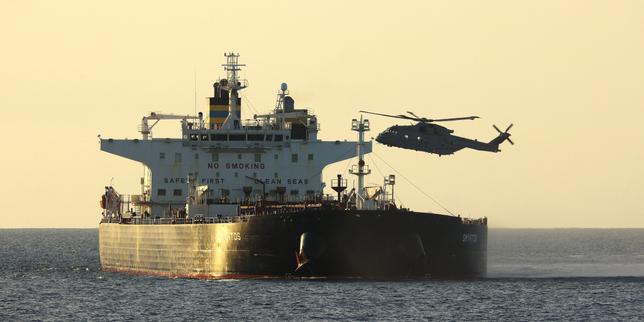
The Royal Navy interception of a Russian shadow fleet tanker in the English Channel exposes a critical flaw in Western sanctions. It was a tactical victory, but a strategic non-event. For hours, headlines buzzed with the drama of warships shadowing a rust-streaked vessel chugging through one of the world's busiest shipping lanes. The public saw a robust enforcement of international law. The maritime insurance and commodity trading world saw something else entirely. They saw a theater of the absurd.
Intercepting a single ship does nothing to stop a shadow fleet that now numbers over 600 vessels. This parallel maritime economy was built specifically to bypass Western sanctions and G7 price caps. While politicians celebrate occasional intercepts, millions of barrels of crude continue to move across the globe daily. The Kremlin is not scrambling. It is laughing all the way to the bank.
The Illusion of Control in International Waters
To understand why the English Channel intercept matters so little, you have to look at how the shadow fleet operates. This is not a collection of rogue pirates flying skull-and-crossbones flags. It is a highly sophisticated, multi-layered corporate shell game.
When the G7 imposed a $60-per-barrel price cap on Russian crude, the goal was simple. The West wanted to force Russia to sell its oil at a deep discount by denying it access to Western maritime services, specifically G7-owned insurance and shipping fleets. If a buyer wanted Western insurance, they had to prove the oil was bought below the cap.
The strategy underestimated the adaptability of global capital. Instead of complying, Russia and its facilitators bought up hundreds of aging oil tankers destined for the scrap yard. These ships were registered under flags of convenience in countries like Gabon, Panama, or Saint Kitts and Nevis. They secured alternative, state-backed insurance from Russian firms or non-Western entities.
The result? A massive, parallel fleet that operates entirely outside the jurisdiction of Western regulators. When one of these tankers sails through the English Channel, it is exercising the right of innocent passage under the United Nations Convention on the Law of the Sea (UNCLOS). Coastal states have very limited legal grounds to stop or seize a vessel merely because it carries sanctioned cargo. The recent interception was a game of diplomatic chicken, a visual warning shot. It was not a legal seizure of the vessel or its cargo.
The Anatomy of a Shadow Tanker
The vessels making up this ghost fleet are ticking ecological time bombs. Most are over 15 years old, an age where standard oil majors typically retire tankers due to structural fatigue and corrosion risks.
Shadow Fleet Profile vs. Standard Fleet
+---------------------+-----------------------+-----------------------+
| Feature             | Standard Tanker Fleet | Russian Shadow Fleet  |
+---------------------+-----------------------+-----------------------+
| Average Age         | 8–12 years            | 15–22+ years          |
| Insurance Provider  | Western International | Obscure sovereign or  |
|                     | Group of P&I Clubs    | unrated domestic firms|
| Ownership Structure | Transparent corporate | Layered shell companies|
|                     | listed on exchanges   | changing monthly      |
| Regulatory Oversight| Strict Class Society  | Substandard or lapsed |
|                     | inspections           | classification        |
+---------------------+-----------------------+-----------------------+
The ownership structures of these ships change constantly. A tanker might be owned by a company registered in the Marshall Islands today, managed by an entity in Dubai tomorrow, and flying the flag of a West African nation by next week. The physical captain on the bridge often has no idea who the ultimate beneficial owner is. They only know their immediate coordinates and their refueling stops.
This constant shifting serves a dual purpose. It makes tracking ownership nearly impossible for financial intelligence units, and it dilutes legal liability if something goes wrong. If a 20-year-old single-hulled tanker breaks apart off the coast of Europe, there is no major corporate entity to sue for cleanup costs. The registered owner will be a bankrupt shell company with an address that turns out to be a PO Box in a Caribbean tax haven.
The Ship to Ship Transfer Magic Trick
The most effective tool in the shadow fleet arsenal is the ship-to-ship (STS) transfer. Sanctioned crude rarely travels directly from a Russian port to its final destination on the same vessel. That would leave too clear a paper trail.
Instead, a shadow tanker loads crude at Baltic ports like Primorsk. It then sails toward international waters, often just outside the territorial limits of Greece, Malta, or Ceuta. There, it meets another tanker. Under the cover of night, and often with their Automatic Identification System (AIS) transponders turned off, the ships connect hoses. The Russian crude is pumped into the second vessel.
How Cargo Laundering Works
💡 You might also like: Monarchy as Infrastructure The Mechanics of the Royal Easter Matins
- Step 1: Tanker A loads crude in Russia, turning off its GPS transponder upon exit.
- Step 2: Tanker A meets Tanker B in international waters for an unmonitored STS transfer.
- Step 3: Tanker B blends the Russian crude with oil from another origin.
- Step 4: Tanker B issues a new certificate of origin, marketing the blend as "Malaysian" or "Middle Eastern" crude to compliant buyers.
By the time the oil reaches refineries in India or China, it has been mixed, matched, and papered over so many times that proving its origin is an administrative nightmare. The compliance departments of global banks look at the new documentation, see a non-sanctioned country of origin, and clear the transaction. Everyone gets what they want. Russia sells its oil, the intermediary makes a massive premium, and the final consumer gets discounted energy. The only loser is the credibility of the Western sanctions regime.
Why the Current Enforcement Strategy Fails
Western governments are fighting a 21st-century economic war with 20th-century bureaucratic tools. Sanctioning individual ships is a game of whack-a-mole. The moment the US Office of Foreign Assets Control (OFAC) or the European Union places a specific tanker on a blocklist, the ship operators simply change its name, register it under a new flag, and transfer it to a different shell company.
Furthermore, Europe is trapped in a geopolitical paradox. The West wants to reduce Russian oil revenues, but it desperately wants to avoid a global energy supply shock. If the US and Europe were to genuinely enforce a total blockade on all 600+ shadow fleet vessels, global oil prices would skyrocket. A major spike in crude prices would trigger inflation across Western economies, hurting political incumbents at the ballot box.
Therefore, enforcement remains performative. Intercepting a vessel in the English Channel makes for an excellent press release. It signals toughness to voters. But behind closed doors, energy economists know that the global economy requires that oil to keep moving. The sanctions were designed to dent Russian profits, not to stop the flow of oil entirely. Russia adjusted to the dent faster than the West could tighten the vise.
The Collateral Damage of the Shadow Fleet
The real crisis is not geopolitical. It is environmental and systemic. By forcing a massive portion of the global oil trade into the shadows, Western policy has created an unmonitored, under-insured, and structurally compromised merchant navy transiting vital global waterways daily.
The English Channel, the Danish Straits, and the Strait of Malacca are now filled with ships operating without standard industry oversight. These vessels routinely engage in dangerous maneuvers, turn off their tracking systems to evade detection, and anchor in unauthorized zones.
If a major collision occurs in the North Sea or the Mediterranean, the environmental fallout will be catastrophic. Western taxpayers will likely foot the bill for the cleanup, because the shadow insurance policies held by these vessels will dissolve the moment a claim is filed. The clubs providing this insurance lack the capital reserves of traditional Western protection and indemnity clubs. They are financial phantoms designed to satisfy basic port documentation requirements, not to cover a billion-dollar oil spill cleanup.
Rewriting the Rules of Maritime Enforcement
Stopping this economic leak requires shifting focus away from individual ships and targeting the systemic bottlenecks that allow the shadow fleet to breathe.
First, coastal states must leverage environmental regulations rather than geopolitical sanctions. While international law protects innocent passage, it also grants coastal states the right to protect their marine environments. Nations bordering tight shipping lanes, such as the UK, Denmark, and Spain, should mandate strict verification of structural integrity and legitimate protection and indemnity insurance for any vessel carrying hazardous cargo through their exclusive economic zones. If a ship cannot prove it possesses valid, fully capitalized insurance capable of covering a worst-case spill, it should be denied entry into territorial straits on safety grounds.
Second, the maritime service hubs must face secondary sanctions. The shadow fleet relies on bunkering services, ship repair yards, and maritime suppliers in countries outside the G7. A tanker cannot sail indefinitely without refueling, hull cleaning, and spare engine parts. Targeting the specific ports and service providers in the Mediterranean, the Middle East, and Asia that service known shadow vessels would ground these ships more effectively than any paperwork ban issued from Washington or Brussels.
The interception in the English Channel was a reminder of naval power, but it served as an even starker reminder of regulatory impotence. The shadow fleet thrives because the global community prioritizes cheap energy over strict compliance. Until the financial and environmental risks of hosting these ghost ships outweigh the profits of trading discounted oil, the Kremlin’s maritime pipeline will keep running, completely unbothered by Western warships flashing their lights in the fog.