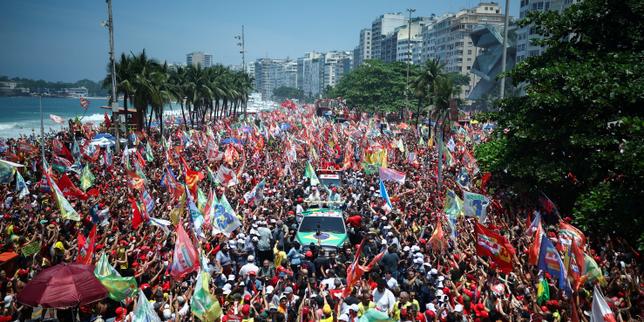
In Brazil, presidential elections are legally compulsory for citizens between the ages of 18 and 70, yet abstention rates routinely hover near 20 percent. During the historic runoff between Luiz Inácio Lula da Silva and Jair Bolsonaro, the race was not decided by television debates or traditional party rallies. It was won and lost in living rooms, WhatsApp family groups, and neighborhood bus stops, where millions of ordinary citizens transformed themselves into unpaid campaign operatives to drag reluctant relatives and neighbors to the ballot box.
When a race is separated by less than two percentage points—as the 2022 second-round showdown between Lula and Bolsonaro ultimately was—traditional political advertising hits a wall of diminishing returns. Voters have already chosen their camps. Undecided moderates barely exist. The only remaining pool of available ballots sits among the disillusioned, the elderly, and the chronically abstinent. For a different perspective, see: this related article.
Understanding how both political movements mobilized these dormant voters requires looking past the loud street demonstrations in São Paulo and Rio de Janeiro. Beneath the sea of red Workers' Party flags and yellow-and-green national jerseys lies a sophisticated, deeply personal ground game built on social pressure, logistical desperation, and existential fear.
The Myth of the Undecided Voter in Modern Brazil
Political consultants in Brasília spent decades operating under a simple rule. To win the Planalto Palace, a candidate had to capture the political center during the final weeks of October. That rule is dead. Further coverage on the subject has been shared by The Washington Post.
By the time Brazil entered the final stretch of the Lula-Bolsonaro contest, voter preferences had hardened into concrete. Polling institutes repeatedly found that fewer than five percent of the electorate remained genuinely open to changing their minds. Instead of persuasion, the battleground shifted entirely to turnout differential—the mathematical gap between how many of your supporters actually show up on Sunday versus how many of your opponent's supporters stay home.
In a country of over 156 million eligible voters, a single percentage point in turnout equals more than 1.5 million ballots. When Lula defeated Bolsonaro by roughly 2.1 million votes in the runoff, every single ride offered to an elderly neighbor and every heated argument over Sunday lunch carried direct statistical weight.
Consider a hypothetical scenario that played out thousands of times across the country. An 74-year-old retired mechanic in Minas Gerais—where voting is optional due to his age—decides the lines are too long and the politicians are all corrupt. Neither Lula's speeches about social welfare nor Bolsonaro's warnings about communism move him. What gets him into a car on Sunday morning is his 28-year-old daughter, who spends three weeks reminding him that his pension, his healthcare, or his religious values depend entirely on his willingness to stand in line for forty minutes.
How Compulsory Voting Masks a Deep Turnout Crisis
Outsiders often misunderstand Brazil's electoral mechanics. Because the constitution mandates voting for most adults, foreign observers assume turnout is automatically near 100 percent. The reality on the ground is far messier.
Failing to vote in Brazil carries a tiny administrative fine—usually less than one US dollar. While unexcused absences can temporarily block a citizen from renewing a passport or taking a civil service exam, millions of working-class Brazilians simply absorb the penalty or file an online justification. In the first round of the 2022 election, more than 32 million registered voters failed to cast a ballot.
That massive pool of abstentions became the primary target for both campaigns during the final push.
The Youth Surge and the Senior Exemption
Two specific demographic groups hold the keys to breaking Brazil's turnout ceiling: teenagers aged 16 and 17, and seniors over 70. For both brackets, voting is entirely voluntary.
Ahead of the election, an unprecedented civic push—backed by pop stars, influencers, and grassroots youth organizations—drove over two million teenagers to register for their voter ID cards. Once registered, those young voters became evangelists inside their own households. Having just acquired political agency, they turned their attention upward toward parents and grandparents who had grown cynical after years of corruption scandals, economic stagnation, and pandemic trauma.
On the other end of the age spectrum, Bolsonaro's campaign recognized early that evangelical churches and conservative family networks held immense sway over older, non-compulsory voters. Pastors and community leaders framed electoral participation not merely as a civic duty, but as a spiritual obligation. For an older citizen who had stopped participating in politics a decade prior, skipping the ballot box was reframed as abandoning their family's moral defense.
The Architecture of the Living Room Campaign
Modern political campaigns love to brag about data analytics and micro-targeted social media ads. Yet behavioral science consistently shows that digital ads rarely overcome physical friction on election day. High-trust interpersonal pressure does.
Both the left and the right in Brazil weaponized relational organizing—the systematic conversion of personal relationships into political leverage. Rather than relying on paid canvassers knocking on strangers' doors, activists focused exclusively on people who already owed them trust, affection, or family loyalty.
The tactics differed sharply between the two camps, reflecting their distinct social bases.
The Street-Level "Vira Voto" Movement
On the left, Lula's supporters revived and expanded a grassroots tactic known as Vira Voto (Flip the Vote). In the final ten days before the election, thousands of volunteers set up folding tables, cardboard signs, and thermoses of coffee at commuter train stations, university gates, and public plazas.
The rules of Vira Voto were strict. Volunteers were instructed never to scream, mock, or debate hostile passersby. Instead, they offered calm, one-on-one conversations aimed at apathetic voters who planned to cast a null ballot or stay home. They carried printed fact sheets comparing minimum wage increases, meat prices, and university funding across different administrations.
More importantly, Vira Voto operated on a hyper-local level. A nurse in a suburban clinic in Recife would spend her lunch break talking to fellow healthcare workers about hospital budgets during the pandemic. A unionized bus driver in São Paulo would spend his shift discussing fuel costs with regulars on his route. These interactions bypassed the partisan filters of cable news and algorithmic feeds.
The Digital-to-Physical Pipeline on the Right
Bolsonaro's movement relied on a different, equally potent infrastructure. While the left leaned heavily on labor unions, student groups, and neighborhood associations, the right utilized decentralized digital networks anchored by local business owners, agricultural cooperatives, and neo-Pentecostal congregations.
WhatsApp and Telegram groups functioned as regional dispatch centers. In the final 72 hours before polls opened, local coordinators used these chats to solve mundane logistical barriers. If an elderly supporter in a rural municipality in Paraná lacked transportation to a distant polling station, a local pickup truck owner would volunteer within minutes. If a single mother needed someone to watch her children while she stood in line, neighbors arranged coverage through the church chat.
This blend of ideological urgency and practical mutual aid turned voting into a collective tribal ritual. You did not just vote for Bolsonaro; you wore the national football jersey, met your neighbors at the bakery at 8:00 AM, and walked to the schoolhouse together.
The Friction of Distance and Poverty
To understand why grassroots mobilization matters so much in Brazil, you have to understand the geography of inequality. Voting in wealthy neighborhoods like Leblon in Rio de Janeiro or Jardins in São Paulo is effortless. Polling stations are clean, air-conditioned, and located three blocks from voters' apartments.
In the urban peripheries and the rural interior of the Northeast, casting a ballot can be an endurance test.
Public transit in Brazilian cities routinely operates on a reduced Sunday schedule. For a low-income worker living on the outskirts of Belo Horizonte or Manaus, reaching a designated polling station might require two buses, a long walk in scorching heat, and two hours standing in a queue. If that worker has to pay bus fare out of pocket—money that could buy rice and beans—abstention becomes a rational economic choice.
This reality sparked one of the fiercest legal and political battles of the final campaign week. Lula's allies petitioned the Supreme Federal Court and the Superior Electoral Court to mandate free public transit on election day across major municipalities. Hundreds of mayors eventually complied, waiving bus fares to eliminate the financial barrier for working-class voters.
Even with free buses, allegations of voter suppression erupted on election Sunday itself. Federal Highway Police operations—concentrated disproportionately in the Northeast, Lula's electoral stronghold—stopped hundreds of buses carrying voters to the polls, citing vehicle safety inspections. The images of delayed passengers standing beside highways instantly went viral, triggering outrage that ironically spurred even more local drivers to organize private carpools to rescue stranded voters.
The Psychological Toll of Existential Politics
When every election is framed as a battle between democracy and dictatorship, or between Christian civilization and ruin, political participation stops being healthy civic engagement. It becomes a source of chronic domestic trauma.
Across Brazil, the hyper-mobilization of family networks left deep fractures that persisted long after the ballots were counted. Adult children blocked parents on messaging apps. Siblings stopped speaking over holiday dinners. In extreme cases, political arguments escalated into physical violence, prompting electoral authorities to ban the carrying of firearms near polling stations during election weekend.
The emotional blackmail required to drag a reluctant parent to the polls carries a hidden cost. When a son tells his father, "If you don't vote, you are destroying my future," he may successfully secure one extra ballot for his preferred candidate. He also transforms a disagreement over tax policy or environmental regulation into an accusation of personal betrayal.
Veteran political analysts in Brasília warn that this level of emotional mobilization is unsustainable. You cannot keep an electorate at a boiling point indefinitely without burning out the institutions that hold society together. When voters are convinced that the opposing candidate represents literal evil, peaceful transfers of power become fragile, and losing an election feels intolerable.
Why Traditional Polling Missed the Late Surge
Throughout the campaign, major Brazilian polling firms faced intense criticism—and even congressional investigation threats from Bolsonaro's allies—for underestimating the incumbent's final vote share in the first round. While many factors contributed to those polling errors, the late-stage grassroots mobilization played a decisive, hard-to-measure role.
Standard polling models rely on historical turnout patterns to weight their samples. They assume that demographic groups will show up to vote in roughly the same proportions they did four years earlier.
Grassroots insurgency breaks those models. When millions of ordinary citizens independently decide to act as unpaid campaign managers inside their own families, they alter the composition of the electorate in ways that telephone and face-to-face surveys struggle to detect until the final 48 hours. A retired father who told a pollster on Tuesday that he planned to stay home might change his mind on Saturday night after a tearful phone call from his daughter.
In the runoff, those late conversions worked in both directions, pushing total valid turnout higher than in the first round—a rare phenomenon in Brazilian electoral history, where second-round participation usually drops as eliminated candidates' supporters lose interest.
The Permanent Campaign Ground Game
The lessons learned in the trenches of Brazil's most fiercely contested election have permanently altered how political power is built in Latin America's largest democracy. Television airtime, once the undisputed king of Brazilian campaigns, has been dethroned by high-trust peer-to-peer persuasion.
Political parties across the ideological spectrum now treat the months between elections not as a period of quiet governance, but as an ongoing exercise in community infiltration and network maintenance. They know that when the next ballot arrives, television commercials will bounce off an exhausted, cynical public. The only voice an apathetic voter will still listen to is the one sitting across the kitchen table.


