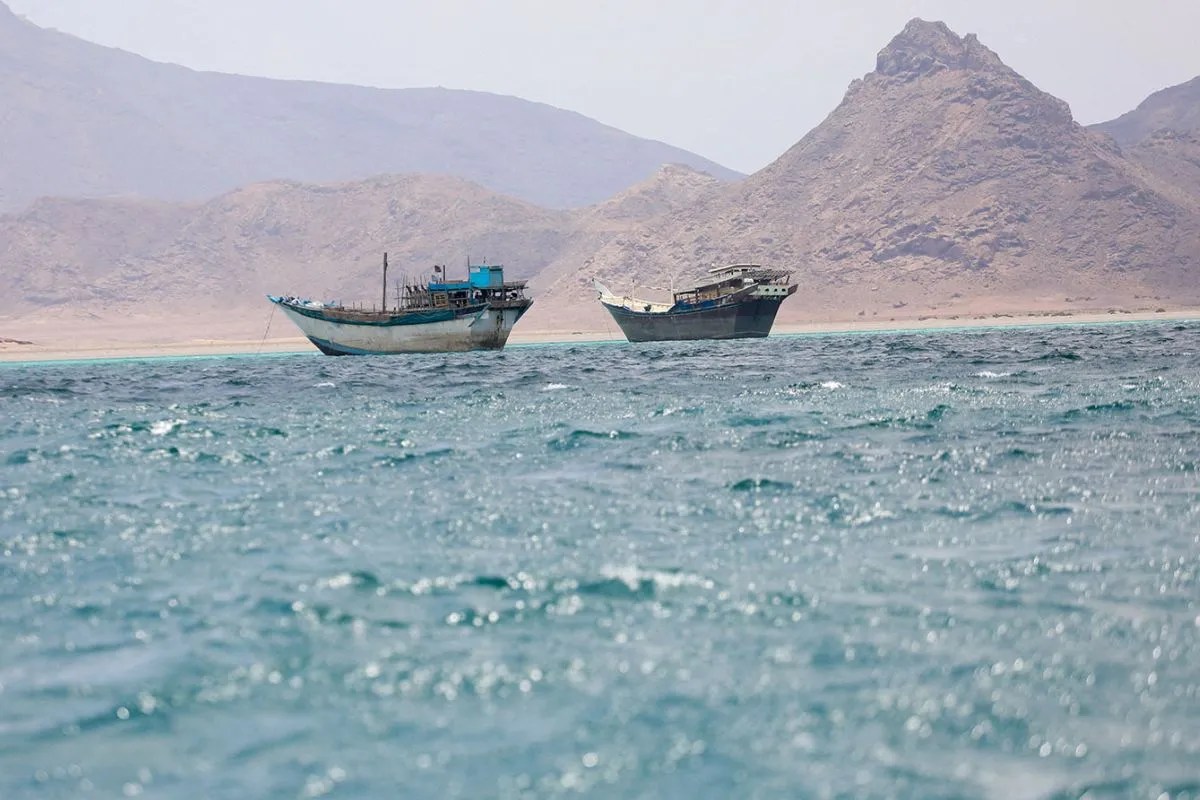
The maritime chokehold in the Persian Gulf has officially crossed from strategic posturing into open kinetic warfare. Recent operational updates from the United States Central Command confirm that military forces have redirected 94 commercial vessels, disabled multiple oil tankers, and boarded international cargo carriers as Washington aggressively enforces a naval blockade against Iranian ports. This escalation follows a dangerous cycle of direct exchanges, including Iranian ballistic missile tests targeting American warships near the Strait of Hormuz and subsequent U.S. strikes that permanently neutralized several Iranian-flagged tankers.
Beneath the headline figures of diverted commercial traffic lies a more complex reality. Global supply chains are paying the immediate price for a confrontation that neither Washington nor Tehran seems capable of de-escalating. Insurers are panicking. Freight rates are skyrocketing. The Strait of Hormuz, through which a massive percentage of global oil flows daily, functions less like an international transit lane and more like a floating minefield. For another look, read: this related article.
The Mechanics of the Blockade
Enforcing a maritime blockade over a high-traffic geographic bottleneck is a logistical nightmare. When CENTCOM orders commercial vessels to alter their paths, the ripple effects stretch all the way from the Gulf of Oman to major ports in Europe and Asia. Ships cannot simply park in the middle of international waters while regional navies trade fire. They are forced into long, costly detours, or held in holding patterns that burn millions of dollars in operational overhead.
The decision to divert 94 commercial vessels highlights a blunt-force reality. The United States military is treating the entire southern approach to the Gulf as a hostile zone. Every independent freighter, container ship, and bulk carrier is treated as a potential vector for sanctions-busting or asymmetric threat delivery. Captains are given little choice. Comply with U.S. naval directives or risk finding yourself caught in the crossfire of anti-ship missile batteries and carrier-strike retaliation. Further analysis on this matter has been shared by Associated Press.
This approach creates severe friction with neutral shipping nations. Global trade relies on the presumption of open seas. When a superpower steps in to choke off commercial access to pressure an adversary, the collateral damage hits economies that have no stake in the geopolitical standoff.
Tehran Shifts the Calculus
Tehran’s response to the naval clampdown has abandoned the traditional playbook of plausible deniability. Rather than relying solely on proxy harassment, the Islamic Revolutionary Guard Corps has shifted toward direct confrontations. Iranian leadership has signaled that any disruption to its oil export network will be met with immediate, punitive asymmetry.
Consider the introduction of advanced tactical maneuvers and heavy rhetoric from senior officials warning that American energy assets in the region remain exposed. When state actors start targeting nuclear-powered aircraft carriers and guided-missile destroyers with ballistic systems, the rules of engagement change permanently. Tehran is calculating that inflicting pain on global energy markets and threatening U.S. regional infrastructure will force Washington to blink first.
This is a high-stakes gamble. The Iranian economy is already buckling under severe sanctions, and turning the Persian Gulf into an active combat zone risks alienating remaining trade partners like China. Yet, the clerical establishment appears convinced that aggressive deterrence is their only shield against total economic strangulation.
The Broader Energy Vulnerability
The crisis is not confined to the narrow waters of the Persian Gulf. Broader infrastructural threats loom over the horizon. Regional intelligence notes indicate that secondary chokepoints, such as the Bab el-Mandeb strait near the Red Sea, remain prime targets for sympathetic proxy networks if the conflict expands. If energy transit through both the Strait of Hormuz and the Red Sea faces simultaneous disruption, the global economy will experience a shock wave unseen in decades.
Markets hate uncertainty, but they despise active blockades even more. Energy prices react instantly to every intercepted tanker and every redirected commercial carrier. Governments scrambling to secure alternative fuel supplies find themselves handcuffed by a lack of viable infrastructure alternatives. Pipelines running overland are operating at maximum capacity, and rerouting tankers around the entire African continent adds weeks to transit times and exponentially inflates consumer prices.
Navigating the Gray Zone
We are witnessing the dangerous evolution of twenty-first-century naval warfare. Traditional declarations of war are obsolete. Instead, nations operate in a permanent gray zone of economic blockades, cyber interference, and targeted skirmishes that stop just short of total global conflagration.
The U.S. military can continue to divert commercial vessels and disable hostile tankers, but steel and firepower cannot restore commercial confidence. Until a diplomatic off-ramp materializes—one that addresses both freedom of navigation and Iran's economic survival—the Persian Gulf will remain a volatile basin where a single miscalculated missile launch can shatter international trade overnight.
For now, cargo captains adjust their coordinates, insurance underwriters rewrite their policies for extreme risk, and the global economy holds its breath waiting for the next exchange.
CENTCOM forces redirect 94 vessels and enforce Iran blockade
This video provides an up-to-date look at the CENTCOM maritime operations and the ongoing enforcement of the naval blockade in the Middle East.


