Darkness, rising mud, and complete isolation tested the limits of human endurance when catastrophic flash floods struck northern Nepal. While most disaster coverage focuses on the immediate tragedy, the story of two workers who survived nine days locked inside a buried hydropower tunnel reveals a harrowing test of willpower.
When the mountain gave way, the reality of underground survival set in immediately.
The Disaster That Disfigured the Valley
The catastrophe began when an ice-rock avalanche and subsequent flash floods tore down the Bhotekoshi River valley. Millions of tons of debris, silt, and massive boulders obliterated everything in their path. At the Upper Trishuli 3A Hydropower Station, workers inside the complex faced an immediate nightmare.
Sanjay Sah, a 30-year-old mechanical foreman, was inside the control room when the warnings came through. Instead of running instantly, he chose to alert his colleagues.
"When there was such a big accident, it was not right for me to run away," Sah later explained to authorities. "My responsibility was to save everyone's life."
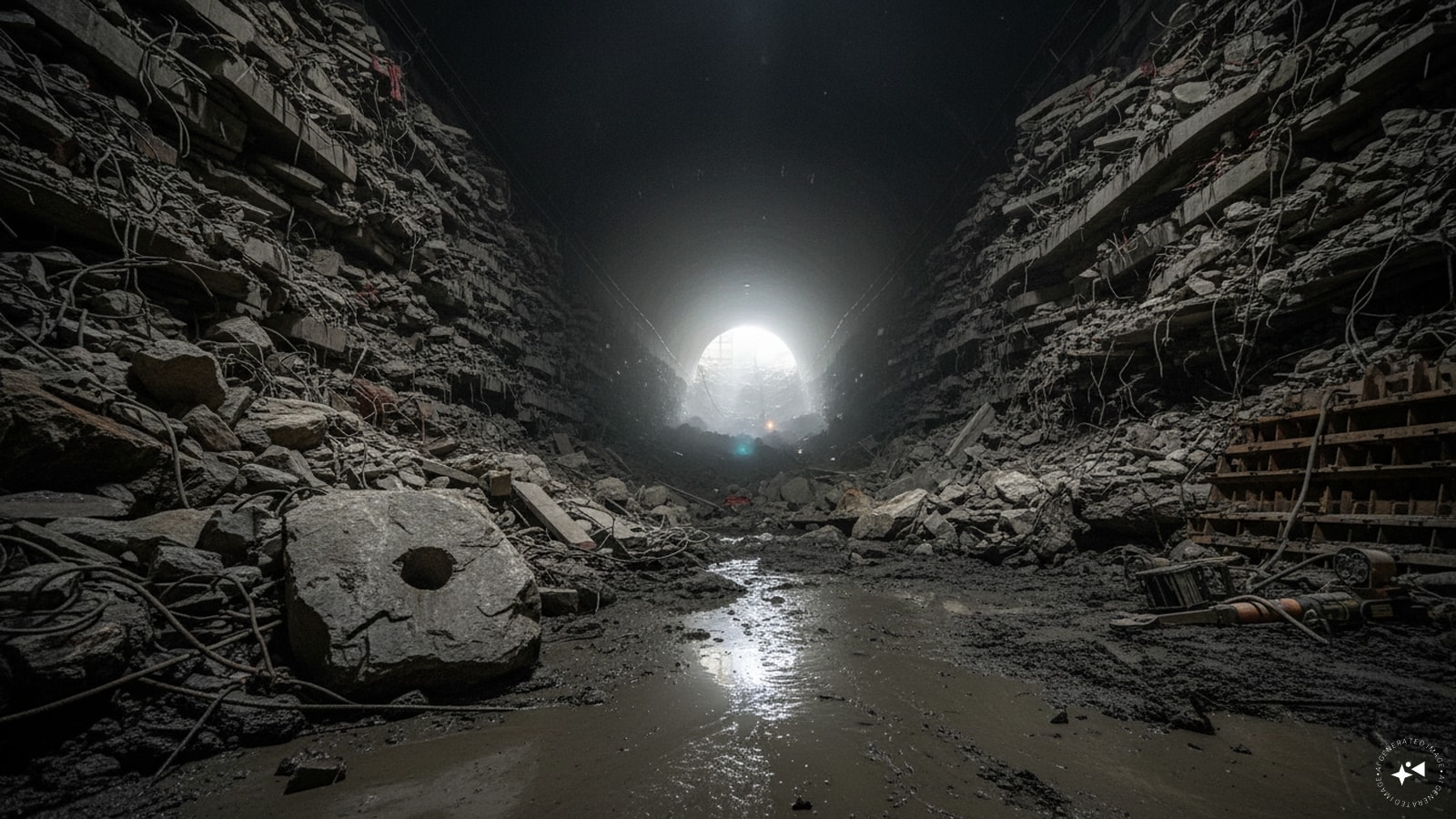
By the time he tried to escape, the path was cut off. Alongside Kabir Maharjan, a 45-year-old mechanical supervisor, Sah became trapped 170 meters deep inside the mountain tunnel. The entrance vanished completely, buried under 15 to 30 meters of landslide mud and rock.
Life Inside the Air Pocket
Survival underground comes down to basic physics and psychological grit. Experts note that human beings disorient quickly in total darkness, often losing track of time within the first day. Beyond 48 hours, panic and hallucinations usually set in.
Yet these two men endured for over 200 hours.
They were protected by a crucial pocket of compressed air trapped within the multi-story structure of the underground powerhouse. Pitch blackness surrounded them. Rising water pooled around their feet, and the air grew thick with the smell of damp earth and diesel.
To keep despair at bay, Sah turned to repetition. He spent nine days quietly chanting Hindu mantras, holding onto his faith as hours bled into days. Maharjan, meanwhile, navigated severe physical distress, sipping muddy water to keep his organs functioning while drifting in and out of consciousness. They managed occasional shouts, communicating with three or four other voices scattered in the blackness nearby, unsure if anyone on the outside even knew they were alive.
Breaking Through the Mountain
On the surface, finding them required an unprecedented engineering rescue. Rescuers faced a brutal logistical puzzle because the flood had completely altered the local topography, hiding the tunnel mouths beneath thick layers of debris.
Teams from the Nepal Army, Armed Police Force, and international specialists had to use satellite imagery, old maps, and surface power poles just to triangulate where the tunnel entrances used to be. Heavy excavators cleared surface rubble, while engineers executed carefully controlled blasts to break through interior blockages without destabilizing the fragile mountain overhead.
Rainstorms repeatedly flooded the excavation shafts, undoing hours of grueling labor. But persistence paid off. When rescue workers finally punched a small exploratory borehole and pushed deeper, they heard faint responses echoing from the dark.
Miracles and Recovery
On a Friday morning, rescue crews pulled Sah and Maharjan from the narrow opening. Video footage captured the exhausted, mud-caked men being hoisted into the daylight as rescue workers cheered.
Sah's first words to his rescuers exposed his immediate disorientation: "What day is it?"
Both men were rushed for medical treatment, with Maharjan requiring intensive care in Kathmandu due to severe physical shock and exhaustion, while Sah was stabilized in Nuwakot. Their survival stands as an extraordinary anomaly in a disaster that left thousands missing across the region. It highlights both the ruthless unpredictability of Himalayan flash floods and the fierce resilience of workers who refuse to give up in the dark.