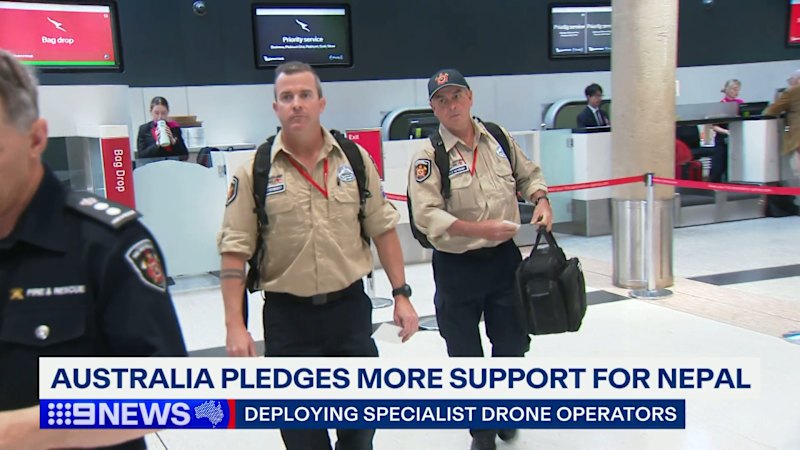
Australia has expanded its humanitarian aid package to $11 million and deployed specialized drone operators to the Nepal-China border, where a catastrophic glacier collapse triggered devastating flash floods. As the official death toll climbs past nine hundred and thousands remain missing, foreign governments are scrambling to locate dozens of unaccounted-for citizens. Canberra's response has evolved from baseline financial relief into a complex technical extraction mission. Yet, this operation highlights the terrifying vulnerability of high-altitude infrastructure and the immense limits of modern disaster response in isolated Himalayan terrain.
The disaster began with a sudden glacier collapse along the border region, sending an unprecedented deluge of ice, mud, rock, and water tearing through valleys. Entire settlements were swept away, bridges were pulverized, and vital access roads were completely erased. Hydropower tunnels filled with debris, trapping workers and locals in pitch-black subterranean pockets. Foreign trekkers and tourists, drawn to the remote beauty of the region, found themselves trapped alongside local residents as communication lines collapsed entirely.
The Logistics of High-Altitude Recovery
Throwing money at a crisis in the Himalayas offers diminishing returns when geography itself becomes the primary antagonist. Initial financial commitments of $5 million quickly ballooned as the true scope of the devastation became clear. Cash allocations to the World Food Programme and local non-governmental organizations are necessary for baseline survival, but they do little to pull a trapped citizen out of a crushed mountain hotel or a flooded hydropower shaft.
Specialized intervention requires physical presence. Australia dispatched an initial team of disaster response specialists and consular staff to Kathmandu, followed swiftly by a fifteen-person contingent from Fire and Rescue NSW and the Queensland Fire Department. This specialized crew brought advanced drone technology designed specifically for search-and-rescue operations in hazardous zones.
These aren't standard consumer quadcopters. Equipped with thermal imaging, artificial intelligence capabilities to spot human forms, and built-in spotlights, these drones can peer into ravines and unstable zones deemed too perilous for human foot patrols.
The Human Toll and Diplomatic Strain
Behind the operational logistics lies a grueling human ordeal. Dozens of Australian citizens were initially listed as missing, sending shockwaves through diaspora communities and families back home. While some individuals have gradually been confirmed safe, the agonizing wait for news has placed immense pressure on Department of Foreign Affairs and Trade officials.
Every passing hour diminishes the window of survival. Search teams rely heavily on telecommunication data provided to Nepali authorities to narrow down the last known coordinates of missing tourists. Hotels like the Kailash and the Royal Himalaya have become focal points for desperate ground searches.
The crisis also exposes structural flaws in regional early-warning systems. Glacial lake outburst floods are increasing in frequency and severity as global temperatures rise, destabilizing high-altitude ice sheets. Communities downstream live under a constant, ticking clock, often lacking the sophisticated sensor networks needed to provide more than a few minutes of warning before a wall of water descends.
Moving Past Band-Aid Responses
Aid packages and drone deployments are vital triage measures, but they represent reactive governance. When the floodwaters finally recede and the grim task of body recovery concludes, hard questions will face regional authorities regarding high-risk infrastructure development in fragile mountain ecosystems. Building massive hydropower installations in active glacial flood paths without fail-safe containment structures is an ongoing gamble with human lives.
For now, rescue workers fight against stubborn terrain, washed-out bridges, and unpredictable weather windows. Australia's expanded financial and technical commitment provides a crucial lifeline, but the scale of the destruction serves as a brutal reminder of nature's indifference to geopolitical borders.
The First of 43 Missing Australians Confirmed Dead in Nepal's Devastating Flash Flood Disaster
This video report covers the confirmation of casualties and the ongoing rescue operations inside Nepal's rugged hydropower tunnels.