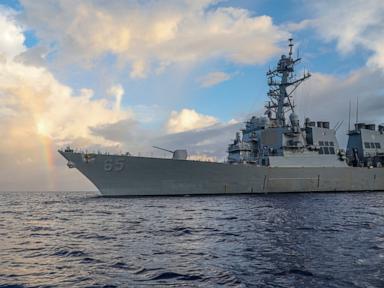
When the lights go out on a ten-thousand-ton warship operating in contested waters, the margin for error collapses to zero. Last month, the guided-missile destroyer USS Benfold suffered a catastrophic engineering failure that left approximately 300 sailors dead in the water and without power for four agonizing days in the South China Sea.
The incident, triggered by a generator casualty on July 24, stripped the Arleigh Burke-class destroyer of its primary life-support systems. For nearly a hundred hours, the crew endured temperatures regularly exceeding 32 degrees Celsius without air conditioning, subsisted without galley services, and managed raw human waste as toilets failed across the vessel.
While naval public affairs emphasized the steady professionalism of the crew, the blackout of the Benfold is not an isolated anomaly. It is a glaring symptom of a surface fleet pushed past its structural and logistical breaking point.
The Anatomy of an Engineering Collapse
Modern warfighting vessels are floating cities dependent on uninterrupted electrical generation. When the generators on the Benfold failed, the ship did not simply lose its combat capability; it lost its basic habitability.
Water purification plants stopped. Ventilation ducts turned into stagnant heat traps. The galley went dark, forcing neighboring vessels like the cruiser USS Robert Smalls to ferry cooked meals across the water to the stricken crew. For four days, the destroyer drifted, unable to maneuver independently, until it could be taken under tow and dragged to Subic Bay in the Philippines for extensive repairs.
This marks the second major electrical and propulsion failure involving an Arleigh Burke-class destroyer in the Indo-Pacific this year. In May, the USS Higgins suffered a similar engineering casualty that left it temporarily disabled.
Two failures of core electrical architecture in a span of months point away from random misfortune and toward systemic fatigue. Maintenance deferrals, stretched deployment cycles, and an overreliance on aging engineering plants are catching up with the surface fleet.
Operational Tempo Versus Mechanical Reality
The Pentagon demands an unyielding operational presence across the globe. Ships are asked to cover vast maritime expanses with fewer depot-level maintenance periods, meaning routine overhauls are compressed or postponed entirely to meet strategic scheduling demands.
When maintenance is rushed, equipment fails. The machinery spaces on these destroyers rely on complex electrical grids and auxiliary systems that operate under immense strain in tropical environments. High ambient seawater temperatures place heavy burdens on cooling systems, and when preventative maintenance schedules are skipped to keep ships on station, minor component wear snowballs into total electrical blackouts.
Compounding the mechanical strain is the human toll. Sailors are working longer hours with fewer hands. When a ship experiences a total blackout, the engineering department faces an immediate, high-stress crisis requiring manual troubleshooting in sweltering, pitch-black compartments. At the same time, navigation teams must track drift and collision hazards in busy waterways without standard electronic aids.
The Broader Strategic Vulnerability
The timing of the Benfold incident highlights a precarious juggling act for American naval strategy. As surface combatants struggle with maintenance backlogs and equipment failures, the wider theater faces acute reallocation pressures.
The deployment and support strain is not limited to destroyers. Extended deployments across multiple combat zones have sparked intense debates over military readiness and quality of life. When support vessels and strike groups are forced to divert resources to rescue immobilized peers, operational coherence fractures.
A navy that spends its equipment faster than it can repair it creates hollow deterrence. The adversary does not need to fire a shot if systemic fatigue and mechanical decay achieve the same result from within.
The Benfold left Subic Bay on August 8 after technicians restored its systems to normal operations. But patching a generator and sending a warship back into the rotation does nothing to fix the underlying rot of an overextended naval architecture.
The next blackout is already written into the schedule. It is simply a matter of when the machinery gives out next.