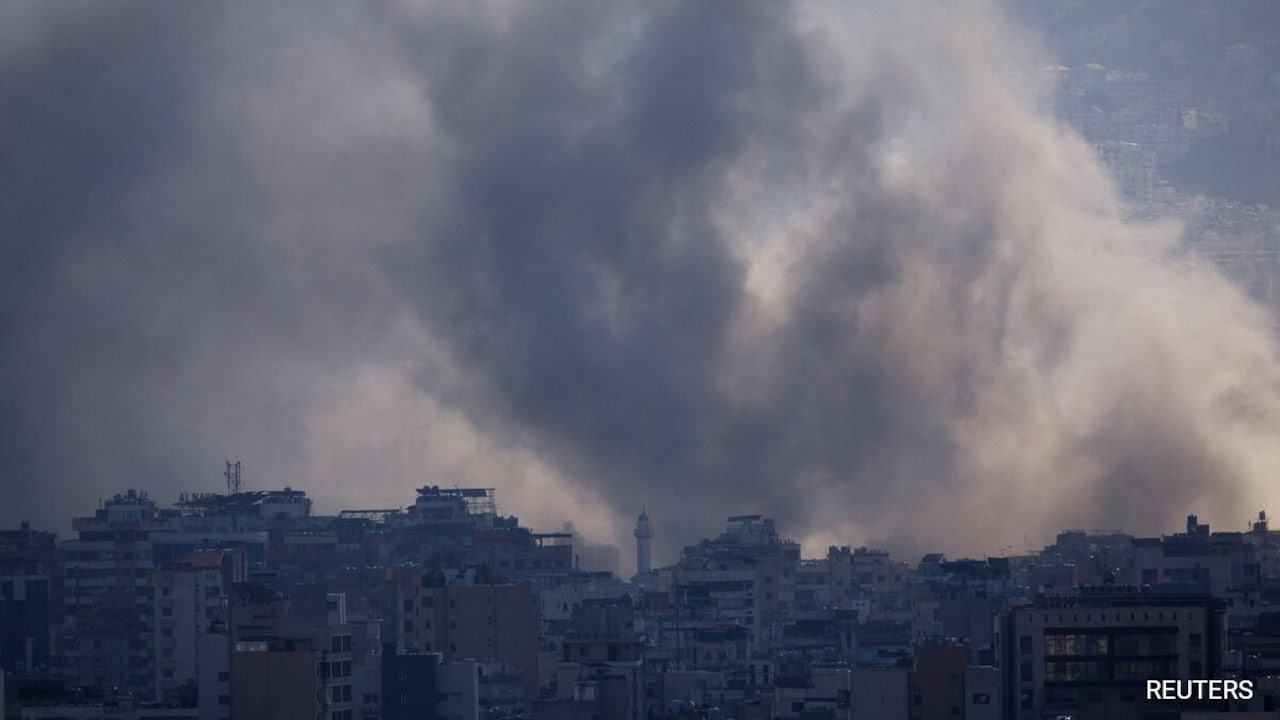
The renewed ceasefire between Israel and Hezbollah, brokered hastily by Washington, Doha, and Tehran, went into effect at 4:00 p.m. local time on Friday. It follows a blood-drenched 24-hour escalation in southern Lebanon that left dozens dead and pushed the broader, fragile United States-Iran diplomatic track to the absolute brink of collapse. While officials in Washington celebrate the halt in hostilities as a victory for regional stabilization, the realities on the ground tell a far more dangerous story. This is not a permanent peace treaty. It is a tactical pause between two exhausted but heavily armed adversaries who are using the diplomatic window to prepare for the next phase of an unavoidable confrontation.
The escalation that nearly destroyed the truce culminated in intense fighting near the strategic Ali al-Taher hilltop overlooking Nabatiyeh. Israeli forces pushed toward the heights to dismantle what they described as vast underground networks, prompting a fierce counter-attack by Hezbollah militants that killed four Israeli soldiers, including a lieutenant colonel. Israel responded with more than 150 airstrikes across southern Lebanon and the Bekaa Valley, killing at least 21 people. The sudden eruption of violence immediately paralyzed the highly anticipated Swiss diplomatic talks between the United States and Iran, which were abruptly postponed after Iranian negotiators refused to proceed without an immediate cessation of military operations in Lebanon.
The Secret Architecture of the Agreement
The frantic diplomacy that salvaged the truce on Friday afternoon exposes the true levers of power governing this conflict. This was not a traditional negotiation executed through standard diplomatic channels. It was a high-stakes, three-way backchannel management operation where Qatar and the United States pressured the Israeli security cabinet, while Tehran directly instructed the Hezbollah leadership to accept the terms.
Iran remains the ghost in the machine. Under the terms of the broader interim agreement signed earlier this month, Tehran secured massive economic relief, including the unfreezing of assets and the removal of maritime blockades on its oil ports. In exchange, the global energy markets saw the reopening of the crucial Strait of Hormuz. But Iran quickly realized that its economic windfall would evaporate if a full-scale war consumed Lebanon and drew the United States directly into the theater.
The resulting framework creates a highly volatile arrangement. Israel has explicitly stated that its military retains complete operational freedom to neutralize perceived threats and destroy subterranean command centers in southern Lebanon. Hezbollah, conversely, maintains that any Israeli movement north of the immediate border zone constitutes a flagrant breach that justifies immediate retaliation. By leaving these contradictory definitions of compliance unaddressed, the mediators have built an agreement on a foundation of quicksand.
Enforcement is an Illusion on the Litani River
To understand why this truce is structurally deficient, one must look at the structural failure of its predecessors. The original late 2024 accord was intended to permanently push Hezbollah forces north of the Litani River and allow the Lebanese Armed Forces to assume total security control of the south. It never happened.
[Strategic Demilitarized Zone]
Litani River Line
=========================================== (Theoretical Hezbollah Boundary)
          [Unenforced Buffer Zone]
=========================================== (Active Confrontation Line)
Blue Line Border
The Lebanese Army, plagued by funding shortages and political paralysis in Beirut, lacks the domestic mandate and physical capability to disarm a deeply entrenched militia. Hezbollah simply hid its weapons, moved into civilian infrastructure, and waited. Meanwhile, the Israeli military conducted regular reconnaissance flights and targeted strikes, arguing that defensive preemption was required to prevent the group from rebuilding its missile stockpiles.
The current arrangement repeats these exact systemic flaws. Israel refuses to withdraw completely from several strategic hilltops inside Lebanese territory, asserting that a total vacuum will immediately be filled by anti-tank missile teams. Hezbollah refuses to disarm or abandon its strongholds, viewing its arsenal as the only credible deterrent against an outright invasion. The United States has floated a 300 billion dollar postwar reconstruction fund as an incentive for regional compliance, but money cannot buy security when both sides view the dispute as existential.
The Fragile Oil Weapon
The real pressure driving this diplomatic urgency is not civilian welfare, but global economic stability. The brief closure of the Strait of Hormuz earlier this year sent shockwaves through international markets, driving energy prices to historic highs and triggering panic across Western capitals. The interim peace agreement was explicitly designed to avert a global systemic collapse by trading Iranian sanctions relief for the free flow of oil.
But the architecture of that deal tethers the global economy directly to the whims of field commanders in southern Lebanon. A single miscalculated rocket strike or an unannounced border incursion can instantly halt the Swiss negotiations, shutter the shipping lanes, and reignite a wider war. Washington is essentially betting that economic incentives will override decades of ideological alignment between Tehran and its primary proxy forces. It is a gamble with an incredibly low probability of success.
Tactical Realities on the Ground
Military analysts tracking the deployment patterns along the border note that neither side is acting like an entity preparing for a sustained period of peace. Israeli engineering units continue to fortify positions along the Ali Taher ridge, systematically clearing terrain to deny cover to infiltrating forces. On the other side of the line, Hezbollah has transitioned to a decentralized command structure, operating in autonomous cells that do not require direct communication lines from Beirut to launch counter-offensives.
This decentralization means that local commanders have the authority to interpret any Israeli movement as a violation. If an Israeli patrol moves ten meters too close to a disputed village, a local cell can open fire without waiting for clearance from the political leadership. The ceasefire does not resolve the core grievances of either population. Tens of thousands of civilians on both sides of the border remain displaced, unable to return to ruined towns and farms while the threat of sudden rocket barrages or airstrikes looms over their daily lives.
The truce achieved on Friday will likely last only as long as it takes for both factions to rearm, rotate their frontline units, and evaluate the outcomes of the broader negotiations between Washington and Tehran. The fundamental contradictions that triggered the conflict remain completely unaddressed, leaving the region trapped in a cycle of temporary pauses and catastrophic escalations.