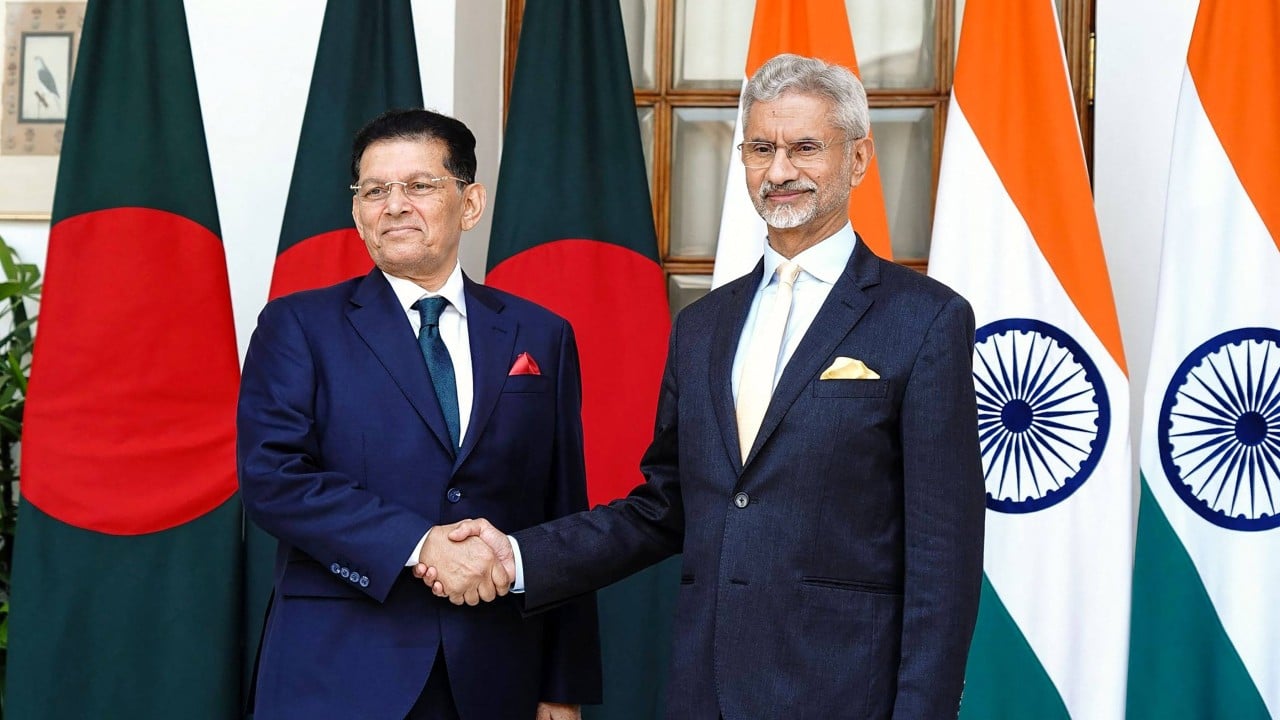
When junior ministers in Dhaka openly signal that Bangladesh is ready to evaluate membership in the newly minted Makkah Joint Defence Agreement, they are not merely diversifying foreign policy. They are stepping onto a geopolitical tripwire. The security framework signed by Saudi Arabia, Pakistan, and Türkiye—widely sensationalized as an Islamic NATO—promises mutual defense and collective deterrence. Yet for Bangladesh, entertaining this alliance introduces profound structural risks, threatens to permanently fracture relations with New Delhi, and trades tactical diplomatic posturing for permanent strategic vulnerability.
To understand why this move raises red flags across South Asia, one must strip away the high-minded rhetoric of religious solidarity and examine the cold machinery of military commitments.
The Anatomy of a Paper Alliance
The agreement resting in Riyadh is frequently compared to the North Atlantic Treaty Organization because of its core clause: an armed attack on one member is treated as an attack on all. But the comparison collapses under professional scrutiny. NATO operates on decades of integrated military command structures, standardized logistics, common funding architectures, and explicit transfer-of-authority protocols.
The Mecca Pact has none of these things.
As of late 2026, the complete treaty text remains confidential. Public disclosures point to a permanent secretariat in Saudi Arabia led temporarily by a Pakistani secretary-general, alongside vague pledges of defense-industrial cooperation. There is no integrated multinational headquarters. There is no combined force structure. There is no shared nuclear umbrella or synchronized early-warning network.
Calling this loose coalition an Islamic NATO is a masterclass in marketing. In reality, it is a political arrangement masquerading as an ironclad security guarantee. For Bangladesh, anchoring national security to an untested, hollow mechanism creates a dangerous illusion of protection while inviting immediate external retaliation.
The Geopolitical Cost of the Bay of Bengal Shift
Dhaka's flirtation with the bloc stems from a desire to project influence beyond its immediate neighborhood under the banner of a "Bangladesh First" doctrine. Policymakers in the capital look westward and see potential windfalls: energy security guarantees, expanded remittance channels from the Gulf, and access to Turkish defense manufacturing.
These are tangible economic desires. However, pursuing them through a military pact that includes Pakistan is a reckless gamble.
India views its eastern flank through an unforgiving lens of national survival. The inclusion of Bangladesh into a military coalition spearheaded by Islamabad brings geopolitical hostility right to India's doorstep. For years, New Delhi has managed a complex, often tense relationship with Dhaka, particularly following political transitions and the sheltering of deposed leaders. Should Bangladesh formalize a defense alignment with Pakistan and its partners, the trust deficit will deepen into structural antagonism.
Borders are fixed by geography, not diplomacy. Bangladesh shares the vast majority of its land perimeter with India, alongside critical river-water systems and economic lifelines. Trading immediate economic leverage with West Asia for long-term strategic friction with a dominant regional neighbor violates every rule of basic statecraft.
The Trap of Selective Obligations
Proponents of the alignment inside Dhaka argue that membership can be kept superficial—a diplomatic signal without heavy combat obligations. This is a dangerous miscalculation.
Collective defense treaties have a habit of dragging peripheral states into core conflicts. Consider a hypothetical scenario where regional tensions flare between Pakistan and its adversaries, or where Gulf security dynamics pull Riyadh and Ankara into active Middle Eastern kinetic engagements. Under an Article 5-style framework, political pressure to honor commitments mounts rapidly. Even if troop deployment is not automatically triggered, the diplomatic fallout of invoking discretion during an ally's hour of need destroys the credibility of the pact, rendering the membership meaningless.
Conversely, fulfilling those obligations means exposing Bangladeshi personnel to distant theaters of war that have zero bearing on the defense of the Bangladeshi homeland. Dhaka possesses a professional military with a proud history of United Nations peacekeeping, valued precisely for its neutrality and international trust. Binding that military to a sectarian-coded regional bloc squanders that hard-earned reputation for non-alignment.
The Illusion of Strategic Diversification
Defenders of the policy claim that keeping doors open to multiple power centers maximizes national autonomy. True strategic autonomy, however, means retaining freedom of maneuver without inviting foreign entanglements.
When a developing nation ties its security policy to a controversial West Asian and South Asian axis, it narrows its options rather than expanding them. It alienates traditional partners, alarms regional powers, and forces military planners to prepare for threats that diplomacy could otherwise avoid.
Bangladesh does not need an Islamic NATO to buy Turkish drones, secure Gulf energy contracts, or maintain labor markets for its expatriate workers. Bilateral economic and technological agreements achieve all of these objectives without requiring a signature on a mutual defense pact.
Choosing to cross the threshold into the Mecca Pact is not an exercise in strength. It is an invitation to external manipulation, regional instability, and a self-inflicted security crisis that Dhaka is entirely unequipped to manage.
Inside the Mecca Pact | Dhaka Weighs Joining Saudi-Led 'Islamic NATO'
This video provides an in-depth look at Dhaka's deliberations regarding the Mecca Pact and the regional security concerns it generates.
http://googleusercontent.com/youtube_content/1


