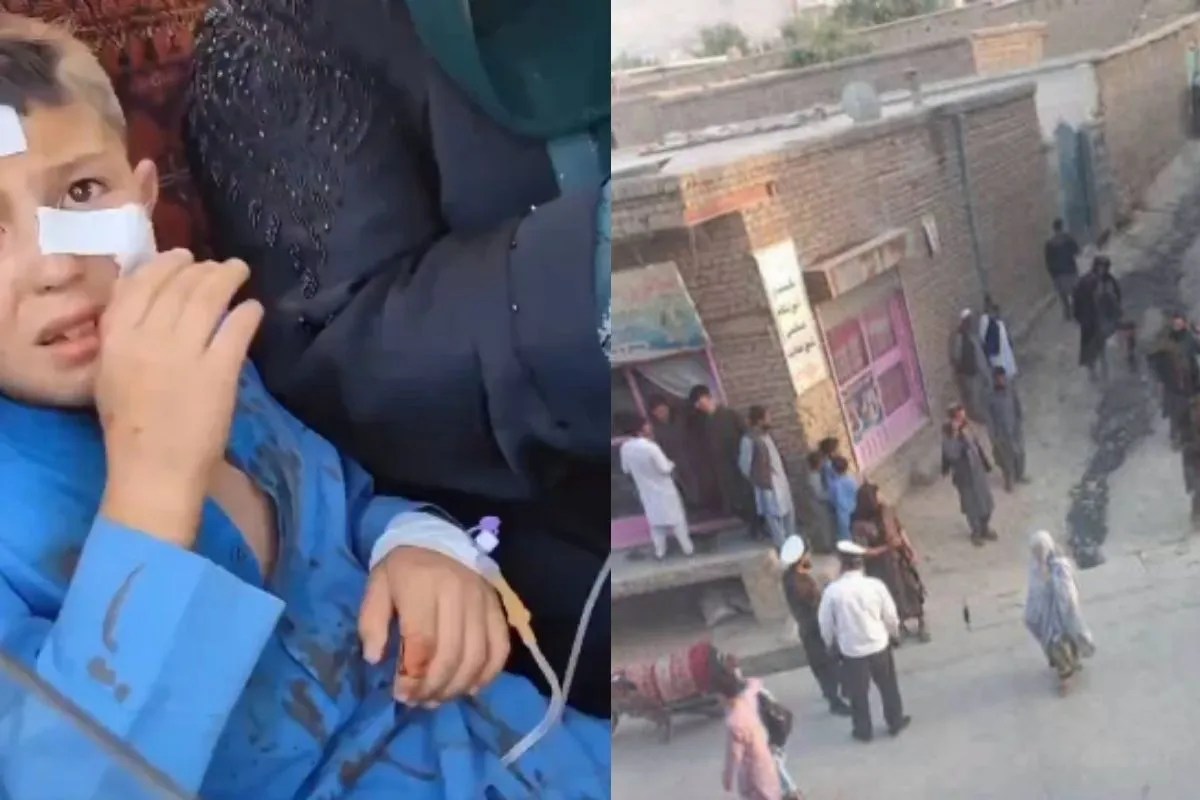
The arithmetic of terror in the Afghan capital rarely accounts for the quiet persistence of classrooms. When explosives tear through educational centers in western districts like Dasht-e-Barchi, leaving over fifty children dead and scores more mutilated, the immediate media cycle captures the smoke, the grief, and the political finger-pointing. But looking past the initial headlines reveals a chillingly calculated strategy of attrition. These assaults are not random acts of urban violence. They represent a systematic campaign targeting the most vulnerable demographic of a persecuted minority, engineered to extinguish future generations before they can hold a pen or claim a voice.
Understanding the mechanics behind these atrocities requires examining why schools serving the Hazara community become slaughterhouses. The targets are deliberately chosen. Educational centers function as the primary engines of social mobility and intellectual resistance for young Shiite Muslims, particularly young women striving for higher education despite sweeping systemic restrictions. When a suicide bomber walks into a crowded tutoring hall or a car bomb detonates at a school gate during dismissal, the intent is absolute. The objective is to maximize psychological terror, ensuring that every family forced to bury a child weighs the cost of literacy against the certainty of death.
The Strategy of Asymmetric Eradication
Decades of reporting from conflict zones teach a harsh lesson. True power often belongs to those who weaponize civilian infrastructure. Armed factions operating in the shadows understand that striking a military checkpoint yields diminishing returns in propaganda value. Striking a school, however, paralyzes an entire community.
Consider the operational signature of these attacks. Intelligence reports and independent tallies following major blasts at facilities like the Kaaj educational center or the Sayed al-Shuhada high school point to a terrifyingly consistent blueprint. The perpetrators time their strikes to coincide with peak capacity hours, such as morning practice exams or final afternoon exit bells. They stack explosive devices, using initial car bombs or perimeter detonations to draw crowds and security responses, followed by secondary charges designed to kill those attempting rescue.
This is military-grade savagery applied to civilian spaces. The local security apparatus, whether under the previous republic or the current regime, consistently proves incapable or unwilling to provide proactive protection for marginalized enclaves. Promises of beefed-up patrols evaporate the moment a high-profile diplomatic delegation leaves the city center.
The Targeting of Minority Aspirations
The geographic epicenter of these massacres remains concentrated in western Kabul. Dasht-e-Barchi is an urban neighborhood defined by its resilience. Generations of Hazara families have pooled their meager resources to build private schools, tutoring hubs, and cultural centers. They invest in education because books represent the only viable shield against generational disenfranchisement.
Extremist factions, most notably the regional affiliate of the Islamic State known as ISIS-K, view these aspirations as an existential threat. Their ideological framework explicitly brands Shiites as apostates, rendering classrooms full of teenage girls studying for university entrance exams legitimate military targets in their distorted calculus. By destroying these centers, the attackers achieve two goals simultaneously. They inflict maximum casualties with minimal risk, and they advance a sectarian agenda of cultural cleansing through fear.
The toll extends far beyond the immediate body count. Thousands of children who survive these blasts carry permanent physical impairments and invisible psychological scars. Classrooms become echoing chambers of trauma. Teachers report chronic absenteeism, and parents face an agonizing moral dilemma. Sending a child to school becomes an act of defiance that risks everything. Staying home means surrender.
The Accountability Vacuum
Official responses to these tragedies follow a predictable, cynical rhythm. Condemnations roll in from international bodies and local authorities alike. Pledges are made to hunt down the perpetrators. Yet, accountability remains an elusive illusion.
In the wake of major explosions, the gap between official death tolls and ground-level documentation exposes a systemic disregard for truth. Ministries routinely underreport casualties to project an image of stability, forcing grieving families to compile their own registry of the dead name by name. Investigations stall out, suspects vanish into porous regional networks, and the cycle resets waiting for the next assembly hall to fill up.
The international community finds itself hamstrung by shifting geopolitical priorities and diplomatic isolationism. Foreign aid shrinks, monitoring mechanisms weaken, and local human rights defenders face intimidation or forced exile. Without sustained pressure and independent oversight, accountability is reduced to empty press statements issued from safe capitals far from the dust and blood of Kabul.
The Defiance of the Surviving Bench
Despite the carnage, the most striking element of life in these targeted neighborhoods is the refusal to stop learning. Visit any makeshift classroom in Kabul weeks after a devastating attack, and the scene defies despair. Students sit at repaired wooden desks, notebooks open, listening to instructors who refuse to abandon their posts.
The resilience of these children is staggering, but it should not be romanticized as a substitute for safety. Courage is not a defense against high explosives. When a state or ruling authority fails to secure its most basic obligation—protecting children within the walls of a school—resilience becomes a tragic burden forced upon the innocent.
The rubble is cleared, the blood is washed from the concrete, and a new bell rings out across the dust. Until structural security replaces rhetoric, and until targeted persecution is met with uncompromising justice, the classrooms of Kabul will remain frontline bunkers in an invisible war.