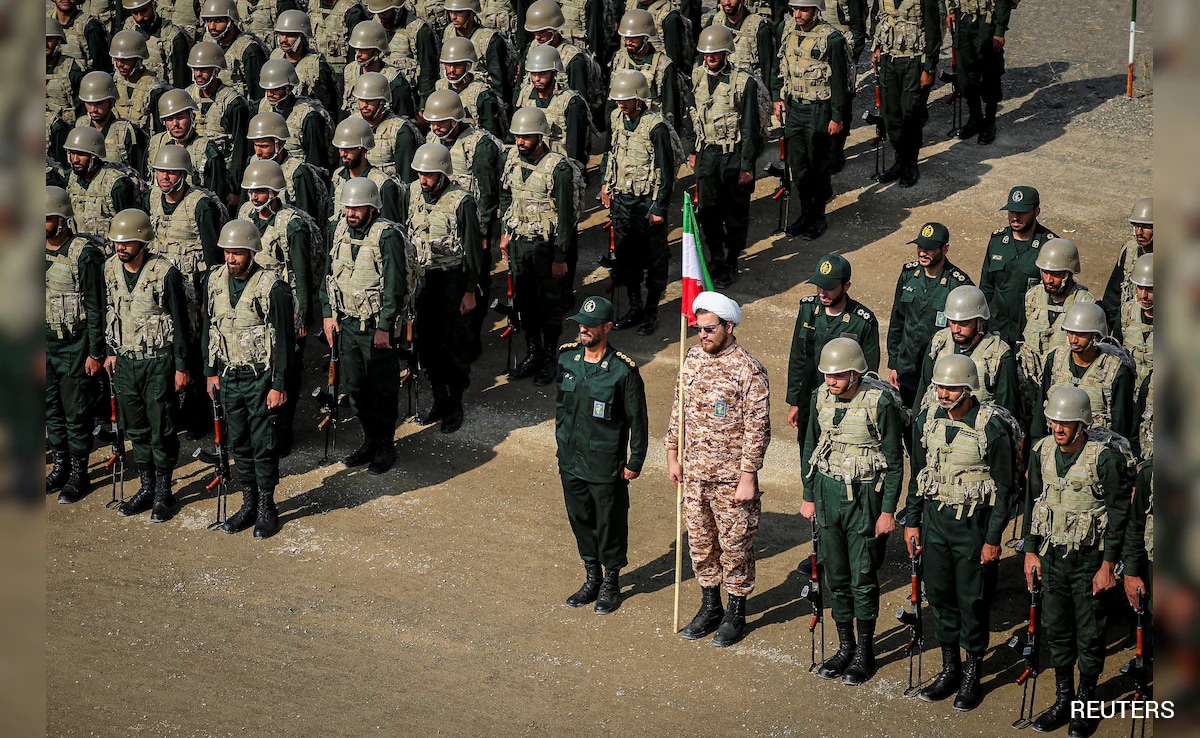
The current diplomatic stalemate in Islamabad is not a delay in the peace process. It is a calculated military strategy masquerading as diplomacy, where the threat of open war serves as the primary negotiating lever.
While Western headlines focus on whether the White House will sign off on the latest draft framework to end the Third Gulf War, Tehran is actively resetting its regional playbook. The core of the current crisis is not a disagreement over border lines or frozen assets. It is Iran's refusal to decoupling its own survival from its regional proxy network. By threatening to activate new fronts across the Middle East, the transitional leadership in Tehran is attempting to force the United States and its regional allies to accept a reality where Iranian influence remains untouched, even after the devastating shocks of Operation Epic Fury.
The Architecture of the Strained Truce
Diplomacy under fire is rarely about finding a middle ground. Instead, it is an exercise in testing the adversary's breaking point. The temporary ceasefire, which has managed to hold by a thread since April, has provided both sides with a tactical breathing room. Yet, the fundamental issues that triggered the outbreak of hostilities on February 28 remain entirely unresolved.
The opening phase of the war saw unprecedented joint military action by American and Israeli forces. Hundreds of strikes effectively decapitated top layers of the Iranian leadership, including Supreme Leader Ali Khamenei. Western planners calculated that such a massive shock would destroy the regime's command structure and force an immediate capitulation. They miscalculated the decentralized nature of the Iranian Threat Network.
Instead of a collapse, the world witnessed an immediate, coordinated response. Hundreds of ballistic missiles and thousands of drones targeted energy infrastructure, Western bases, and Gulf Arab states. The subsequent closure of the Strait of Hormuz triggered a global fuel crisis, proving that raw military dominance cannot easily neutralize asymmetric capabilities.
Now, the Islamabad talks are stalled because Tehran views a rapid return to the pre-war status quo as a strategic defeat. Accepting peace without securing structural concessions would lock Iran into a position of weakness, surrounded by hostile states and crippled by ongoing naval blockades. For the clerical and military remnants in Tehran, prolonged tension is vastly preferable to an unfavorable peace.
The Illusion of a Disarmed Proxy Network
The prevailing theory in Washington has long been that heavy military degradation would break the links between Tehran and its regional partners. Decades of intelligence gathering suggest otherwise. These relationships are deeply institutionalized, built on a shared strategic doctrine rather than simple transactional benefits.
+--------------------------------------------------------------+
|               IRANIAN THREAT NETWORK (2026)                  |
+--------------------------------------------------------------+
|                                                              |
|   [ Tehran Leadership ]                                      |
|            │                                                 |
|            ├────────► Lebanese Hezbollah (Rebuilding)        |
|            │                                                 |
|            ├────────► Houthi Rebels (Autonomous Operations)  |
|            │                                                 |
|            └────────► Iraqi Paramilitaries (Local Pressure)   |
+--------------------------------------------------------------+
Sustained operations have undoubtedly weakened major actors like Lebanese Hezbollah. Thousands of fighters have been lost, and logistical supply lines are under continuous surveillance. However, this pressure has driven an evolution within the network rather than its destruction.
We are now seeing a shift toward a decentralized model. Local units are operating with a higher degree of autonomy, making them less vulnerable to central leadership decapitation. Furthermore, security agencies have tracked an expansion of informal proxy activity reaching into Europe, utilizing local criminal elements for low-level sabotage and intelligence gathering. This makes the network far more difficult to counter through traditional military strikes.
The Lebanon Interconnection
Tehran's recent warnings regarding new fronts are directly tied to the ongoing actions in the Levant. Iranian Foreign Minister Abbas Araghchi made it clear that any settlement must include a total cessation of hostilities on all fronts, explicitly highlighting Lebanon.
From the Iranian perspective, allowing Israel to continue its campaign against Hezbollah while maintaining a ceasefire in the Gulf is a non-starter. If the Axis of Resistance is dismantled piece by piece, Iran loses its primary deterrent against future Western intervention. Therefore, the threat to expand the war is an attempt to shield its most valuable regional asset from total destruction.
The Gulf Redefinition
The conflict has fundamentally altered relationships between Iran and its neighbors. Early in the war, missile strikes targeted oil infrastructure in Kuwait, Saudi Arabia, and the United Arab Emirates. This was a deliberate message. If Iran's oil exports are reduced to zero by Western blockades, no other state in the region will be permitted to export safely.
Kuwait and the UAE have strongly condemned these actions, citing flagrant violations of international law and UN resolutions. Yet, the diplomatic reality is complex. While Gulf capitals demand strict security guarantees from the West, they are also highly wary of a total regional war that would devastate their economic infrastructure. This creates a friction point between Washington's desire for regime change and the region's need for immediate stability.
The Calculus of Asymmetric Attrition
Time operates differently in asymmetric warfare. For a Western administration, a prolonged military deployment in the Middle East is an expensive, politically sensitive liability. For the regime in Tehran, managing a controlled, low-level conflict is a tool for political survival.
By maintaining a state of high alert and intermittent friction, the Iranian government can suppress internal dissent. The massive domestic protests that shook the country in early 2026 have been largely overshadowed by the external war footprint. Conscription, martial law, and state control over information are much easier to justify when the nation is actively exchanging fire with global superpowers.
"An early cessation of hostilities risks locking Iran back into an unfavourable status quo characterised by sanctions, strategic encirclement and periodic military pressure."
Furthermore, the economic toll on the West is mounting. The Pentagon has already spent tens of billions of dollars on operational costs, with requests for hundreds of billions more to sustain the regional naval presence. The disruption to the global shipping routes around Kharg Island and the wider Arabian Sea forces international trade to adapt at an immense cost. Tehran knows that Western voters have a low tolerance for long-term economic pain caused by distant conflicts.
The Structural Failure of the Current Framework
The fundamental flaw in the current peace talks is the assumption that a simple return to the old rules is possible. The collapse of the 2015 nuclear agreement and the failure of subsequent negotiations in 2025 proved that paper treaties cannot bridge a fundamental trust deficit.
The White House faces an election cycle where any perception of weakness will be heavily penalized. Consequently, demands are being made for total Iranian compliance, including verifiable disarmament of missile capabilities and the abandonment of regional proxies. These are conditions that no leadership group in Tehran can accept without triggering its own collapse.
The current framework fails to address the core driver of the conflict: the security dilemma. Every defensive measure taken by the West is viewed by Iran as preparation for an invasion. Every asymmetric capability deployed by Iran is seen by the West as unprovoked aggression. Without addressing this cycle, any signed document will be nothing more than a temporary pause before an even larger escalation.
A genuine resolution requires recognizing that Iran's proxy strategy is an adaptive response to decades of isolation. Military strikes can destroy hardware, but they cannot erase the strategic doctrine that created the network in the first place. Until the underlying structural incentives for conflict are altered, the peace talks will remain a cliffhanger, and the threat of new fronts will remain a potent, dangerous reality.