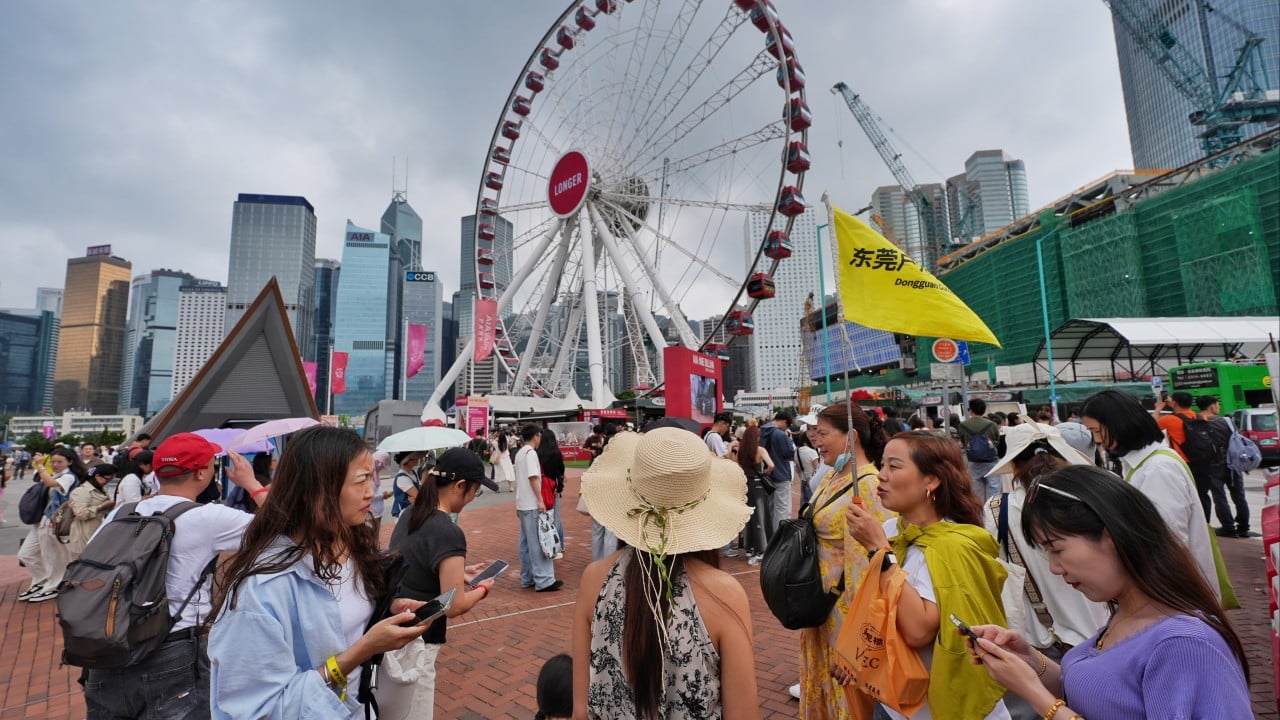
When Hong Kong immigration officers raided several tourist hotspots and arrested visitors running illicit commercial operations, authorities broadcast a clear message regarding visa abuse. That high-profile enforcement blitz targeted individuals operating underground one-stop shop services, blending tour guiding, photography, and cosmetic consultations into convenient packages marketed entirely online. Yet beneath the theater of state intervention lies a persistent reality. The crackdown has failed to deter operators. Advertisements for these clandestine travel services continue to flood mainland Chinese social media channels unabated, exposing the structural limits of conventional border policing against decentralized digital commerce.
The Anatomy of the Shadow Service Economy
To understand why traditional enforcement struggles, one must examine how modern cross-border travel intersects with mobile-first entrepreneurship. For decades, regional tourism relied on licensed brick-and-mortar agencies, regulated tour operators, and predictable commercial pipelines. Tourists booked package tours through established channels, stayed in authorized hotels, and utilized accredited local guides. That traditional structure has fractured completely. Social media platforms with massive user bases transformed individual smartphones into mobile storefronts. A visitor entering Hong Kong on a standard tourist endorsement can now market private photography sessions, bespoke itinerary planning, and grey-market aesthetic treatments directly to consumers across the border within minutes, bypassing traditional corporate intermediaries. For a more detailed analysis into similar topics, we recommend: this related article.
How Digital Platforms Redefine Cross-Border Commerce
The financial incentives driving this underground economy are straightforward. Domestic economic pressures and shifting employment markets in mainland China have pushed many young workers to seek alternative income streams outside traditional corporate structures. Operating an unlicensed mobile service in Hong Kong requires virtually zero capital overhead. There is no storefront rent to pay, no commercial licensing fee to clear, and no payroll tax to remit. An individual can cross the border, conduct three photo shoots at Victoria Peak, manage a private cosmetic consultation in a rented apartment, and return home the same evening. The profit margins dwarf what these operators could earn in standard entry-level employment domestically, creating a powerful financial magnet that administrative penalties struggle to neutralize.
The Structural Limits of Border Enforcement
Immigration authorities face an uphill battle when trying to distinguish a legitimate sightseer from an illicit service provider. Under local statutes, visitors entering on standard tourist endorsements are strictly prohibited from taking up employment, whether paid or unpaid, or establishing any business without prior authorization from the Director of Immigration. Enforcing this rule sounds simple in theory. In practice, it requires catching perpetrators in the act of exchanging money or proving commercial intent before services are rendered. When an investigator checks a phone, encrypted chat applications and disappearing messages obscure the paper trail. Transactions occur via digital payment networks rooted outside local jurisdiction, leaving enforcement agents with circumstantial evidence that rarely satisfies strict evidentiary standards in court. For additional details on the matter, comprehensive coverage can also be found at Associated Press.
Historical Parallels in Regional Trade
The historical precedent for this underground activity runs deep within the region's commercial fabric. Long before social media apps facilitated mobile photography and beauty consultations, parallel trading syndicates exploited the fluid boundary between Shenzhen and Hong Kong. Small-scale traders carried consumer goods, infant formula, and luxury items across control points to arbitrage price differences and tax structures. Authorities spent years deploying baggage weight limits, restricted cross-border endorsement quotas, and specialized customs surveillance to suppress parallel trading. While those heavy-handed measures curtailed large-scale physical smuggling, the entrepreneurial energy simply mutated. Instead of hauling physical commodities across the border, modern operators now traffic in intangible services and experiential commodities that leave no bulky cargo on railway platforms.
The Squeeze on Legitimate Local Operators
The consequences of this unregulated underground trade ripple through the broader economy, generating intense friction with local business owners. Legitimate travel agencies, licensed tour guides, and certified photography studios face severe disadvantages when competing against shadow operators who pay no taxes and observe zero safety regulations. Traditional operators are bound by statutory labor laws, public liability insurance requirements, and commercial rental overheads. When underground competitors undercut market rates by fifty percent while offering identical or superior digital marketing reach, licensed enterprises bleed revenue. This economic disparity has amplified resentment among local merchants who watch tax-paying businesses struggle while transient operators exploit local infrastructure without contributing to public coffers.
Consumer Risks in the Unregulated Gray Market
Consumer protection also vanishes in this unregulated gray market. When a tourist hires a licensed tour operator or a registered clinic in Hong Kong, statutory bodies oversee dispute resolution, product safety standards, and consumer rights. If a cosmetic procedure performed by an unlicensed provider in a residential flat goes wrong, the victim has virtually no legal recourse. They cannot appeal to the Travel Industry Authority or seek justice through local consumer councils without exposing their own complicity in a breach of visa conditions. Safety protocols are routinely bypassed in favor of convenience and low cost, turning residential apartments into makeshift salons and crowded public spaces into unmanaged commercial backdrops.
Why Periodic Sweeps Fail to Stem the Tide
Government responses have traditionally relied on periodic inter-departmental operations, combining police forces, immigration officers, and regulatory bodies into sudden sweeps. These operations yield dramatic headlines and a handful of detained suspects, satisfying public demand for visible action. However, the underlying economic engine remains untouched. Arresting four or five individuals in a weekend sweep is equivalent to bailing out a sinking ship with a teaspoon while the hull remains breached. The digital infrastructure that powers these underground services is inherently resilient. If one user account is banned or detained, creators simply launch new profiles under different aliases, adapting their marketing vocabulary to evade automated keyword filters used by platform monitors.
The Spatial and Environmental Fallout
The economic fallout extends to municipal cleanliness and spatial management in densely packed districts. Unlicensed tour groups and freelance photographers routinely swarm public landmarks, obstructing pedestrian walkways, crowding public transportation nodes, and straining municipal sanitation services. Neighborhoods that rely on orderly tourism management find their public amenities overwhelmed by uncoordinated commercial activity. Local district councils have repeatedly petitioned the administration for stronger deterrents, arguing that unchecked commercial foot traffic degrades the living environment for residents who must navigate congested streets daily. Yet municipal departments often find their jurisdiction constrained by evidentiary hurdles when attempting to penalize transient operators who disperse before citations can be issued.
Platform Governance and Regulatory Blind Spots
Platform governance represents another critical battleground that remains largely unmapped by existing laws. Social media companies operating across jurisdictions face different liability standards regarding user-generated commercial advertisements. While mainland platforms enforce community guidelines against illegal activities, underground operators easily circumvent keyword detection by utilizing slang, coded terminology, and encrypted contact exchanges. A prospective client searching for cosmetic services or bespoke tours in Hong Kong encounters a dense network of recommendations and promotional posts that mimic ordinary travel blogs. By the time regulatory bodies flag an illicit advertisement, the account holder has altered their digital footprint or migrated to an alternative platform.
The failure of the recent crackdown highlights a broader governance dilemma in the modern administrative state. Law enforcement frameworks designed for an analog era of paper visas and fixed storefronts struggle to regulate fluid, peer-to-peer digital economies. As long as economic disparities persist alongside frictionless cross-border mobility and omnipresent social media marketing, individuals will find ways to monetize tourist endorsements. Resolving this tension requires more than sporadic arrests or harsher statutory penalties. It demands a fundamental reassessment of how regulatory bodies monitor digital commerce platforms, hold hosting services accountable for illicit advertisements, and adapt legal definitions of employment to fit the gig economy. Until enforcement strategies evolve beyond reactive policing, the underground one-stop shop will remain a fixture of the regional economy, operating in plain sight just beneath the threshold of legal deterrence.