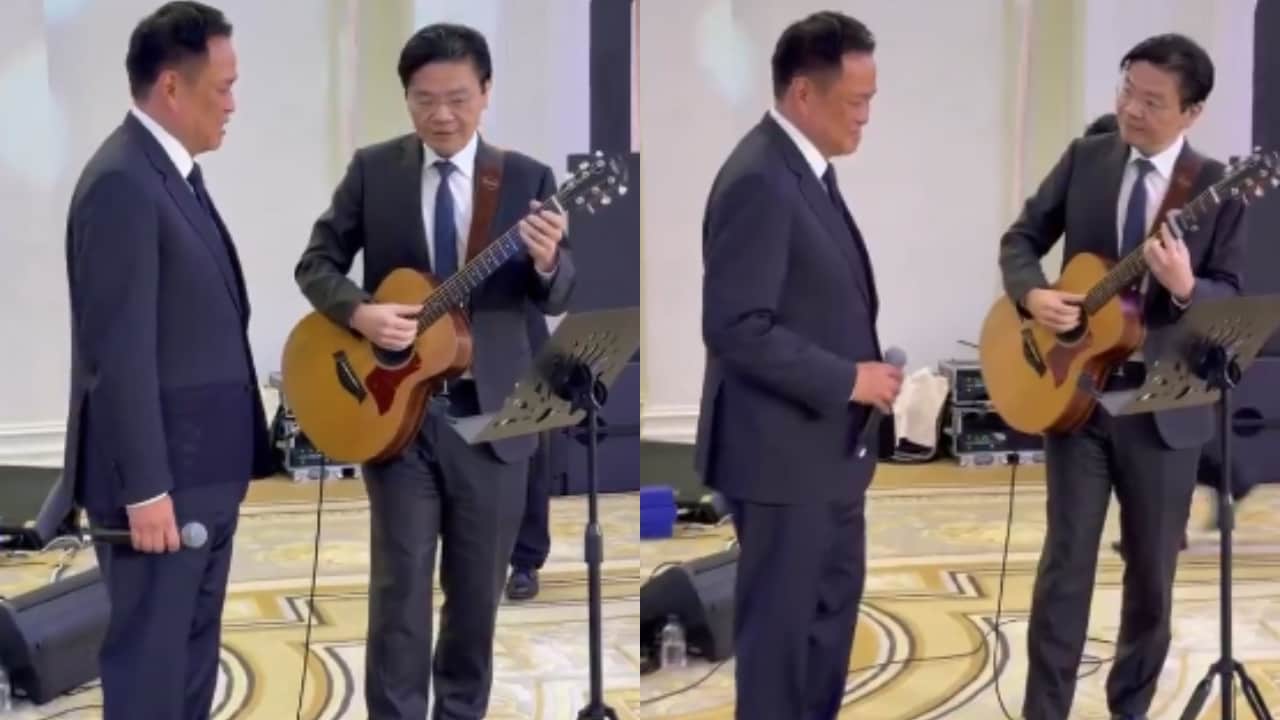
When Singapore Prime Minister Lawrence Wong strapped on an acoustic guitar and Thai Prime Minister Anutin Charnvirakul stepped up to the microphone at Government House in Bangkok, the internet quickly categorized it as a cute, viral diplomatic photo-op. They played The Beatles’ “Let It Be” and Bob Dylan’s “Blowin’ in the Wind”. Beneath the social media applause and the superficial novelty of heads of state trading policy binders for classic rock chords, a much more calculating geopolitical reality was at play. This was not merely a random karaoke session. It marked the first Thailand-Singapore Leaders' Retreat in eleven years, occurring at a moment when Southeast Asia faces severe supply chain fractures, intensifying maritime friction in the South China Sea, and a fractured regional leadership landscape under ASEAN.
Statecraft rarely relies on spontaneous joy. Every minute of a prime ministerial visit is choreographed down to the second by ministries of foreign affairs that treat optics as strategic currency. When two nations go more than a decade without holding their premier bilateral summit format, the resumption requires an immediate injection of trust. Trust cannot be manufactured through joint communiqués on cross-border QR code payments or artificial intelligence frameworks alone. It requires human friction or, in this case, calculated harmony. By stepping into a shared musical performance, Wong and Anutin signaled an alignment that traditional diplomatic cables struggle to capture.
The Economics of Soft Power in Southeast Asia
Bilateral relations between Singapore and Thailand run deep, anchored by decades of trade, defense training, and historical continuity. Yet, leadership transitions in both capitals have necessitated a recalibration of how these two distinct economies interact within the broader Association of Southeast Asian Nations. Singapore remains the financial anchor and logistics powerhouse of the region, hyper-efficient and perpetually anxious about external supply shocks. Thailand acts as an agricultural giant, an industrial manufacturing hub, and a political ecosystem characterized by complex domestic coalitions and fluid alliances.
The official agenda at Government House covered substantive vulnerabilities. Both administrations face mounting pressures regarding energy security, food stability, and the relentless creep of transnational cybercrime. Singapore needs reliable green energy corridors and food import diversification. Thailand needs foreign direct investment and technological modernization to escape middle-income traps that have stymied its growth for years.
When the formal memoranda of understanding were signed, the documents addressed supply chain resilience and digital economy frameworks. But the real architecture of an alliance rests on the interpersonal rapport of its chief executives. Lawrence Wong, stepping further into his tenure as Singapore's leader, has cultivated a persona that blends technocratic competence with approachable candor. Anutin Charnvirakul, a veteran political operator known for navigating Thailand's turbulent political currents with pragmatism, understands the value of disarming charm.
Why Classic Rock Resonates in Modern Diplomacy
The choice of repertoire is worth examining through an analytical lens. Selecting American and British counterculture anthems from the 1960s and 1970s is a deliberate exercise in neutral cultural diplomacy. Songs like “Let It Be” and “Blowin’ in the Wind” carry universal themes of endurance, peace, and questioning authority, devoid of the specific regional baggage that might come with Asian pop culture or localized folk traditions. They represent a shared Westernized elite education and a common globalized vocabulary that transcends local language barriers.
For hypothetical context, if two leaders from opposing ideological blocs attempted a similar acoustic display, it would read as absurd or forced. But between Singapore and Thailand—both market economies deeply integrated into global trade networks—singing Dylan and Lennon-McCartney underscores a shared worldview. It tells domestic audiences and external observers, particularly major powers like the United States and China, that these two middle powers operate within a shared cultural and strategic comfort zone.
This performance also serves an internal domestic consumption purpose. For Anutin, hosting a high-level Singaporean delegation with such relaxed hospitality projects confidence and stability to a domestic audience that watches political leadership for signs of vulnerability. For Wong, projecting ease outside the sterile confines of the Istana demonstrates diplomatic maturity and regional adaptability at a time when ASEAN faces sharp internal divisions over Myanmar and great power competition.
The Geopolitical Subtext Behind the Chords
Beyond the viral clips circulating on social media platforms, the timing of this eleven-year hiatus break carries heavy strategic weight. ASEAN as an institution faces persistent questions regarding its relevance and its ability to forge consensus amid intense US-China rivalry. Smaller member states often find themselves squeezed, forced to navigate economic coercion and diplomatic pressure from competing superpowers.
In this environment, bilateral ties between core ASEAN nations act as stabilizing sub-networks. Singapore and Thailand do not need to form a formal military pact to exert influence; their alignment on digital standards, food security, and regional logistics helps anchor the broader regional bloc. When the leaders of these two nations share a stage and harmonize on classic anthems, they are projecting an image of regional resilience. They are demonstrating that despite domestic political turbulence or bureaucratic inertia, the core machinery of Southeast Asian diplomacy can still find a rhythm.
The guitars will be packed away, the official delegations have returned to their respective capitals, and the dense policy papers on artificial intelligence and energy grids will face the unyielding test of bureaucratic implementation. Yet, the image of a Singaporean prime minister on guitar and a Thai prime minister on vocals lingers as a reminder that international relations are ultimately driven by individual actors navigating shared uncertainties under the bright glare of public scrutiny.
When Diplomacy Hits a Whole New Level: Thailand and Singapore PMs Sing 'Let It Be' Together
This video covers the official state visit and the unexpected musical performance by the prime ministers following their bilateral talks in Bangkok.