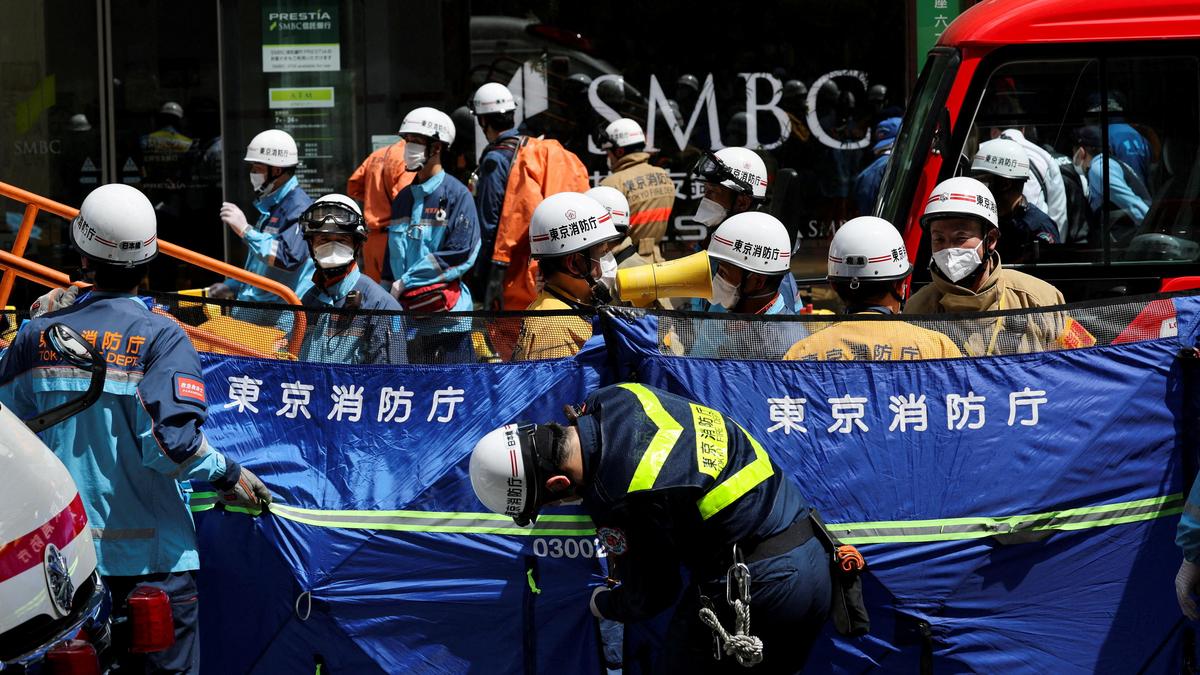
The headlines reporting on the recent disruption at Tokyo’s luxury Ginza Six shopping complex followed a familiar, comforting script. Around 20 people treated for sore throats. A man spraying an irritant near a ground-floor ATM. Traces of capsaicin, the active component in standard self-defense pepper spray, found on the wall. Minor injuries, light symptoms, and a swift response by first responders in hazmat suits.
For a public desperate to maintain the illusion of absolute urban safety, the narrative settled neatly into the category of an isolated nuisance. But viewing this solely through the lens of a minor local crime misses the broader, more concerning reality. This was not just a case of a single reckless individual. It exposed a significant vulnerability in modern public infrastructure. The incident at Ginza Six reveals how easily standard security protocols can be bypassed, how rapidly a low-tech chemical agent can paralyze a premier commercial space, and why the current approach to public safety is failing to adapt to soft-target vulnerabilities.
The Anatomy of a Soft Target
Security in high-end commercial properties has historically focused on loss prevention and visible deterrence. Shoplifting, property damage, and unruly behavior are the traditional targets of retail security teams. This approach leaves a glaring blind spot. The ground floor of any major shopping center is designed to be highly accessible, featuring open entryways, minimal barriers, and heavy foot traffic.
At Ginza Six, the choice of location was deliberate or tactically ideal. The perpetrator chose a high-traffic area near an automated teller machine. ATMs are natural bottleneck points where individuals stand still, focused entirely on a screen, completely unaware of their immediate surroundings.
When the irritant was released, the building's architectural design worked against the occupants. Modern luxury malls utilize massive, open-concept atriums and centralized HVAC systems designed to maximize airflow and aesthetic appeal. These same systems, however, are highly efficient at distributing airborne particles. What began as a localized release near a banking terminal quickly migrated through the immediate zone, affecting dozens of shoppers who were nowhere near the source.
The immediate physical reactions reported by victims—scratchy throats, coughing, and sudden upper respiratory numbness—illustrate the efficiency of capsaicin deployment in enclosed environments. It does not require a military-grade weapon to induce mass panic or compel an evacuation. A standard canister of concentrated pepper spray can effectively deny access to thousands of square feet of real estate within seconds.
The Friction in First Response
The reaction from Tokyo’s emergency services was visually impressive. Dozens of fire engines lined the upscale streets of Ginza. First responders donned heavy hazmat gear, setting up specialized decontamination trucks to evaluate citizens. From a public relations standpoint, it demonstrated overwhelming readiness. From an operational standpoint, it highlighted a systemic lag.
While emergency crews treated the scene with the abundance of caution required for an unknown chemical threat, the actual containment of the site told a different story. Even as the main roadway was blocked and stretchers were deployed, shoppers continued to enter and exit the building through secondary side doors.
This operational disconnect points to a fundamental flaw in how public private partnerships handle mid-tier emergencies. Property management companies are hesitant to execute total lockdowns or complete building evacuations unless absolutely forced by authorities, fearing the immense economic loss and reputational damage that accompanies a shutdown. By treating the perimeter as porous while simultaneously deploying hazardous material units at the front facade, authorities sent contradictory signals to the public.
The reality is that if the substance sprayed had been a more toxic agent rather than a standard commercial irritant, this delayed perimeter control would have resulted in significantly higher exposure rates. The protocol relied heavily on the benign nature of the substance, a luxury that modern threat environments do not guarantee.
The Myth of Total Safety
Japan consistently ranks among the safest nations globally, a reputation built on strict firearm regulations, low violent crime indices, and a deeply ingrained cultural adherence to social order. This exceptional level of safety, however, has bred an environment of hyper-vulnerability.
Because overt acts of violence are rare, security infrastructure in public spaces remains largely passive. Security personnel in major commercial hubs are rarely equipped, trained, or psychologically prepared to intervene in active, fast-moving physical assaults. They function primarily as concierges and traffic coordinators.
When an anomaly occurs, the systemic response relies on historical precedent rather than active threat mitigation. This reliance is visible in how the public behaves during these events. Eyewitness accounts from the Ginza Six incident detail individuals walking toward the commotion out of curiosity, rather than moving away from an unidentified hazard. The natural assumption among bystanders was that a minor fire or a technical malfunction had occurred, leading them straight into the path of an airborne chemical irritant.
This lack of public situational awareness, combined with a passive security posture, turns every major transportation hub, department store, and entertainment venue into a highly vulnerable target. The threat does not need to stem from organized political motives to be highly disruptive. Personal grievances, acute mental health crises, or simple malicious intent can shut down a multi-million-dollar economic engine using items purchased legally online.
Rethinking Air Space Security
Addressing this vulnerability requires moving beyond the traditional reliance on visible guards and security cameras. The real battleground in public asset protection is no longer just the floor space; it is the air quality.
To secure public indoor environments against chemical irritants, properties must invest in localized, smart environmental engineering.
- Zoned HVAC Isolation: Modern building ventilation systems must possess the capability to instantly isolate specific zones upon the detection of an airborne contaminant. Rather than circulating air throughout an entire floor, an isolated zone can contain a plume to its point of origin, protecting the broader occupant population.
- Rapid Deployment Exhaust Systems: High-risk areas such as ATM vestibules, main entrance lobbies, and public restrooms require dedicated, high-velocity exhaust mechanisms that can purge air directly outside the building envelope at the push of a button.
- Real-Time Air Quality Monitoring: Integrating particulate sensors capable of identifying sudden spikes in aerosolized compounds can provide security teams with immediate alerts before physical symptoms manifest across a crowd.
Implementing these structural changes is costly and logistically complex. Property developers and real estate investment trusts will inevitably resist mandates that increase capital expenditure for low-probability events. However, as urban density increases and the accessibility of incapacitating agents grows, the cost of inaction will eventually be measured in prolonged business closures, legal liabilities, and compromised public trust.
The incident in Ginza was a minor warning. It demonstrated that the current methods of securing premium public spaces are ill-equipped to handle even the most basic airborne disruptions. Relying on the rarity of violent crime as a primary defense strategy is no longer a viable policy. The infrastructure supporting public life must evolve from a stance of passive observation to active, structural resilience.


:max_bytes(150000):strip_icc()/line-app-logo-ccdacd0f7c344b3d9d4847edcb90733d.jpg)