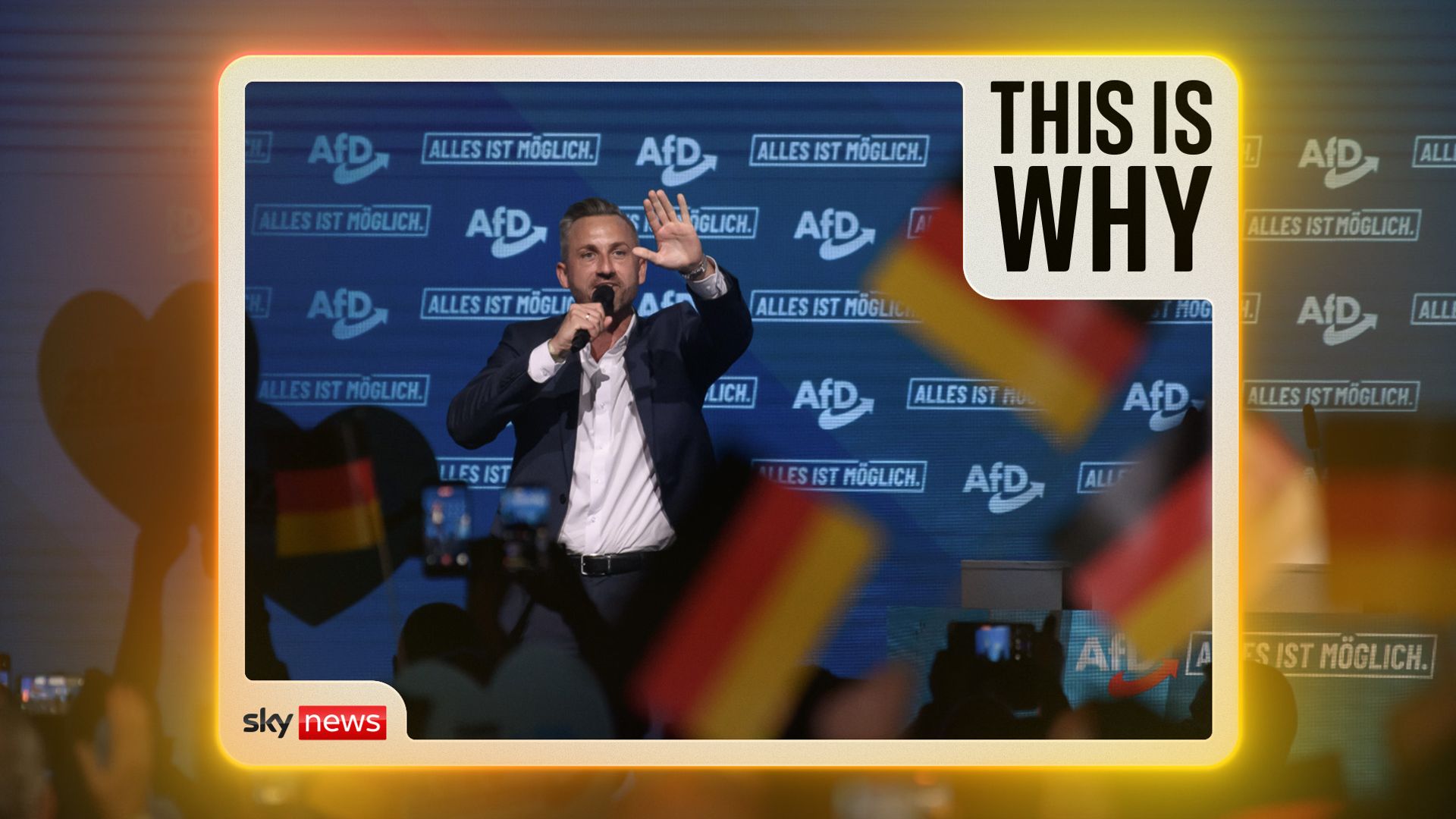
The political landscape of Europe's largest economy is fracturing at an unprecedented velocity, bringing the far-right Alternative for Germany (AfD) to the brink of an historic state-level victory. In eastern industrial strongholds like Saxony-Anhalt, where polling numbers hover near forty percent, the traditional postwar firewall constructed by mainstream parties faces structural collapse. This is not a sudden electoral anomaly. It represents the culmination of a decade-long institutional failure, economic stagnation, and a widening chasm between Berlin's political elite and citizens inhabiting the former East German states.
Decades after reunification, the structural disparities between western and eastern Germany remain stark. While federal leaders preach steady-state recovery, industrial towns across Saxony-Anhalt and Thuringia experience a persistent erosion of public services, youth drain, and economic anxiety. The AfD capitalized on this foundational resentment. By marrying welfare chauvinism with uncompromising anti-immigration rhetoric, the party transformed from an intellectual eurosceptic club founded in 2013 into a mass working-class movement.
Mainstream political entities, particularly the Christian Democrats (CDU) and the Social Democrats (SPD), miscalculated the appeal of right-wing populism. Chancellor Friedrich Merz assumed that adopting harsher rhetoric on border security would drain support from the populist alternative. Instead, imitation legitimized the original message. Voters looking for systemic disruption naturally gravitated toward the political force that owned the narrative from day one, rather than settling for centrist approximations.
The institutional response has relied heavily on exclusion. The democratic firewall—the absolute refusal of any established party to form coalitions with the AfD—kept the party out of executive offices at the state and federal levels. Yet, defensive containment does not halt ideological momentum. As polling numbers approach absolute majorities in specific regional parliaments, exclusion transforms into a double-edged sword. When nearly half a state's electorate votes for a party, shutting them out of governance entirely risks alienating those voters from democracy itself.
Simultaneously, state surveillance agencies and courts grapple with how to categorize the party. Official designations labeling regional branches as confirmed right-wing extremist organizations trigger intense legal battles and temporary injunctions. These administrative measures often backfire in the public arena. Party leadership frames every judicial hurdle as proof of a corrupt establishment attempting to silence the working class, feeding a narrative of institutional persecution that deepens voter loyalty.
The implications extend far beyond regional governance. If a far-right party secures executive control over a German state, it gains direct authority over local policing, public broadcasting, and educational curricula. Cultural institutions, from historical museums to artistic foundations, face prospective funding overhauls. The normalization of radical nationalist policies inside a German state house dismantles a taboo that has held firm since 1945.
Addressing this crisis requires more than moral condemnation or procedural gatekeeping. The economic foundations of eastern Germany require targeted, massive public investment that directly counters rust-belt decay, rather than austerity packages designed in distant capital offices. Until mainstream parties address the structural root causes of regional disenfranchisement, the political earthquake reshaping Germany will continue to expand its epicenter.