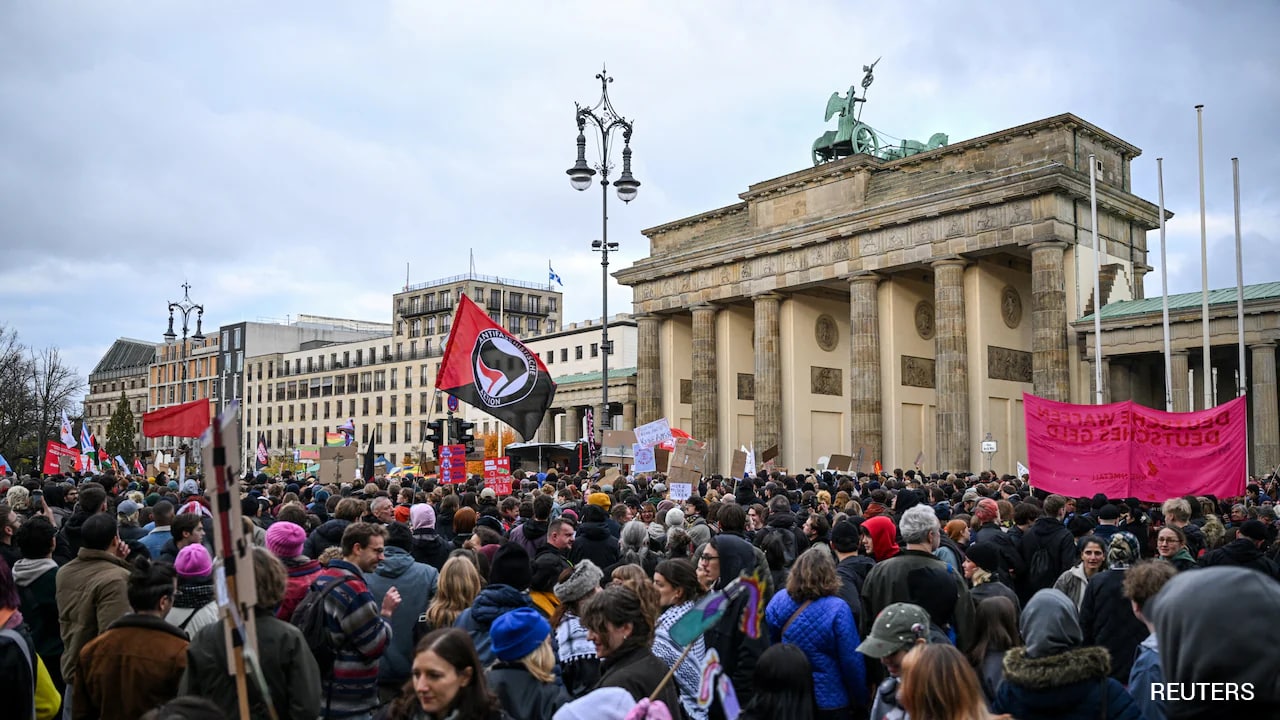
When street violence erupts during a youth demonstration in Germany, political rhetoric moves faster than police reports. A German minister pointing fingers at migrant communities after a Gen Z protest riot captures a recurring flashpoint in European civic life. Yet reducing complex street unrest to a single demographic label misses how modern youth protests actually escalate, how political incentives shape immediate blame, and what happens on the ground when grievances collide with crowd dynamics.
Decades of covering European politics and urban unrest teach a simple rule. The first official explanation after a riot rarely captures the full picture. Officials speak under intense media pressure, coalition strain, and voter anxiety. A minister blaming migrant communities offers an immediate, easily digestible narrative for voters already primed to view immigration through a security lens. Whether that blame reflects verified policing data or political instinct is a separate question that requires closer scrutiny.
Why Blame Lands So Fast After Street Violence
Chaos in a city square creates an information vacuum. Smoke rises, sirens wail, shop windows shatter, and camera phones record seconds of violence stripped of context. Politicians step into that vacuum because silence looks like weakness.
Blaming migrant communities serves a distinct strategic purpose in German public debate. It speaks directly to law-and-order constituencies and pushes back against rival parties that frame integration or policing as the root problem. It also shifts attention away from harder institutional questions, such as crowd-control tactics, youth alienation, or housing and economic pressures that affect young people across background lines.
That does not mean demographic factors are automatically irrelevant in every incident. Urban neighborhoods with higher concentrations of young men, socioeconomic strain, or strained ties to local institutions can experience sharper friction when demonstrations turn confrontational. Still, jumping from visible rioters to a sweeping indictment of migrant communities conflates individual criminal acts with broad social groups.
Consider a hypothetical example to see how distortion happens in real time. Imagine a Saturday evening march led by university students and apprentices over rising rents and transit costs. As dusk falls, smaller groups of masked agitators push toward the front lines, hurl bottles at officers, and set trash bins ablaze. An arrest tally released the next morning lists several suspects with migration backgrounds alongside native-born youths. A minister highlights the migration angle in a morning broadcast interview, turning a multi-layered breakdown of public order into a story about cultural or immigrant unrest.
How Gen Z Protests Shift From Marching to Rioting
Gen Z protests behave differently than older waves of street activism. Younger demonstrators organize rapidly across encrypted chats and short-form video feeds, often without the rigid discipline of traditional unions or party youth wings. A rally can draw thousands of peaceful participants who leave early, leaving behind a smaller, more volatile crowd as night sets in.
Escalation rarely comes from one single trigger. It builds through feedback loops.
- Crowd compression: Narrow streets, heavy police cordons, and sudden kettle tactics turn tense standoffs into claustrophobic bottlenecks where panic and anger spread quickly.
- Provocateur dynamics: Small blocs of people looking for confrontation use larger youth marches as cover, knowing that chaotic scenes travel farther online than peaceful speeches.
- Online amplification: Clips of clashes circulate within minutes, drawing outside thrill-seekers or counter-protesters who have little connection to the original Gen Z grievance.
- Policing friction: Young protesters who feel over-policed or dismissed by authorities often react more defensively when officers move in to clear a square.
When a minister frames the resulting riot primarily around migrant communities, the Gen Z dimension almost disappears. Young people protesting economic insecurity, climate policy, educational strain, or foreign policy get recast as bystanders or props in an immigration conflict. That framing distorts the motives of the majority who marched peacefully and obscures the operational mechanics of how a crowd tips into violence.
What Policing Data and Civic Reality Actually Show
Serious analysis requires separating street-level arrest figures from political talking points. In German cities, police forces track offenses, suspect demographics where recorded, and tactical deployments, yet raw arrest counts have limits. Arrests reflect where officers concentrate manpower, which neighborhoods or subgroups are scrutinized more closely, and who gets caught before dispersing.
Even when suspects with migration backgrounds appear in riot reports, context matters. Many young people with roots in Turkey, Syria, Eastern Europe, or elsewhere were born and raised in Germany. Calling them "migrant communities" lump together recent arrivals, long-settled families, and German citizens in ways that obscure real social differences.
Integration Gaps Versus Street Opportunism
Long-term integration challenges in parts of Germany are real and well documented. School attainment gaps, labor market hurdles, and crowded urban housing hit some young people hard. Ignoring those realities out of political politeness is just as unhelpful as exaggerating them into a total explanation for every riot.
At the same time, street riots attract opportunists across lines. Football hooligans, anti-authoritarian radicals, and local youths looking for chaos often show up at high-profile clashes regardless of background. Treating every riot as proof of a single community's behavior mistakes a symptom of public disorder for a complete diagnosis.
The Cost of Oversimplified Narratives
Oversimplified blame carries heavy civic costs. When officials point a finger at migrant communities before investigations mature, trust erodes on multiple fronts at once.
Young people from immigrant backgrounds who follow the law and care about democratic participation feel tarred by association. Over time, that breeds alienation rather than civic belonging. Meanwhile, citizens who worry genuinely about neighborhood safety and rule of law may feel that politicians are offering slogans instead of practical policing, youth outreach, and court follow-through.
Political Incentives Behind the Rhetoric
Politicians operate inside a media ecosystem that rewards sharp lines over nuance. A careful statement noting that investigations are ongoing, that multiple groups were involved, and that police are reviewing crowd-control procedures rarely trends on social media. A punchy line about migrant communities does.
Coalition politics adds another layer. When governing parties face pressure from opposition factions on immigration and public security, ministers often harden their tone to prove toughness. That posture can rally core supporters in the short term while deepening polarization across the broader electorate.
There is also a generational blind spot at work. Older decision-makers sometimes struggle to read how Gen Z experiences economic stress and institutional distrust. Framing youth unrest through a familiar immigration lens allows leaders to fight an old argument rather than confront new pressures facing young Germans.
Practical Ways to Judge Future Claims
Readers following coverage of future protests and riots in Germany do not have to take either extreme at face value. A few basic habits cut through the noise.
- Wait for verified breakdowns: Early statements often mix rumors, unconfirmed arrest tallies, and partisan framing. Official police summaries and prosecutor findings usually take days or weeks to clarify who did what.
- Check the timeline of the unrest: Look at whether violence broke out at the start of a march or hours later after speeches ended and crowds fractured.
- Separate agitators from demonstrators: A noisy or violent fringe can hijack a crowd of thousands without representing the Gen Z movement behind the banner.
- Watch for unverified labels: Pay attention to whether speakers distinguish between recent arrivals, German-born citizens of migrant heritage, and broader neighborhood disorder.
Street violence in a democratic society demands firm, proportionate law enforcement and fair prosecution of anyone who harms people or property. It also demands honesty about why young people take to the streets and why political leaders choose certain scapegoats when tempers flare. A riot is a failure of public order in the moment, and a test of democratic maturity long after the smoke clears.


