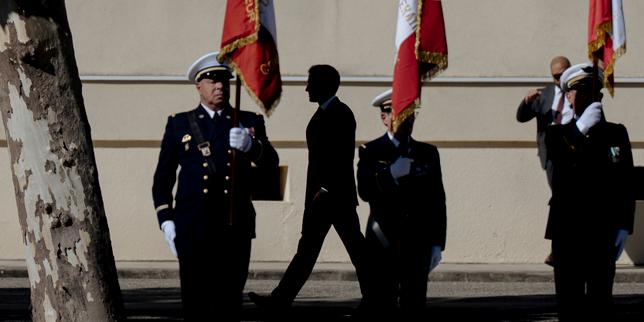
Forget everything you thought you knew about the old debates over mandatory conscription. France just flipped the script. A brand-new, purely military, and entirely voluntary service has officially kicked off, bringing an initial cohort of 3,000 young recruits straight into the barracks.
If you are trying to understand why Paris is suddenly pivoting toward hardened defense readiness, you have to look past the political noise. This isn't a rushed PR stunt. It is a calculated, strategic recalibration designed to patch critical operational gaps in an increasingly volatile European security landscape. Let's break down how this program actually works, who it targets, and why it matters right now. Learn more on a connected subject: this related article.
Why France Scrapped the Old Playbook
For years, the political establishment argued over civilian youth schemes like the heavily criticized and ultimately phased-out Service National Universel (SNU). Critics called it bloated, expensive, and directionless. The military largely agreed. They didn't need teenagers spending two weeks folding t-shirts and singing anthems; they needed operational thickness, technical competence, and physical readiness.
When President Emmanuel Macron announced the shift toward a rigorous, ten-month military-only track, he made one thing crystal clear: compulsory conscription is dead. Bringing back a universal draft for hundreds of thousands of eighteen-year-olds is logistically impossible and fundamentally misaligned with how modern professional armies operate. More analysis by NBC News delves into related views on this issue.
Instead, the focus shifted to a selective, high-standard model inspired by Northern European frameworks like Norway's. The goal is depth over breadth.
Anatomy of the Ten-Month Commitment
This new service isn't a weekend workshop. It is a full ten-month professional immersion structured into two distinct phases.
First comes a rigorous one-month initial military training block. Recruits learn the fundamentals of unit discipline, weapon handling, field survival, and collective cohesion. They wear the uniform, pull their weight, and live by the exact same rules as active-duty soldiers.
Once past that initial filter, the remaining nine months deploy these young volunteers directly into active military units across mainland France and overseas territories. They aren't sitting in classrooms. They participate in routine operational support, logistical upkeep, infrastructure defense, and specialized technical missions.
And no, they aren't working for free. Recruits pull a gross monthly salary starting around 800 euros, alongside fully covered housing, food, and gear.
Who Makes Up the First Cohort
The initial wave consists of 3,000 volunteers, heavily weighted toward eighteen and nineteen-year-olds treating the program as a structured gap year before university. Roughly twenty percent of the slots stretch up to age twenty-five, drawing in specialists like engineering students, IT experts, and aspiring medics who want to apply their civilian skills in a tactical environment.
Getting in isn't automatic. Candidates must pass comprehensive medical screenings, security clearance background checks, and motivational evaluations. The military wants people who actually want to be there.
Crucially, completing this service doesn't leave young adults stranded. For university students, the time spent is officially recognized, and financial stipends don't mess up student grant calculations. Furthermore, upon completion, every participant automatically transitions into the operational reserve pool for five years. It builds a massive, trained backbone for national resilience without resorting to forced drafts.
The Financial and Political Reality
Scaling up a project like this requires serious cash. Paris injected an extra two billion euros into the budget via updates to the military programming law to fund infrastructure, equipment, and pay.
The long-term roadmap is aggressive. From the initial 3,000 recruits, the target scales to 10,000 per year by 2030, with an ultimate ambition of reaching 50,000 annual volunteers by 2035 when combining all specialized military volunteer streams.
Critics from across the political spectrum have voiced predictable skepticism. Opposition figures on the left call the move alarmist, while certain centrists question the sheer logistical speed of the rollout. Yet, the government's stance remains blunt: pretending geopolitical threats do not exist doesn't make them disappear.
If you are a young French citizen weighing your options after high school, this program offers a unique path to test your limits, earn a real paycheck, and pick up leadership skills that look incredible on any resume. The barracks are open, the first cohort is already in uniform, and the French military is betting heavily on this new generation of volunteers.


