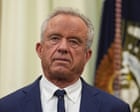
Federal financial disclosures rarely arrive with clean hands. When Health Secretary Robert F. Kennedy Jr. submitted his mandatory transparency forms, they revealed a dense web of high-value transactions, including four million dollars in book advances and hundreds of thousands of dollars in travel-related gifts from tight-knit political allies. For an administration riding the populist wave of the Make America Healthy Again platform, the numbers tell an older, more cynical story about how modern political movements transform ideological fervor into private capital.
The core of the disclosure points directly to two separate two-million-dollar advances originating from Skyhorse Publishing, a house managed by longtime associate Tony Lyons. Lyons is not merely a traditional publisher navigating standard commercial risks. He occupies a central administrative role within the broader ecosystem of political action committees and advocacy groups designed to promote the MAHA agenda. When the person bankrolling the manuscripts also commands the political apparatus backing the cabinet official, the boundary between commercial enterprise and political patronage dissolves entirely.
Financial arrangements of this magnitude demand rigorous scrutiny under federal ethics frameworks. Watchdogs have spent decades cataloging the subtle ways executive branch officials monetize their proximity to power without explicitly violating the letter of the law. In this case, the defense relies on technical compliance. Pledges to abstain from active promotion or marketing while in public service are offered as a firewall against conflicts of interest. Yet history demonstrates that massive upfront compensation for unwritten or nascent manuscripts functions less like a standard market transaction and more like a deferred retainer.
Beyond the publishing checks, the disclosures itemized substantial personal subsidies. Security executive Gavin de Becker provided roughly one hundred twenty-six thousand dollars in Washington housing accommodations alongside close to one hundred fifty thousand dollars in private air travel. That ledger features luxury itineraries, including a forty-five-thousand-dollar excursion to Greece and a ninety-seven-thousand-dollar journey to Fiji. High-end travel subsidies of this scale test the absolute limits of gift-ban exemptions, forcing the public to accept that high-ranking public servants require private benefactor support to sustain their personal logistics.
The tension inherent in these disclosures goes to the heart of populist credibility. The entire rhetorical architecture of the health movement rests on an adversarial stance toward entrenched elites, corporate capture, and hidden financial influence. When the movement's titular leader accumulates millions from inner-circle operatives who simultaneously monetize the brand through corporate sponsorships and political fundraising, the optics clash violently with the message. Outsider politics requires an immaculate separation between public advocacy and private accumulation. Every million-dollar check from a movement insider provides fresh ammunition to critics who argue that anti-establishment crusades are simply lucrative branding exercises for a privileged few.
Defenders of the arrangement will argue that authors possess a commercial right to their intellectual property and that market demand dictates book values. That argument ignores the reality of political economics. A four-million-dollar advance is not standard compensation for an essay collection on public wellness; it is an equity stake in political influence. When publishers tied directly to a political faction bankroll the leader of that faction while simultaneously seeking influence over federal health policy, the transaction moves past mere commerce. It becomes an investment vehicle, quietly yielding returns long after the ink dries on the disclosure forms.