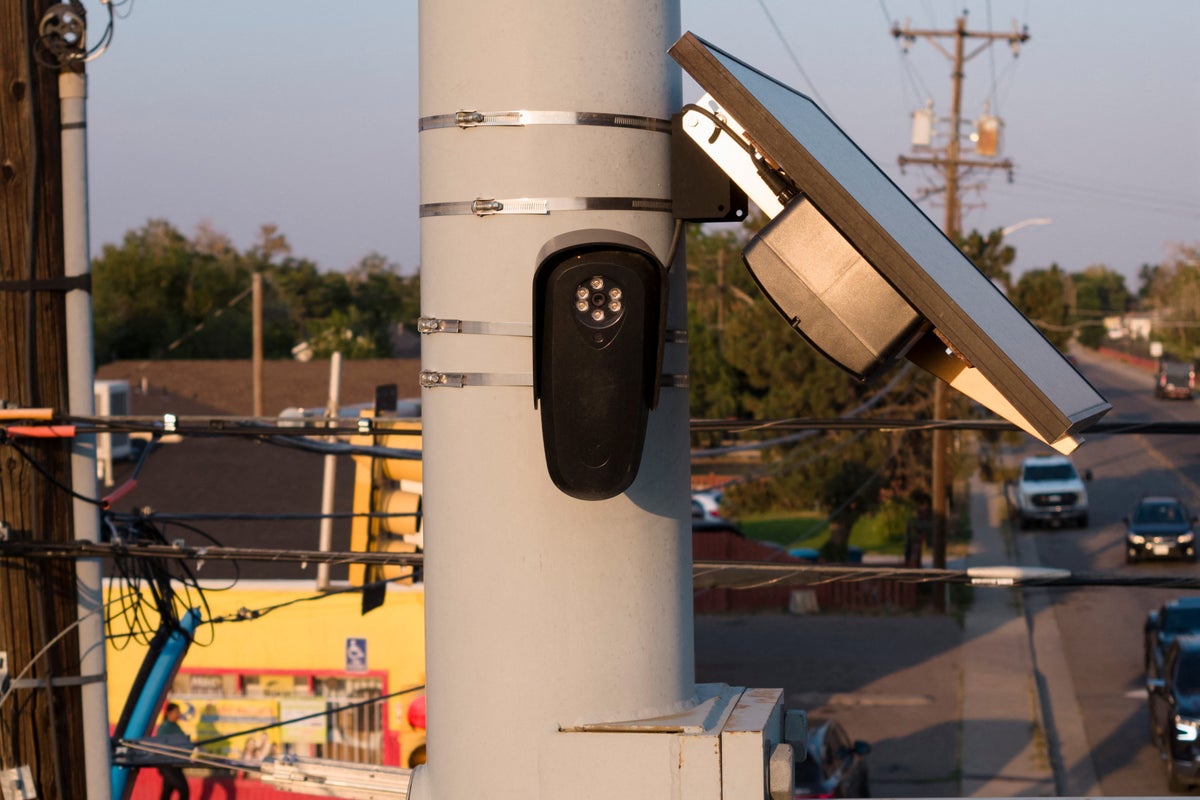
Private tech vendors should never act as the primary regulators of police surveillance networks. Yet that is precisely where American cities find themselves after a wave of revelations forced automated license plate reader titan Flock Safety to roll out mandatory oversight tools. For years, the Atlanta-based company scaled its network of artificial intelligence-enabled cameras to more than 5,000 communities with minimal friction, treating internal compliance mostly as an optional feature left to the discretion of individual police departments.
That approach collapsed under the weight of investigative reporting documenting dozens of law enforcement officers using the vast camera database to stalk ex-wives, track girlfriends, and run unauthorized personal surveillance. Now, the corporation is scrambling to mandate restrictions it long left on the table. The core question remains whether corporate policy shifts can fix a structural accountability vacuum baked into mass municipal monitoring.
Decades of watching public safety vendors pitch municipal clients reveal a predictable pattern. Companies sell convenience and absolute security, while downplaying the friction of civil liberties. Flock Safety built its footprint by promising local governments an effortless way to capture vehicle make, model, and movement patterns, feeding millions of daily scans into a searchable national database.
When the system was marketed to city councils and neighborhood associations, the pitch relied entirely on catching stolen cars and violent suspects. Little attention was paid to what happens when the keys to a panopticon are handed over to hundreds of thousands of individual authorized users without stringent, unyielding architectural guardrails from day one.
The numbers tell a sobering story of administrative neglect. Until recently, requiring an officer to tag a database search with a legitimate criminal case number was optional. Officers could query coordinates and movement tracks without creating a paper trail tied to an active investigation.
When investigative scrutiny exposed at least 50 instances of officers misusing license-plate tracking technology for personal harassment, the vendor responded by altering its software defaults.
The company announced it would finally force departments to require case numbers for every query, automatically scan background logs for abnormal activity through an algorithmic feature called Audit Assistance, and shorten the default data retention period from thirty days down to seven.
These adjustments are welcome. They are also years overdue.
Relying on a private vendor to police the police exposes a profound failure of municipal governance. City managers and mayors eagerly signed contracts for hardware that maps the daily habits of ordinary citizens, yet routinely abdicated responsibility for auditing how that data gets used.
When a police chief controls the internal audit logs in departments where corruption or misconduct occurs, internal oversight becomes an illusion. Corporate software patches cannot replace independent, external civic governance. A notification algorithm scanning for middle-of-the-night search spikes is a digital speed bump, not a substitute for constitutional accountability.
Consider a hypothetical town where a police department installs dozens of roadside optical sensors to monitor traffic. If an officer decides to track a former partner's vehicle movements out of personal animus, the technology initially records that query into a silent ledger. If leadership fails to review those ledgers, the abuse continues unchecked until an outside journalist or an external whistleblower drags the behavior into the open.
The new corporate requirement to log case numbers adds friction, but determined bad actors can still input placeholder digits unless human supervisors verify the legitimacy of every open file. Technology alone cannot legislate ethics.
Furthermore, the adjustment to a default seven-day data retention window highlights the previous excess. Storing months of historical travel patterns for citizens who have committed no crime creates a standing dossier system that would make historical intelligence agencies envious.
While the company has introduced an Evidence Mode to preserve data longer for active investigations, the shift proves that the prior mass retention standards were designed for maximum data accumulation rather than strict necessity. Communities are forced to negotiate with a private balance sheet over how long their own movements remain stored on corporate cloud servers.
The pushback is moving past polite municipal council meetings. Across the country, legal challenges are testing whether continuous tracking of vehicle locations violates constitutional protections against warrantless searches. Courts are beginning to view automated tracking databases not as simple digital notebooks, but as sophisticated tracking devices that demand strict judicial oversight. When a private network of lenses can reconstruct an entire timeline of a person's religious attendance, medical appointments, and personal associations, the legal framework governing public observation is stretched to its breaking point.
Blaming a software platform for human malfeasance misses the broader institutional failure. Police officers who abuse databases are violating public trust, but the systems that grant broad, unvetted access to massive location repositories invite temptation.
When accountability measures are treated as optional toggles that cities must manually activate, safety technology prioritizes sales velocity over civic protection. Real oversight requires independent public audits, strict statutory limits on data sharing across jurisdictional lines, and immediate administrative lockouts triggered the moment an officer steps outside authorized investigative parameters.
Until local governments reclaim authority over public surveillance instead of outsourcing governance to corporate software developers, the integrity of these networks will remain entirely dependent on whether anyone is watching the watchers.