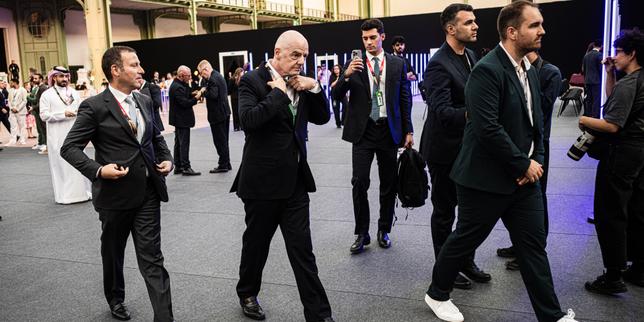
The grimaldi forum in Monaco played host to another sterile corporate ritual this week as thirty-six clubs discovered their eight distinct opponents for the expanded European league phase. What was once a tense autumn routine of traditional groups has mutated into a bloated algorithmic maze. The 2026-27 UEFA Champions League calendar is officially locked, and the fallout from the automated pots exposes a growing chasm between elite commercial theater and competitive sanity.
Defending champions Paris Saint-Germain drew a brutal itinerary featuring matches against Barcelona and Manchester City, while fifteen-time winners Real Madrid secured marquee dates with Inter Milan and Arsenal under returning manager José Mourinho. Yet beneath the glitter of these blockbuster pairings lies an exhausting reality for players and fans alike. The tournament schedule stretches deep into January with two extra matchdays before a ball is even kicked in the knockout rounds.
The Weight of the Expanded Calendar
Physical burnout is no longer a distant theoretical risk for modern squads. It is a mathematical certainty. Consider a Premier League heavyweight navigating domestic title races, domestic cups, expanded international windows, and now an eight-game European league phase before winter even concludes. The margins for error shrink while the volume of high-intensity fixtures multiplies.
Clubs like Manchester City and Arsenal face eight distinct opponents chosen from four separate seeding pots, ensuring that heavyweights collide early and often. For instance, a hypothetical contender might host Paris Saint-Germain at home while simultaneously preparing for a hostile away trip to Madrid or Milan within the same grueling fortnight. The traditional winter breather has vanished, replaced by an unrelenting stream of high-stakes television inventory.
Decoding the Automated Draw Mechanics
The transition from manual ball-drawing to automated software selection was supposed to save time. Instead, it stripped the tournament of its theatrical soul while preserving every structural flaw of the Swiss model. Computers now spit out complex matrices in minutes, mapping out home and away fixtures across four pots without human drama.
Under the hood, the system guarantees that every team plays two opponents from each pot, splitting fixtures evenly between home turf and foreign stadiums. Yet this apparent fairness creates wildly unbalanced paths to the top eight. While some mid-tier qualifiers managed to slip through the qualifying rounds into favorable pairings, traditional powerhouses find themselves locked in mutual attrition. The top eight spots guarantee direct passage to the Round of 16, but finishing between ninth and twenty-fourth consigns teams to a perilous playoff round in February.
The Financial Chasm and Domestic Collateral
UEFA defends the bloated format through the lens of revenue generation and blockbuster television matchups. More games mean more broadcast windows, higher ticket sales, and inflated sponsorship yields. For the elite tier, the balance sheet looks healthier than ever.
Domestic leagues, however, are paying the price. Mid-tier clubs outside the financial stratosphere find it increasingly difficult to bridge the gap when the continent's richest organizations hoard revenue and squad depth. When a club plays eight league phase matches between September and January, squad rotation becomes an absolute necessity rather than a tactical choice. The competitive integrity of domestic leagues warps as squads with fifty million pound bench options swallow the fixture congestion whole, leaving smaller domestic competitors gasping for air.
The road to the Estadio Metropolitano in Madrid for the June 5 final is longer, harder, and more commercialized than any iteration of the European Cup that came before it. As the first matchdays loom in September, the spectacle is undeniable. The human cost remains to be seen.