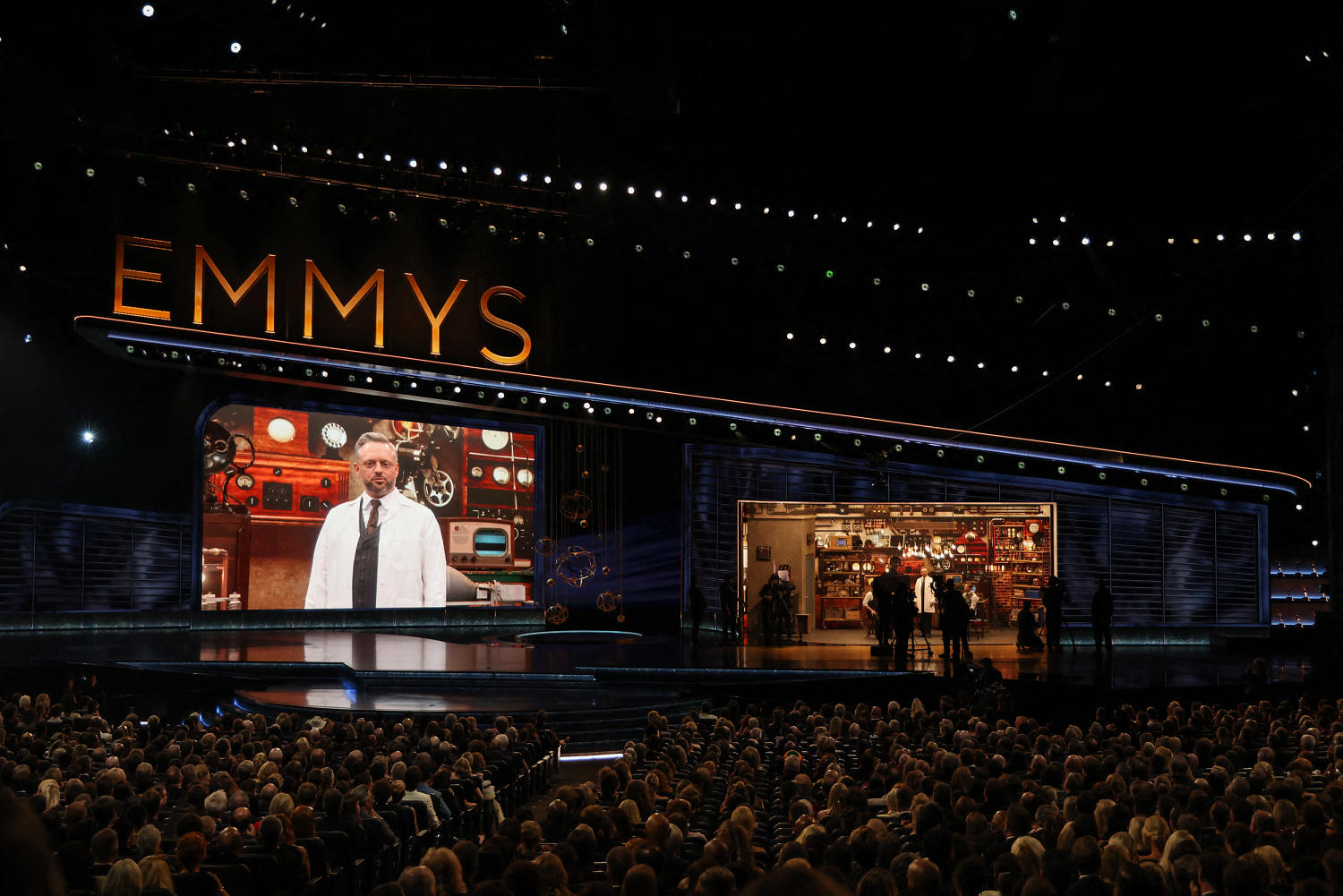
The television industry gathered at the Peacock Theater in Los Angeles for the 78th Primetime Emmy Awards, broadcasting live on NBC and streaming simultaneously on Peacock with Mariska Hargitay anchoring the night. Millions tuned in or logged on to see which prestige dramas and comedies would walk away with golden statuettes. Yet beneath the glitz of the red carpet and the carefully scripted monologues lies a quieter, more systemic panic. The infrastructure holding up Hollywood’s highest honors is straining under the weight of an economic shift that television networks and streaming platforms refuse to address honestly in public.
For decades, the Emmy Awards served as a straightforward promotional engine. A nomination translated directly into syndicated rerun sales, higher physical media demand, and elevated ad rates for the upcoming fall television season. Today, that economic loop is broken. Streaming services do not sell ad space the same way traditional networks do, nor do they rely on traditional syndication to monetize catalog titles. When a subscription platform sweeps the major categories, the victory does not automatically inject capital back into the production pipeline. Instead, it justifies corporate budgets that prioritize subscriber retention over long-term financial sustainability. If you found value in this piece, you should look at: this related article.
Consider the mechanics of the modern For Your Consideration campaign. Studios routinely spend millions of dollars mailing screeners, hosting lavish luncheons, and buying billboards along Sunset Boulevard just to capture the attention of a voting body that is drowning in prestige content. This arms race creates a distinct disadvantage for smaller independent distributors who cannot afford a multi-million-dollar lobbying effort. The trophy no longer simply rewards artistic excellence; it reflects corporate staying power and marketing endurance. When an organization like the Television Academy awards a series that cost an astronomical sum per episode, it validates an unsustainable financial model that squeezes mid-budget creators out of the marketplace entirely.
The viewing public experiences this disconnect through an increasingly fractured broadcast experience. Traditional television viewership numbers have declined steadily for years, prompting producers to inject viral stunts, unexpected musical numbers, and social media cross-promotion into the live telecast. These choices attempt to capture a younger demographic that consumes television in thirty-second clips on mobile devices rather than sitting through a three-hour awards ceremony. Yet this strategy alienates the core demographic that still watches linear television or follows traditional appointment viewing. The ceremony is trapped between two opposing eras of media consumption, satisfying neither fully. For another perspective on this story, check out the recent coverage from IGN.
Voter fatigue represents another hidden vulnerability within the Academy. With hundreds of original scripted series airing across dozens of competing platforms, voting members face an impossible backlog. Industry insiders admit privately that many voters make choices based on name recognition, critical consensus, or peer pressure rather than a comprehensive review of every eligible submission. This structural reality turns the ballot box into a popularity contest driven by marketing saturation rather than merit. When a voter must choose between a dozen critically adored dramas released across streaming services they do not subscribe to, institutional habit takes over. Familiar production companies and returning nominees retain an unfair advantage simply because breaking through the noise requires more hours than any human possesses.
The rise of platform exclusivity further complicates the cultural impact of the ceremony. In an earlier era, a shared television moment united millions of viewers who had all watched the exact same network broadcast the previous week. Today, winning shows frequently live behind paywalls that require specific app subscriptions and digital accounts. A viewer might see headlines about a historic victory on Monday morning without ever having seen a single episode of the winning program. This dynamic turns television's biggest night into an advertisement for products that a significant portion of the audience cannot easily access. The cultural resonance of the golden statuette diminishes each time it honors a series locked inside a closed ecosystem.
Behind closed doors, network executives and studio heads worry about the long-term viability of the broadcast format itself. Production costs for live television events continue to climb while ad revenues flatten or shift toward digital platforms. Networks maintain these broadcast rights not because the telecast generates immediate profit, but because prestige advertising and corporate partnerships anchor their autumn schedules. If the ratings slide accelerates, even that justification will begin to lose its arithmetic logic. The entire enterprise relies on the assumption that audiences still care about peer validation within an industry that is rapidly decentralizing.
The international market introduces yet another layer of complexity. While American awards shows once commanded global attention as a window into Hollywood culture, international audiences now look to domestic productions from South Korea, the United Kingdom, and Scandinavia that bypass the American studio system altogether. Global streaming footprints mean that local hits travel across borders instantly, diluting the unique cultural authority that the Academy once held. When a subscriber in London or Tokyo can access top-tier local content with a single click, an American trophy ceremony loses its status as the definitive arbiter of global taste.
Reform proposals circulate through Hollywood agency boardrooms every awards season, yet substantive change remains rare. Some analysts suggest splitting the ceremony into genre-specific streaming events or shifting entirely to a digital-first format to reduce broadcast overhead. Others argue for stricter limitations on campaign spending to level the playing field between major conglomerates and independent distributors. Each proposal faces fierce resistance from entrenched interests who benefit from the status of the current system. Studios that control the machinery of production and distribution have little incentive to dismantle a promotional vehicle that still commands front-page media coverage, regardless of its underlying economic efficiency.
The evening closes with handshakes, flashbulbs, and acceptance speeches that thank agents and legal teams. The statues find their way into velvet-lined boxes and return flights to Los Angeles, New York, and London. But the ledger remains unbalanced. The industry continues to pour unprecedented sums into a race for gold while the foundation beneath the television ecosystem shifts toward an uncertain future. When the lights go down on the theater and the broadcast feeds cut to black, the awards leave behind an industry that is richer in trophies and poorer in structural stability. The questions raised by the evening's winners will not be answered by next year's nominations, but by whether the business model can survive the decade intact.