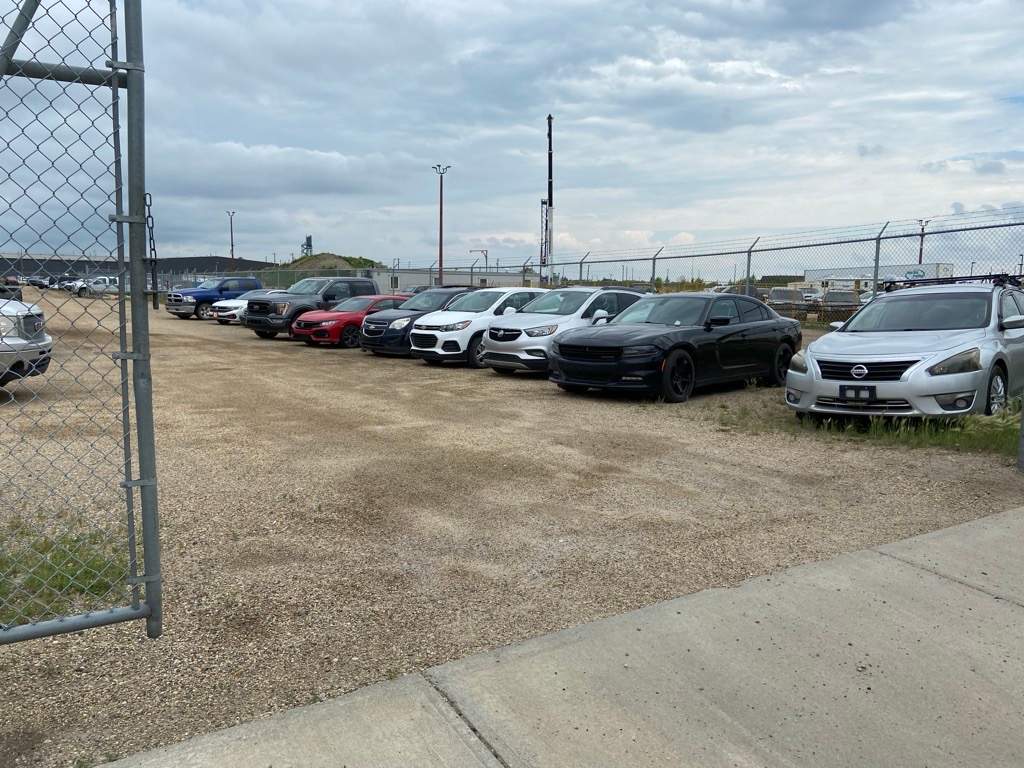
The City of Edmonton and the Edmonton Police Service recently announced the reclamation of 150 spaces at an overflow impound lot near Yellowhead Trail, momentarily reducing a massive backlog of abandoned vehicles clogging residential streets. On paper, the 73 percent drop in pending tows—from a peak of 682 down to 181—looks like a bureaucratic victory.
It is an illusion.
This temporary fix paperizes over a profound structural failure within Edmonton’s municipal infrastructure. The reality is that municipal enforcement completely halted towing operations earlier this year because the main impound lot was entirely full, rendering bylaw enforcement toothless. By relying on a former transit park-and-ride lot that was briefly borrowed as a construction staging area for the Yellowhead Trail freeway conversion, the city has applied a small adhesive bandage to a gaping wound.
The Myth of Efficiency
The city’s parking enforcement department has been vocal about its systematic approach to clearing the queue. Officials emphasize that teams are moving 10 to 15 vehicles a day to keep operations orderly. But this deliberate pacing is not a strategic choice. It is a limitation imposed by a severe deficit of physical space and municipal capacity.
Consider the sheer volume of the problem. Over the last two years, requests for parking enforcement across Edmonton surged by 45 percent. The neighborhood complaints sent through the 311 system paint a picture of derelict cars left for weeks with smashed windows, rusted frames, and expired plates. Under municipal bylaws, a vehicle is legally abandoned if left on a public street for more than 72 consecutive hours. Yet thousands of owners have discovered that the 72-hour warning notice is an empty threat because the city simply had nowhere to put their cars if they ignored it.
When the main yard at 122 Street and 124 Avenue reached absolute capacity, the system ground to an unceremonious halt. Bylaw officers could issue tickets, but the actual removal of safety hazards became impossible. The resulting backlog turned residential neighborhoods into long-term storage facilities for unwanted steel. Reclaiming 150 spots from a finished construction zone provides brief operational breathing room, but it fails to address what happens when those 150 spots inevitably fill up again.
A Forgotten Footprint from the Nineties
The core of the issue lies in a striking administrative stagnation. According to data from the Edmonton Police Service, the footprint of the dedicated vehicle impound lot has remained completely unchanged for nearly three decades. The city is attempting to manage a 2026 metropolitan population using the exact same parcel of land allotted in 1997.
In those three decades, Edmonton’s population has grown significantly, bringing hundreds of thousands of additional registered vehicles onto the road network. The math is simple and unforgiving. More people and more cars inevitably yield more breakdowns, more unregistered vehicles, and more abandonment. Expecting a mid-sized lot from the late 1990s to absorb the enforcement needs of a modern city is a logistical fantasy.
Ward Anirniq Councillor Erin Rutherford has emerged as one of the few civic leaders willing to call out this structural neglect. Rutherford explicitly pointed out that a temporary injection of 150 spaces is mathematically incapable of solving a long-term deficit driven by a 45 percent spike in enforcement demand. She formally pressured the Edmonton Police Commission to relocate the lot to a larger, permanent facility and integrate it as a major capital project in the upcoming four-year municipal budget.
The response from the commission was telling. It claimed that a new impound lot could not be proposed under its current capital funding constraints, declaring that the current setup provides sufficient functionality for the foreseeable future. This standoff highlights a classic municipal paradox where the body responsible for enforcement operations refuses to fund the infrastructure required to execute those operations, leaving neighborhoods to bear the visual and physical costs.
The Hidden Logistics of Impound Stagnation
To understand why a tow lot fills up and stays full, one must examine the complex lifecycle of a seized vehicle. An impound lot is not a fluid transit hub. It is a highly regulated, slow-moving repository where cars sit trapped in legal and financial limbo.
When a vehicle is towed for abandonment, it cannot simply be flipped or crushed immediately. A rigid statutory timeline governs every single car that enters the gate. First, administration must verify ownership, a process complicated by missing VINs, out-of-province registrations, or vehicles left by transient owners. If a car is deemed derelict or involved in a criminal investigation, it can sit for months while investigators process evidence or wait for court dates.
For standard abandonments, owners are hit with escalating towing and daily storage fees that quickly outpace the actual cash value of the vehicle. If a 15-year-old sedan with a blown transmission is slapped with a 300-dollar tow charge and 50 dollars in daily storage fees, the owner has no financial incentive to retrieve it. The car becomes a permanent resident of the lot.
The city is then forced to hold the vehicle for a mandatory waiting period before it can legally clear the title and send the car to a public auction or a scrap yard. This auction pipeline is bottlenecked by administrative capacity and market demand. When the inflow of junked cars vastly exceeds the legal outflow speed, the entire system chokes. Reclaiming 150 spaces did not fix this pipeline. It merely delayed the next total system freeze.
Neighborhood Fallout and the Broken Windows Effect
The failure to maintain a functional, scalable towing ecosystem has measurable consequences for Edmonton’s communities. When abandoned cars are left to rot on public streets for weeks at a time, they do more than take up valuable curb space. They actively degrade community safety.
A derelict vehicle is a magnet for property crime. Smashed windows invite scavengers looking for copper, electronics, or personal items. Unlocked, abandoned cabins frequently become sites for illicit activity or temporary shelter during harsh weather, creating immediate friction with local homeowners. This is the classic broken windows theory brought to life on the asphalt of Edmonton's suburbs.
Furthermore, these vehicles present genuine physical dangers. Cars parked too close to intersections blind turning motorists and block pedestrian sightlines, increasing the risk of collisions. During heavy rain or winter snow clearing, stationary, abandoned vehicles disrupt municipal maintenance crews, leaving large patches of roads unplowed or unswept, which further damages the local infrastructure.
The neighborhood of Prince Charles, situated right next to the current impound operations, bears the brunt of this logistical failure. Residents face constant noise, heavy tow truck traffic, and the spillover effects of a maxed-out facility. Expanding the capacity of an ill-fitted, central lot rather than relocating it altogether means these residential areas will continue to endure the fallout of industrial-scale storage right outside their front doors.
The Real Cost of Budgetary Inaction
Defenders of the current status quo point strictly to the bottom line. Building a modern, high-capacity impound facility outside the urban core requires significant capital investment, land acquisition, and environmental assessments for automotive fluid containment. In a cycle of tight municipal budgets and infrastructure deficits, an impound lot is rarely a popular political priority.
This financial calculation is incredibly short-sighted. The city currently loses substantial revenue by failing to enforce parking regulations effectively. When bylaw officers stop towing due to lack of space, the city forfeits the collection of fines and towing fees from viable vehicles. More importantly, the administrative hours spent managing a perpetual waitlist of 600-plus vehicles represent an ongoing drain on public resources.
Relying on temporary land hand-offs from major construction projects like the Yellowhead Trail conversion is a high-stakes gamble. Those construction projects eventually end, and the land will be clawed back for its intended uses, such as transit or green space. When that occurs, the city will find itself exactly where it started earlier this year: standing next to a full lot, staring at hundreds of abandoned cars it cannot move.
True operational resilience requires a dedicated, scalable site removed from dense residential zones, paired with streamlined legal processes to accelerate the disposal of worthless, unclaimed vehicles. Until the city and the police commission stop treating vehicle storage as an afterthought, Edmonton's streets will remain just one busy enforcement season away from total gridlock.