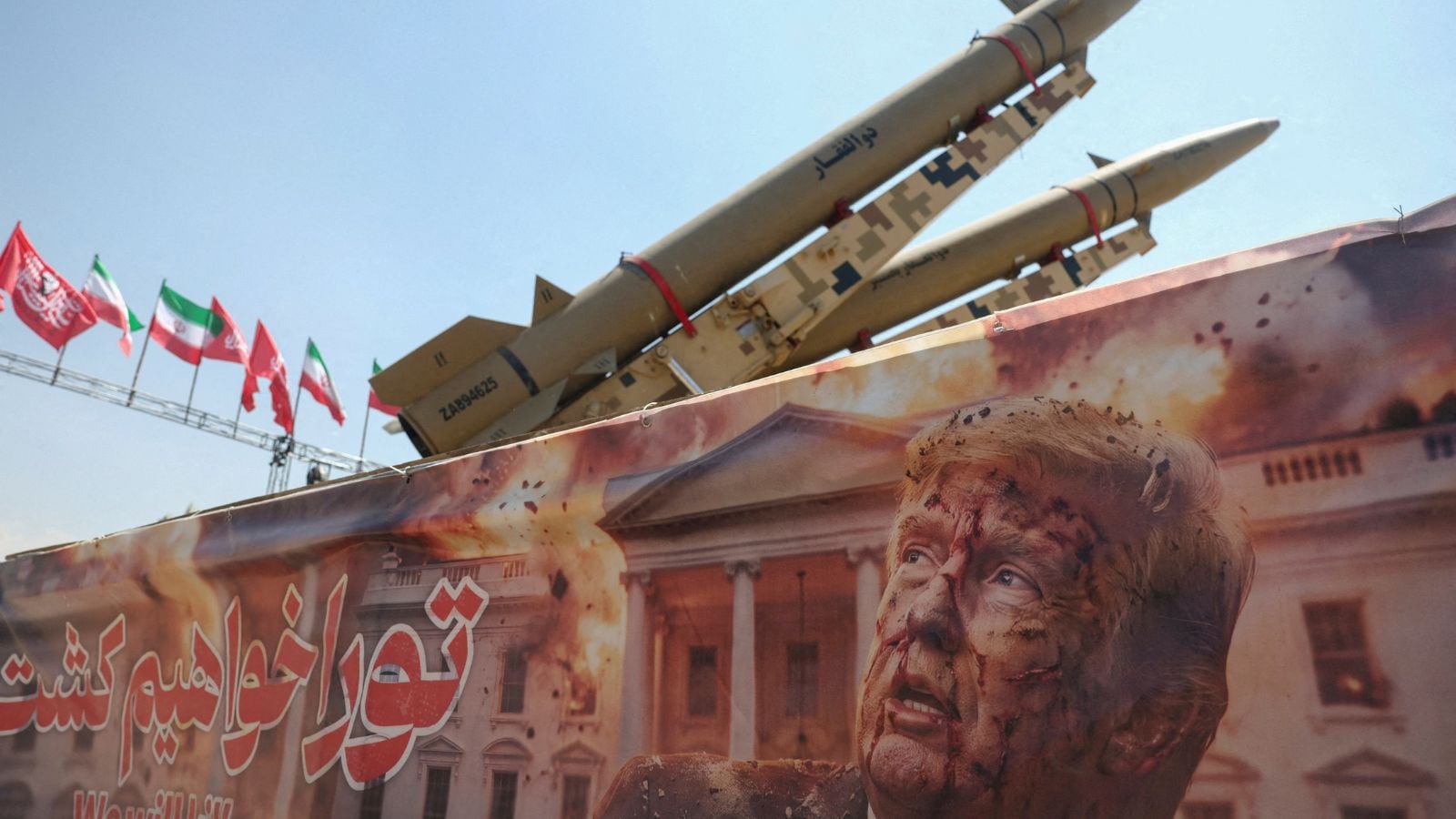
The United States is preparing an aggressive financial offensive against Iran, combining a strict naval blockade with what Treasury Secretary Scott Bessent has termed the toughest sanctions in history. As Washington attempts to sever every remaining economic lifeline keeping Tehran afloat, the geopolitical fallout extends far beyond the Persian Gulf. Concurrently, Pakistani Army Chief Asim Munir arrived in Tehran for high-level emergency talks, attempting to revive a collapsed diplomatic framework and navigate the looming threat of secondary financial penalties on neighboring states.
The convergence of Washington's impending economic blitz and Islamabad's desperate shuttle diplomacy exposes a critical inflection point in the ongoing conflict. With the Strait of Hormuz effectively locked down and global energy markets reacting with volatility, the structural mechanics of this confrontation reveal deep vulnerabilities on all sides.
The Financial Weaponization of Maximum Pressure
Bessent has framed the upcoming Treasury measures not merely as routine administrative penalties, but as an economic D-Day designed to force the Iranian regime into total submission. This strategy relies heavily on a dual mechanism: maintaining an active naval choke point while starving the state of foreign exchange reserves, trade registries, and access to international clearing houses.
For months, the White House has signaled that kinetic military strikes are only part of a broader calculus. By shifting the primary burden of warfare onto financial chicanery, Washington hopes to bypass the political costs of a prolonged military campaign while achieving a similar strategic outcome. Yet, previous iterations of maximum pressure campaigns have historically driven target nations into autarkic survival modes rather than immediate capitulation.
Tehran’s leadership understands the existential nature of this assault. Rather than buckling under the weight of impending restrictions, hardline elements within the Iranian security apparatus have responded with threats to close off regional energy flows entirely. The core friction point remains Beijing, which continues to absorb the vast majority of Iran's seaborne crude exports. Washington's unwillingness to directly penalize major Chinese financial institutions—fearing broader trade retaliation and diplomatic friction ahead of upcoming high-level summits—creates a gaping loophole in an otherwise totalizing embargo.
Islamabad's Balancing Act and the Limits of Mediation
While financial technocrats in Washington plot out banking restrictions, Pakistan is playing a high-stakes game of regional triage. Army Chief Asim Munir’s diplomatic mission to Tehran is designed to prevent the total collapse of bilateral stability, especially after a fragile 60-day interim peace framework brokered earlier this year dissolved amid renewed military exchanges.
Pakistan faces an acute dilemma. Sharing a long, porous border with Iran while maintaining deep security and economic dependencies with Western and Gulf partners leaves Islamabad with very little margin for error. If the White House follows through on threats to punish any entity providing an economic lifeline to Iran, transit projects, cross-border energy sharing agreements, and regional trade corridors involving Pakistan risk sudden invalidation.
Munir’s discussions in Tehran focus heavily on keeping diplomatic channels open while evaluating the fallout from recent regional security pacts, including the Pakistan-Turkey-Saudi alignment. However, mediation efforts repeatedly crash against the reality of immutable strategic demands. Tehran demands relief from sanctions before altering its naval posture in the Strait of Hormuz, while Washington demands an unconditional cessation of regional hostilities before easing the economic stranglehold.
The Structural Realities of Energy Choke Points
At the center of this geopolitical storm lies geography. The Strait of Hormuz handles a massive share of global petroleum transit, making any disruption an immediate threat to global macroeconomic stability. When insurance providers pull coverage and commercial tankers refuse to navigate the corridor, the economic shockwaves reverberate from Tokyo to Frankfurt.
Bessent’s assertion that tighter financial controls will reduce the likelihood of a kinetic military restart relies on a frictionless translation of economic pain into political compliance. Markets, however, are pricing in the precise opposite outcome. Every escalation in rhetoric brings retaliatory warnings from Tehran regarding Gulf shipping lanes, keeping energy prices elevated and exposing the limits of financial coercion when dealing with a state that views its survival as non-negotiable.
As the details of the Treasury department's latest punitive package take effect, the burden shifts to external actors like China and regional intermediaries like Pakistan to manage the shock. The intended endgame of collapsing the regime through financial isolation risks triggering a broader systemic disruption across global supply chains long before any political breakthrough materializes on the ground.