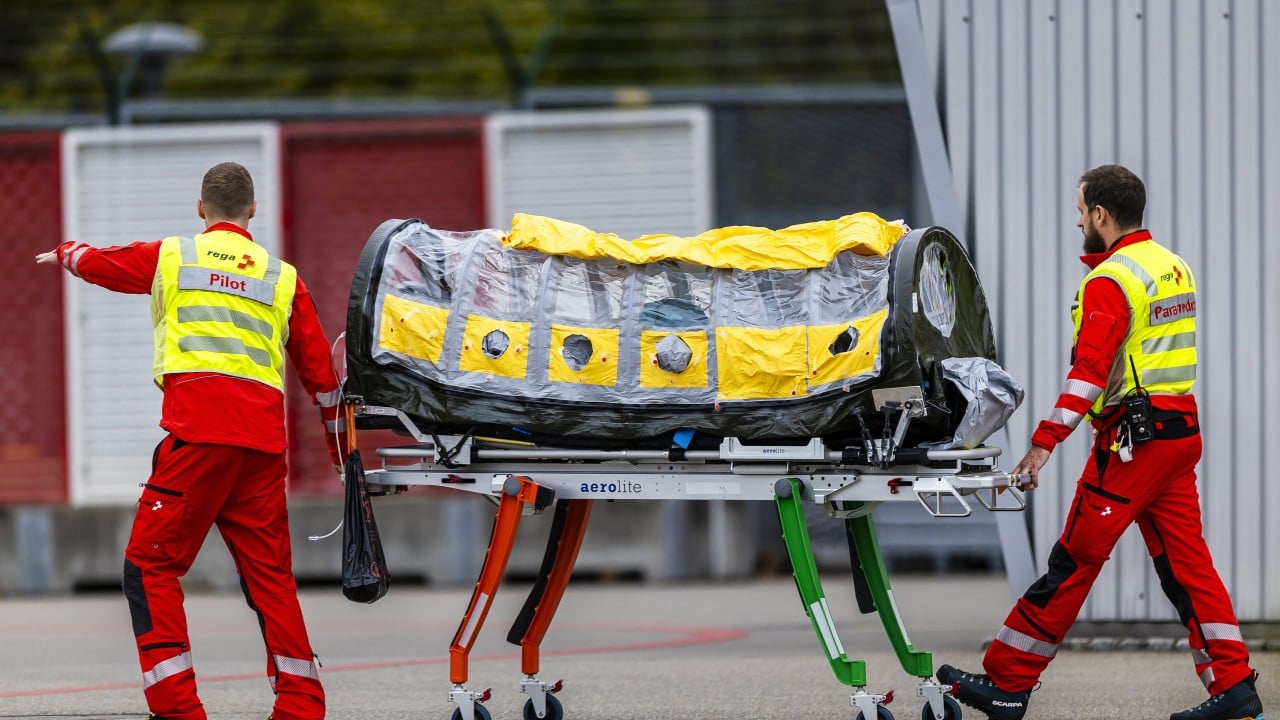
When an Ebola patient evacuated from Nigeria to Switzerland or any other high-income hub hits the wires, the coverage almost always reads like a triumph of modern logistics. A specialized air ambulance touches down. Hazmat-suited crews wheel a negative-pressure isolation pod across the tarmac. Press releases praise rapid coordination between ministries of health, diplomatic missions, and infectious disease wards.
Those stories miss the harder truth. If you enjoyed this article, you might want to look at: this related article.
Evacuating a single Ebola patient across continents is a high-wire logistical feat that costs hundreds of thousands of dollars per flight, consumes scarce containment gear, and pulls top-tier clinical talent away from broader public health work. Yet it does almost nothing to stop an outbreak at its source. Worse, it exposes a sharp divide in global health readiness: wealthy nations can fly a few high-priority patients into Biosafety Level 4 or high-level isolation units, while the clinics where transmission actually flares often lack running water, reliable electricity, and basic personal protective equipment.
Having covered infectious disease emergencies and health policy for decades, I have watched the same script play out repeatedly. A dramatic cross-border transfer grabs headlines for forty-eight hours. Then the cameras move on, leaving behind the unglamorous realities of contact tracing, supply chain bottlenecks, and fragile local health systems. For another perspective on this event, check out the recent coverage from NPR.
How Cross-Border Evacuation Actually Works
Moving a suspected or confirmed Ebola virus case by air is nothing like booking a commercial medevac. Standard medical flights are built for trauma, cardiac emergencies, or orthopedic injuries, not filovirus containment. A single slip during loading, inflight care, or waste handling can turn an aircraft cabin into a high-risk exposure zone.
Operators who handle these flights rely on specialized transport isolators—sealed pods or stretchers equipped with HEPA filtration and controlled airflow designed to keep contaminated air or fluids from escaping into the cabin. Even with engineered containment, every movement is choreographed down to the minute. Flight crews train for hours in personal protective equipment that traps body heat, fogs visors, and turns routine tasks like starting an intravenous line or handing a patient water into a slow, deliberate ordeal.
Diplomatic clearance adds another layer of friction. A country does not simply wave in an aircraft carrying a high-consequence pathogen without strict preconditions. Receiving hospitals must verify bed availability, negative-pressure capacity, laboratory support, and dedicated staff rosters before a plane even leaves the ground. For a transfer from West Africa to Europe—such as flying an Ebola patient from Nigeria to Switzerland—clearances must align across departure airports, transit airspace, customs authorities, and receiving cantonal or national health agencies.
Air space and landing rights can stall on a technicality. One missing clearance signature or an unanswered question about waste incineration protocols can keep an aircraft sitting on a ramp while a patient's condition deteriorates.
The Nigerian Containment Precedent
Nigeria offers a sharp case study in why speed and local discipline matter far more than flashy rescue flights. During the 2014 West African Ebola crisis, an infected traveler arrived by air in Lagos, a megacity of roughly twenty million people dense with informal transit, crowded markets, and bustling private clinics.
On paper, Lagos looked like a worst-case scenario. If a high-consequence pathogen finds a foothold in a sprawling urban hub with uneven primary care, containment can spiral fast.
Instead, Nigerian health authorities, working alongside international partners and rapid-response teams, moved aggressively to trace contacts, isolate symptomatic individuals, and enforce strict infection control in hospitals. That response contained the Lagos importation quickly compared to neighboring countries struggling with overwhelmed rural health systems and cross-border movement.
The lesson from Nigeria is sobering for anyone who treats air evacuation as a primary defense. You cannot evacuate a megacity. Even if a handful of foreign nationals or high-profile patients get flown to Geneva, Zurich, or another European medical center, the vast majority of cases in an affected country must be managed locally. If local clinics fail to spot early symptoms—which often start with fever, headache, muscle aches, and fatigue that mimic malaria or typhoid—the virus spreads silently before isolation protocols ever kick in.
Why Switzerland and European Hubs Enter the Picture
Switzerland occupies a distinct place in global health logistics. Geneva hosts major international health and humanitarian institutions, and Swiss hospitals maintain strict clinical standards and specialized infectious disease infrastructure. When a high-risk patient is flown into Switzerland, the move typically reflects a mix of diplomatic ties, institutional affiliation, specialized clinical care access, and pre-arranged evacuation coverage for international workers or specific nationals.
Receiving a patient like this tests more than clinical skill. It tests hospital readiness from the ambulance bay to the incinerator.
Every piece of contaminated linen, tubing, diagnostic swab, and protective suit generates regulated medical waste that cannot simply go into standard hospital disposal streams. Staffing a dedicated isolation team also carries hidden costs. Nurses and physicians assigned to high-consequence infectious care face intense physical strain, psychological stress, and scheduling disruptions that ripple across regular hospital units.
Public anxiety is another factor leaders rarely admit until it boils over. Even when infection control experts know the exact transmission mechanics—Ebola spreads through direct contact with blood or body fluids of a symptomatic person or contaminated objects, not casual airborne drift across a city block—local communities and hospital workers still demand airtight proof that every safeguard is in place.
Hypothetical Cost Breakdown of a Long-Haul Bio-Containment Flight
To understand why these operations remain rare and selective, consider a hypothetical example of a long-haul evacuation from West Africa to Central Europe. Suppose a humanitarian organization arranges a dedicated air ambulance equipped with a certified patient isolation unit for one adult patient and a two-person medical escort team.
| Cost Category | Hypothetical Estimate (USD) | Operational Driver |
|---|---|---|
| Aircraft charter and crew standby | $140,000 – $220,000 | Long-range jet, specialized permit routing, crew rest and hazard pay |
| Isolation pod and medical consumables | $25,000 – $45,000 | Certified containment unit, HEPA filters, high-grade PPE, IV supplies |
| Ground ambulance and tarmac handling | $15,000 – $30,000 | Dedicated transfer vehicles at origin and destination, decontamination gear |
| Medical waste and facility prep | $20,000 – $50,000 | High-temperature waste handling, lab surge readiness, overtime staffing |
In this hypothetical scenario, a single evacuation easily runs between $200,000 and $345,000 before factoring in weeks of intensive hospital care after arrival. Numbers shift depending on aircraft availability, insurance agreements, and diplomatic complexity, yet the takeaway holds: air evacuation is a boutique capability, not a scalable public health strategy.
The Equity Trap in Global Health Security
Here is the uncomfortable question policymakers keep dodging. If a quarter-million dollars can fly one patient into a world-class hospital in Switzerland, what could that same money buy on the ground in a district clinic in West or Central Africa?
It could fund months of infection prevention and control training. It could stock dozens of clinics with gloves, gowns, face shields, chlorine disinfectant, and oral rehydration supplies. It could pay for motorcycles, fuel, and data tools for contact tracers walking door to door in hot, humid neighborhoods where trust in authorities is often thin.
Critics of medical evacuation sometimes frame it as a moral failure or a symptom of "global health apartheid," where well-connected individuals get platinum-tier care abroad while local residents face stark limits at home. That criticism hits a real nerve. At the same time, dismissing evacuations outright ignores practical realities. Aid workers, diplomats, and clinical staff operating in hazardous outbreaks often take those assignments under explicit agreements that emergency evacuation options exist if they fall ill. Remove that safety net completely, and recruiting experienced personnel for future crises becomes harder.
The tension is real. Both sides have a point, and pretending there is an easy, cost-free balance only obscures the trade-offs.
Clinical Reality Inside High-Level Isolation
Treating Ebola virus disease is grueling work even in a hospital with unlimited clean water and modern diagnostics. Patients lose fluids rapidly through vomiting and diarrhea, leading to severe dehydration, electrolyte imbalances, organ strain, and—in severe cases—hemorrhage.
Supportive care makes a measurable difference. Aggressive fluid replacement, electrolyte correction, blood pressure support, and targeted management of secondary infections or organ complications improve survival odds compared to minimal care. Experimental therapeutics and monoclonal antibody treatments have also reshaped clinical management in recent outbreaks, though timely access and logistical cold-chain requirements remain critical.
Yet even in a top European hospital, care happens behind layers of protective gear that create distance between clinician and patient. Vision is narrowed. Hearing is muffled. Heat builds fast. Every movement requires conscious discipline so a glove does not tear or a sleeve does not ride up during a procedure.
What Headlines Miss About Outbreak Containment
When news outlets focus on an Ebola patient evacuated from Nigeria to Switzerland, readers naturally fixate on the drama of the flight. Planes, hazmat suits, and border crossings make compelling television.
Quiet epidemiology does not.
Stopping an outbreak depends on boring, relentless execution long before and long after any plane takes off:
- Rapid case detection at local clinics and triage tents so suspected cases do not sit in general waiting rooms.
- Reliable laboratory confirmation so health teams know quickly whether a fever is Ebola, Lassa fever, yellow fever, or something else entirely.
- Complete contact tracing that tracks everyone exposed over a 21-day monitoring window without losing people to fear or stigma.
- Safe and dignified burials, since bodies after death can carry high viral loads and funeral customs frequently involve close physical contact.
- Community engagement led by trusted local voices rather than distant officials reading scripts.
If any one of those links snaps, an evacuation flight changes almost nothing about the trajectory of the outbreak. If all five hold steady, dramatic cross-border rescues become rare footnotes rather than turning points.
How to Read the Next Evacuation Headline
The next time a report surfaces about a high-consequence patient flown from West Africa to a European hub, skip the surface spectacle and look for the details that actually signal whether the system is working.
Check whether local health authorities in the departure country are reporting transparent surveillance data and maintaining full supply chains for frontline clinics. Look at whether receiving hospitals are protecting routine non-outbreak care while isolating the patient safely. Watch how quickly officials share accurate risk information so rumors do not outpace facts.
A single flight can save a life. It cannot build a resilient health system, fix a broken supply chain, or outrun a virus on its own. Governments and health agencies should fund rapid evacuations where commitments demand them—and then invest ten times as much energy into strengthening the clinics and surveillance teams on the front lines where every outbreak begins and must end.