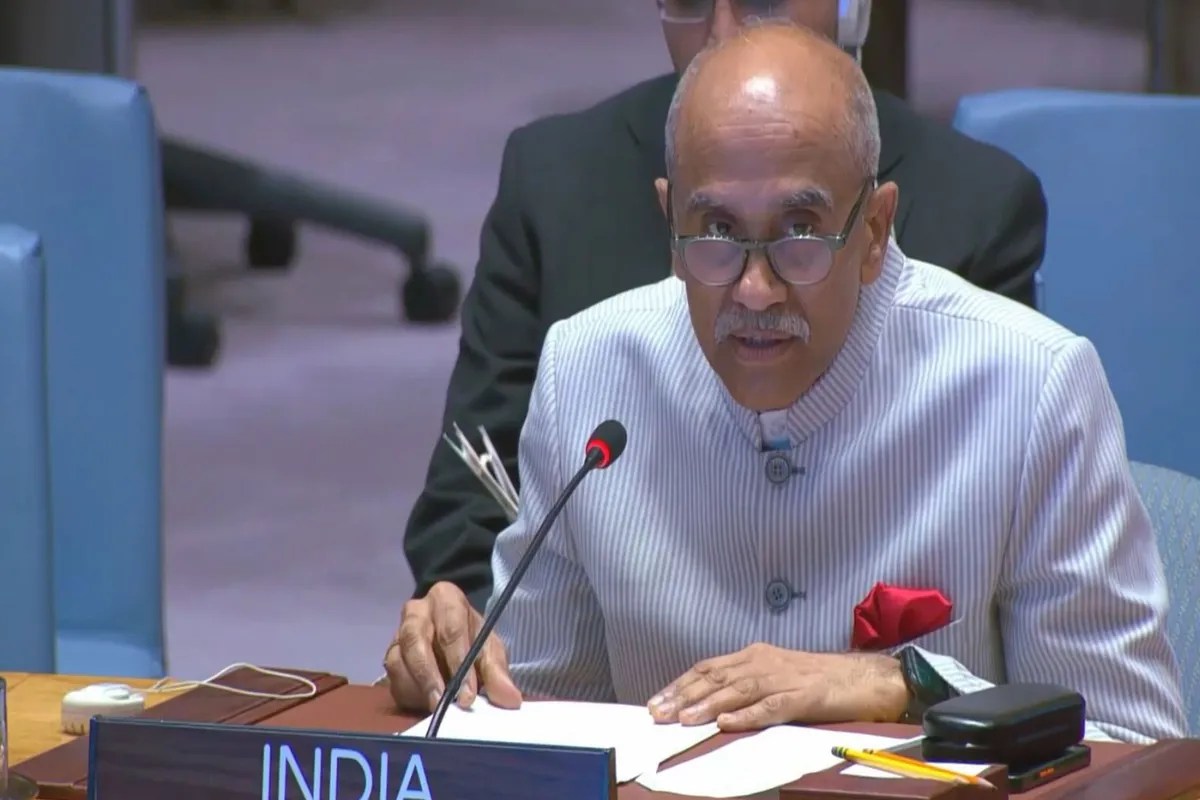
When Indian diplomats take the floor at the United Nations to address the security vacuum in Kabul, the intervention is rarely just about rhetoric. It is a calculated response to a structural security deficit that has persisted since the abrupt international military withdrawal from Afghanistan. India’s core argument centers on a blunt assessment: the environment that allows militant groups to operate with impunity across Afghan soil must be dismantled permanently.
For years, New Delhi has maintained a consistent diplomatic posture on regional security. The primary anxiety is not theoretical. It stems from decades of cross-border violence, historical proxy conflicts, and the operational resurgence of proscribed networks such as Lashkar-e-Taiba and Jaish-e-Mohammad, which have historically found ideological and physical shelter in the Afghanistan-Pakistan borderlands. When India demands that the international community stop tolerating safe havens, it highlights an uncomfortable truth for global bodies. Diplomatic engagement with de facto authorities in Kabul often risks normalizing a regime that has yet to demonstrate a verifiable break from transnational extremist networks.
The mechanics of modern terrorism rely heavily on unmonitored geographic spaces. Afghanistan’s mountainous terrain and porous borders present an ideal environment for illicit groups to rebuild training infrastructure, generate finance through smuggling, and coordinate cross-border operations. While de facto authorities in Kabul routinely claim that no external actors are permitted to use their territory, intelligence assessments from various regional capitals tell a more fragmented story. Factions within the governing apparatus often maintain competing loyalties, creating blind spots that transnational militant cells exploit with ease.
This creates a severe policy dilemma for neighboring states and international institutions. Total diplomatic isolation of Afghanistan risks plunging millions deeper into a humanitarian catastrophe, compounding economic collapse, and driving desperate populations across borders. Conversely, uncritical normalization rewards a regime that suppresses basic civil liberties, particularly the rights of women and girls, while failing to provide ironclad guarantees against transnational militancy.
India navigates this complex matrix through a strategy of targeted engagement coupled with uncompromising security demands. Rather than abandoning the Afghan population entirely, New Delhi has maintained technical and humanitarian channels, delivering medical aid and food supplies while keeping its security warnings sharp at multilateral forums. This dual-track approach reflects an understanding that security and humanitarian assistance cannot be cleanly separated, yet security must remain the non-negotiable baseline.
The broader international community remains divided on how to handle this impasse. Western powers often view the region through the narrow lens of counter-terrorism monitoring from over the horizon, while immediate neighbors bear the direct brunt of refugee flows, drug trafficking, and spillover violence. Regional security architecture, including frameworks managed through multilateral organizations, frequently stymies progress due to geopolitical friction between major powers. When rival nations prioritize short-term strategic positioning over collective security, militant networks find the necessary breathing room to expand their operational reach.
Resolving this deadlock requires more than routine diplomatic communiques at high-level summits. It demands verifiable benchmarks, strict financial tracking of extremist funding, and a united regional front that refuses to distinguish between "good" and "bad" militant factions. Until the international community moves past political expediency and enforces true accountability, the structural conditions enabling terror outposts will persist, keeping regional stability permanently out of reach.