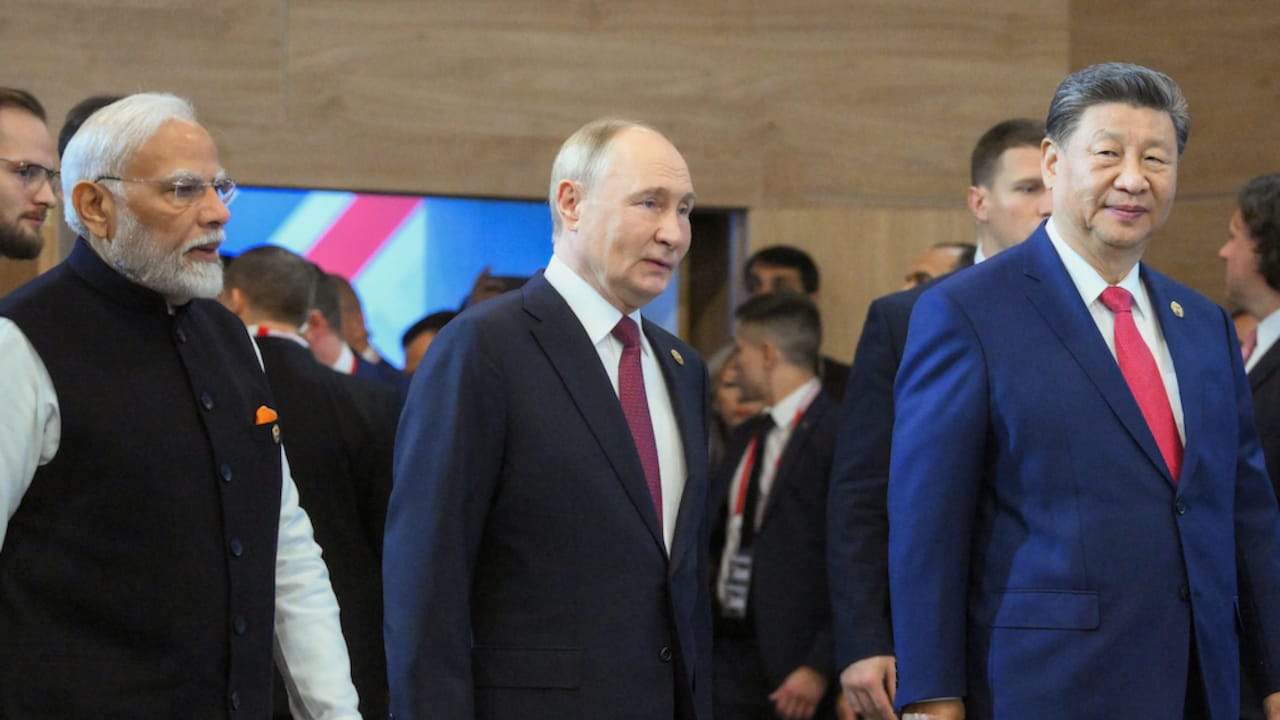
The upcoming 18th BRICS Summit in New Delhi on September 12-13, 2026, brings together an expanded bloc of eleven nations under India's chairmanship, featuring high-stakes attendance lists led by figures like Vladimir Putin and Xi Jinping. Behind the logistical preparations overseen by Delhi Lieutenant Governor Taranjit Singh Sandhu lie complex geopolitical calculations, particularly regarding India-China bilateral engagement following years of border friction.
The Shifting Architecture of an Expanded Bloc
What started as a loose acronym for four emerging economies has matured into an expansive coalition that now commands a massive share of global GDP and energy resources. With the inclusion of regional heavyweights like Saudi Arabia, Iran, the United Arab Emirates, Egypt, Ethiopia, and Indonesia alongside the core five, the bloc represents a profound diversification of interests.
This growth introduces acute internal contradictions. Managing the alignment between traditional non-aligned democracies like India and authoritarian or heavily sanctioned states like Russia and Iran requires diplomatic acrobatics. New Delhi has consistently maintained a policy of multi-alignment, balancing its deepening security ties with Western partners against its historical and energy-driven relationship with Moscow. Hosting this gathering on Indian soil forces New Delhi to anchor these competing agendas around its chosen theme of resilience, innovation, cooperation, and sustainability.
The Bilateral Undercurrents
The anticipated presence of Chinese leadership introduces a sharp edge to the summit dynamics. Reports indicating that Beijing's delegation could scale up significantly compared to previous engagements point to an intent to re-engage deeply across economic and diplomatic channels. Following the disengagement pact along the disputed Himalayan border, the bilateral relationship remains fragile and strictly guarded.
Diplomats in South Block are acutely aware that the summit optics will be scrutinized globally. Every handshake, bilateral pull-aside, and public pronouncement will be parsed for signs of genuine normalization or tactical maneuvering. India cannot afford to let multilateral ambitions overshadow its core security posture, nor can it ignore the necessity of managing coexistence with its largest continental neighbor.
Financial Realities and Alternative Clearing Architectures
Beyond the diplomatic theater, the technical agenda centers heavily on economic resilience. Discussions regarding local-currency settlements and alternatives to Western-dominated payment systems continue to occupy working groups. While a single unified BRICS currency remains an improbable distant aspiration due to wildly divergent monetary policies and capital controls among members, bilateral trade mechanisms bypassing traditional clearinghouses are gaining traction.
For international businesses and financial analysts, the core takeaway is not the immediate dethroning of the dollar, which remains structurally entrenched, but the gradual creation of parallel financial plumbing. Nations under heavy sanctions seek insulation, while others simply desire protection against weaponized currency volatility. New Delhi must navigate these financial experiments carefully, ensuring its own economic integration with Western markets remains insulated from secondary friction.
Logistics, Optics, and Statecraft
Executing an event of this magnitude in the national capital demands an extraordinary security apparatus. Multi-agency coordination between federal ministries, intelligence bureaus, and municipal corporations transforms parts of New Delhi into high-security zones. The operational footprint mirrors the gravity of the guest list. Delegations numbering in the hundreds require meticulous protocol, bespoke security corridors, and airtight intelligence sharing.
The overarching question remains whether an expanded bloc can evolve from an annual talk shop into a cohesive geopolitical actor. Divergent interests on United Nations Security Council expansion, maritime security in the Indo-Pacific, and global trade rules mean consensus is rarely guaranteed. As leaders gather under the Delhi canopy, the true measure of success will not be found in the expansive final declaration, but in the quiet, unscripted margins where real diplomatic boundaries are tested.