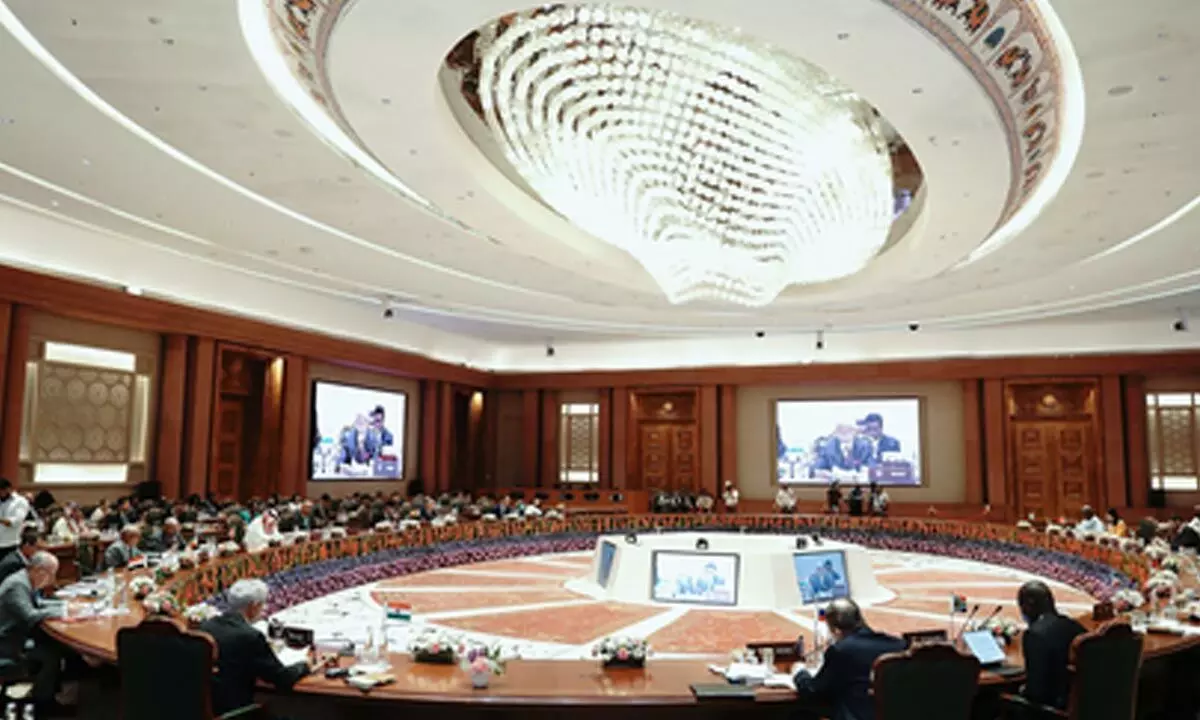
World leaders packed their bags and left New Delhi last week, but the ripples of the 18th BRICS Summit are still shaking up global diplomacy. Hosted at Bharat Mandapam, India wrapped up its high-stakes year-long chairship with a massive gathering. Heavyweights like Chinese President Xi Jinping and Russian President Vladimir Putin touched down in the capital, creating a rare physical alignment of global power players under one roof.
If you only looked at the surface-level photo ops, you missed the real story. Behind the carefully choreographed handshakes and group portraits, intense bilateral chess was played out of sight.
The High Stakes Diplomacy in New Delhi
Prime Minister Narendra Modi didn't waste a single minute of the two-day event. While global media obsessed over the optics of the China-Russia-India dynamic, the real substance happened in private conference rooms. Modi held a packed lineup of back-to-back bilateral talks, including crucial sit-downs with Kazakhstan’s President and other key international partners.
Trade corridors, energy security, and regional stability dominated these closed-door discussions. With ongoing conflicts rattling global supply chains, nations are scrambling to lock down independent economic safeguards. India used its chairship to push for a multipolar framework that doesn't rely entirely on Western financial systems.
Why Xi and Putins Departure Marks a Turning Point
As Xi Jinping and Vladimir Putin wrapped up their schedules and boarded their flights out of India, political analysts began parsing every word of the joint communiqués. The summit wasn't just about handshakes; it signaled a deliberate push toward expanding alternative trade settlements and deepening non-dollar economic cooperation among member states.
Critics often dismiss these summits as mere talk shops. Yet, the tangible agreements signed on the sidelines tell a different story. Supply chain resilience agreements and infrastructure financing mechanisms moved past the planning phase. Countries that historically kept each other at arm's length are now finding pragmatic reasons to sit at the same table.
What This Means Moving Forward
The shifting weight of global influence is becoming impossible to ignore. As India hands over the baton, the bloc looks fundamentally different than it did even a few years ago. Expanding memberships and localized currency settlements mean the rules of international trade are rewriting themselves in real time. Pay attention to how these bilateral pacts translate into actual trade volume over the next twelve months. That is where the true success of the New Delhi summit will be measured.


