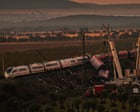
Public confidence in Spain’s railway network has fractured not merely because of isolated mechanical failures, but because decades of aggressive high-speed expansion left regional infrastructure starved of basic maintenance and modern safety systems. While Madrid poured billions into gleaming bullet trains connecting major capitals, the older conventional lines carrying daily commuters were left operating on aging signaling technology and deferred repairs. When fatal accidents occur on these neglected corridors, they expose a two-tier transport system where political prestige took priority over baseline operational safety.
For thirty years, Spain marketed its rail network as a global triumph of engineering. The Alta Velocidad Española, or AVE, became the crown jewel of modern Spanish infrastructure, boasting the longest high-speed network in Europe and the second longest in the world behind China. Tourists and business travelers gliding between Madrid and Barcelona at three hundred kilometers per hour saw a frictionless, ultra-modern transit miracle. Yet beneath that polished surface, a deep structural rot was spreading across the broader network managed by Adif, the state-owned infrastructure administrator, and operated largely by Renfe. For a deeper dive into this area, we recommend: this related article.
The Architecture of a Two-Tier Rail Network
To understand why commuters are losing faith in Spanish trains, you have to look at how transport budgets were allocated over the last three decades. Every successive government in Madrid treated high-speed rail ribbons as political currency. Ribbon-cutting ceremonies for new AVE extensions won regional elections, regardless of whether the passenger volume justified the astronomical construction costs.
Meanwhile, the Cercanías (commuter rail) and Media Distancia (regional mid-distance) networks suffered quiet, systematic neglect. These are the trains that millions of working-class Spaniards rely on every single morning to reach factories, hospitals, and universities. While AVE tracks were fitted with the European Rail Traffic Management System (ERTMS)—an advanced digital signaling and automatic braking protocol capable of stopping a train if a driver misses a signal—vast stretches of conventional track continued to rely on ASFA, a legacy analog system developed in the 1970s. For broader background on this development, comprehensive analysis is available at The New York Times.
ASFA relies heavily on human vigilance. If a driver suffers a medical emergency, becomes distracted, or misreads a speed restriction on a sharp curve, the older versions of the system offer limited automated intervention. The 2013 Santiago de Compostela disaster, which claimed eighty lives when an Alvia train derailed on a sharp curve just outside the station, brought this exact vulnerability into brutal focus. Investigators found that the high-speed track abruptly transitioned into a conventional track without active ERTMS speed-control protection at the critical braking point.
How Signal Failures and Deferred Maintenance Compound Risk
When safety advocates warn about "deferred maintenance," the phrase often sounds bureaucratic and abstract. On a railway, it translates into specific, physical points of failure. A railway track is a dynamic system under constant mechanical stress. Extreme summer heat across the Iberian Peninsula causes steel rails to expand and buckle, while torrential autumn rains erode track beds and trigger landslides in mountainous regions like Galicia and Asturias.
Keeping that infrastructure safe requires continuous ultrasonic rail testing, ballast tamping, and real-time sensor monitoring. When maintenance budgets are squeezed to service the massive debt accrued from building high-speed lines to sparsely populated provinces, corners get cut. Track inspections get spaced further apart. Known anomalies in signaling circuits are logged as low-priority fixes rather than immediate shutdown triggers.
Consider a hypothetical scenario on a busy regional commuter line outside Madrid or Barcelona. A track circuit—the electrical loop that detects whether a section of rail is occupied by a train—begins throwing intermittent false positives due to worn insulation and water ingress. Instead of halting traffic to replace the aging cable run, dispatchers are forced to authorize drivers to pass red signals at restricted speeds under verbal confirmation. Once verbal authorization becomes routine rather than a rare emergency exception, the safety margin evaporates. Human error is no longer caught by the machine; it is invited into the cab.
The Fragmentation of Responsibility
Another factor eroding public trust is the institutional divorce between track and train. Following European Union directives designed to liberalize the rail market and allow private competitors like Ouigo and Iryo onto Spanish tracks, the old state monopoly was split into separate entities. Adif manages the tracks, stations, and signaling, while Renfe operates the rolling stock.
In theory, separating infrastructure from operations creates transparency and fosters competition. In practice, during crises and accident investigations, it creates a maze of finger-pointing. When a collision or derailment occurs, the public watches a slow-motion blame game unfold between the infrastructure manager, the train operator, the signaling contractors, and the Ministry of Transport.
Train drivers' unions, particularly SEMAF, have repeatedly sounded the alarm over deteriorating track conditions, overgrown vegetation obscuring signals, and broken perimeter fencing that allows vehicles and livestock onto the right-of-way. Yet union warnings are frequently dismissed by transport officials as labor posturing during contract negotiations—until a fatal crash validates every bullet point in their safety dossiers.
The Psychological Toll on the Daily Commuter
Public confidence is fragile because rail travel demands total surrender of agency. When you drive a car, you hold the steering wheel; you harbor the illusion of control. When you board a train, you place your life entirely in the hands of invisible dispatchers, automated relays, and steel welds you will never inspect.
For Spanish commuters, that trust has been chipped away not just by catastrophic headlines, but by daily operational friction. Over the past several years, chronic delays, broken overhead catenary wires, signal blackouts, and stalled trains inside dark tunnels have become commonplace, particularly around Barcelona’s Rodalies network and Madrid’s Atocha hub.
When a commuter experiences three signal failures in a single month, their perception of the system fundamentally shifts. They stop viewing a fatal crash as a freak, one-in-a-million statistical anomaly. Instead, they see it as the logical conclusion of a system visibly fraying at the edges. Every unannounced stop between stations triggers a spike of anxiety. Passengers look out the window at rusted trackside cabinets and ask a simple, devastating question: if they cannot keep the air conditioning running and the timetable accurate, why should I trust them with the brakes?
The Liberalization Paradox
The arrival of low-cost high-speed operators has inadvertently exacerbated the strain on Spanish tracks. Liberalization drove ticket prices down and sent passenger numbers soaring to record highs. On paper, this looks like an unqualified success story for green mobility.
However, the physical infrastructure was not upgraded to absorb the sudden surge in train frequency. More trains running tighter headways mean less time at night for maintenance crews to access the tracks. The "maintenance window"—typically a four-hour block between midnight and four in the morning—has shrunk as operators push for earlier departures and later arrivals to maximize fleet utilization.
Furthermore, running heavier trains at higher frequencies accelerates wear and tear on switches, crossings, and overhead power lines. Adif collects track access fees from Renfe, Iryo, and Ouigo, yet those revenues still struggle to cover the true lifecycle cost of maintaining a sprawling network while simultaneously funding new construction projects in the Basque Country, Extremadura, and Andalusia.
Why Official Investigations Fail to Restore Trust
When tragedy strikes on the rails, the government’s reflex is predictable. Ministers express condolences, declare days of mourning, and promise a "transparent and exhaustive investigation" led by the Railway Accident Investigation Commission (CIAF).
Here lies one of the deepest credibility gaps in Spain’s transport sector. For years, the European Union Agency for Railways criticized the lack of true independence within Spain’s investigative body, noting that key investigators were frequently drawn from the very institutions—Adif and Renfe—whose systems and procedures were under scrutiny. Even after structural reforms were introduced to bolster autonomy, the glacial pace of official inquiries leaves victims' families waiting years for answers.
By the time a final technical report is published, the news cycle has moved on, political leadership has rotated, and recommendations are quietly shelved or watered down. Accountability becomes diffused across so many layers of bureaucracy that no senior executive or ministry official ever faces meaningful consequences for systemic underinvestment.
The Transparency Deficit
If Spain wants to rebuild faith in its railways, technical fixes alone will not suffice. Installing ERTMS across every kilometer of regional track will take more than a decade and billions of euros that the treasury does not easily possess. In the interim, radical transparency is the only viable currency.
Rail authorities in countries like Switzerland and Japan maintain extraordinary public trust not because their systems never fail, but because their reporting mechanisms treat every minor near-miss as a public data point. When a signal malfunctions or a maintenance deadline slips, the metrics are published openly, audited independently, and addressed before metal bends.
Spain must dismantle the culture of defensive secrecy that surrounds Adif and Renfe. Real-time track condition audits, independent safety inspection logs, and unvarnished punctuality and fault data should be accessible to the public and scrutinized by a parliamentary oversight committee with subpoena power. Until commuters see executives held directly accountable for the unglamorous, invisible work of tightening bolts and replacing worn cables on local lines, every new high-speed train unveiled in Madrid will only remind the public of what was left behind.