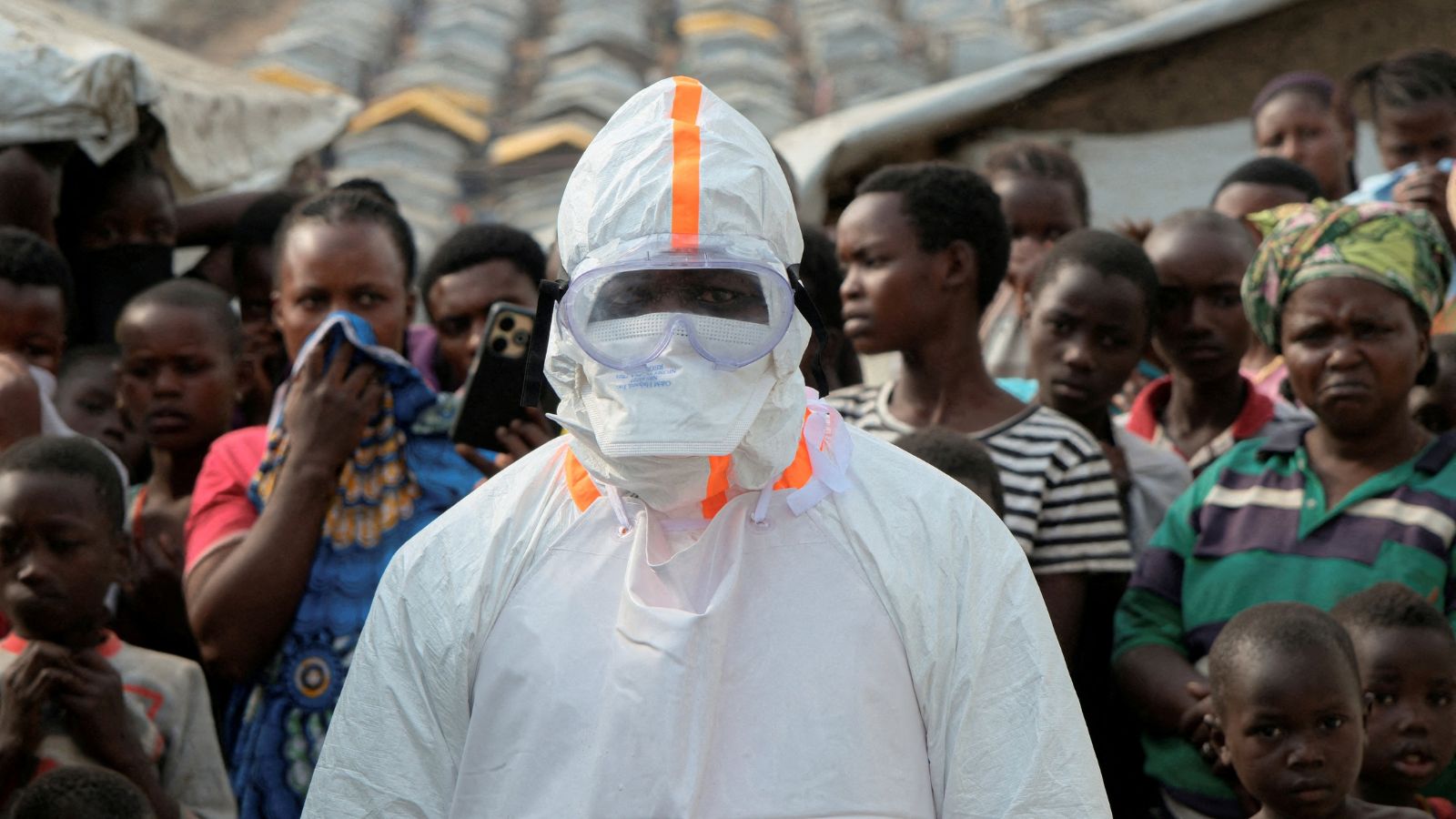
The Democratic Republic of Congo has officially crossed a grim threshold. Confirmed cases in the country's ongoing Ebola outbreak have surged past 4,000, locking public health infrastructure in eastern provinces into an exhausting war of attrition. Driven primarily by the Bundibugyo virus strain, this epidemic has already claimed more than 1,850 lives. The numbers confirm a terrifying velocity, making it the largest recorded Ebola emergency in the nation's history and the second-largest worldwide.
Yet focusing purely on the arithmetic misses the mechanical failure of the response. Epidemics of this scale do not happen in a vacuum. They expose the friction points where international emergency frameworks collide with persistent regional realities. Meanwhile, you can explore similar developments here: Why Beijing Spending More on African Health is a Trap Not a Rescue.
The Anatomy of an Unprecedented Spread
Transmission dynamics in eastern Congo have shattered historical assumptions about how quickly this pathogen moves through a population. Traditional response playbooks were built for isolated rural villages where contact tracing follows clean, linear lines. Those playbooks are failing now.
In provinces like Ituri, which accounts for the vast majority of infections, high population mobility acts as a primary vector. Displaced persons camps, swollen by ongoing armed conflict, represent catastrophic clusters. When thousands of people live shoulder-to-shoulder with limited access to clean water or sanitation, isolation protocols become nearly impossible to enforce. To understand the complete picture, check out the detailed article by National Institutes of Health.
A hypothetical case illustrates the operational breakdown: A symptomatic individual leaves an active transmission zone in a rural health zone, boards an overcrowded informal transport vehicle, and travels into a bustling trading hub like Bunia. By the time contact tracers map the journey, dozens of secondary exposures have occurred across multiple provincial boundaries.
Medical humanitarian organizations operating on the ground, including Doctors Without Borders (MSF), have issued repeated warnings that the response remains perpetually steps behind the transmission curve.
Structural Vulnerabilities and Treatment Gaps
The strain driving this crisis—the Bundibugyo virus—carries unique challenges. Unlike the more common Zaire species, historical stockpiles of specific targeted therapeutics and vaccines face severe supply and efficacy hurdles against this specific strain.
Health workers bear the brunt of these vulnerabilities. Official figures point to more than 150 documented infections among medical personnel, resulting in dozens of deaths. These numbers indict the foundational safety protocols inside regional clinics. When frontline workers lack consistent personal protective equipment, clean water, and rapid diagnostic tools, clinics transform from sanctuaries into breeding grounds for the virus.
Furthermore, deep-seated community mistrust complicates clinical intervention. Decades of institutional neglect, coupled with active security threats from armed militias, mean that external medical teams arrive under heavy suspicion. When local populations view disease control teams with skepticism, symptoms go unreported, safe burials are bypassed, and true infection rates remain obscured beneath an official tally that experts already know is an undercount.
Shifting from Containment to Community Ownership
International bodies like the Africa CDC have begun pivoting their rhetoric away from top-down directives. Jean Kaseya, the agency's director-general, recently emphasized that previous operational assumptions must be discarded. You cannot manage a biological crisis in an active conflict zone by relying solely on armed escorts and centralized decree.
True suppression requires handing operational control directly to local leaders and community networks who understand regional migration paths and cultural burial traditions. Without building genuine trust at the village and camp level, every diagnostic kit and treatment bed deployed from international capitals will fail to catch transmission chains before they ignite.
The disease continues to expand into new health zones. Unless the international funding architecture shifts toward rapid, localized capacity building rather than reactive emergency drops, this 4,000-case milestone will serve merely as a way station on the road to a much larger catastrophe.