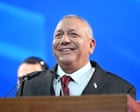
President Isaac Herzog tasked Yashar party leader Gadi Eisenkot with forming Israel's next government on November 8, 2026, turning a deadlocked October 27 election into a high-stakes test of political survival.
Headlines announcing the mandate make it sound like a clean handover of power. It isn't. Eisenkot holds the formal assignment, yet none of the coalition paths sitting in front of him can be assembled without breaking promises, alienating allies, or handing leverage back to rivals who lost ground at the ballot box.
Why a Mandate Does Not Equal a Majority
Israel's 120-seat Knesset fractured after last month's election left neither Prime Minister Benjamin Netanyahu's bloc nor the anti-Netanyahu opposition with an automatic majority. Likud remained the single largest faction, while Eisenkot's Yashar—founded in September 2025 after he broke from National Unity—won 21 seats on a platform built around national repair, security credibility, and ending political polarization.
Herzog's choice reflected math rather than sentiment. Even when a faction trails in raw size, a candidate who can credibly claim broader cross-bloc appeal or a clearer path to a Knesset majority gets first shot under Basic Law: The Government. Under Israeli rules, the designated leader gets an initial 28-day window—with a possible 14-day extension from the president—before the mandate shifts elsewhere or the country drifts toward repeat elections.
Anyone who has watched Israeli coalition bargaining for decades knows the first week after a mandate is always theater. Everyone publicly insists on principle. Private negotiations start looking for arithmetic that barely holds together.
By mid-to-late November, the friction inside Eisenkot's own camp was already showing. Talks over rolling back judicial overhaul legislation passed during Netanyahu's tenure ran into deep disagreements, and the Democrats party suspended coalition talks with Yashar amid what it called a stalemate. A mandate buys time and prestige, not automatic discipline among partners who only agree on one thing—opposing Netanyahu.
The Three Routes and Their Hidden Costs
Eisenkot has publicly kept three main avenues open, and every single one carries a steep political bill.
Bargaining With Haredi Factions Over the Draft
One route runs through ultra-Orthodox parties such as United Torah Judaism. Reports from Israeli outlets indicate talks have progressed on terms that could allow an Eisenkot-led arrangement, centering on how to handle arrests for military draft evasion.
Here is the catch. United Torah Judaism has pushed for legislation before a new government is sworn in, whereas Eisenkot has favored a post-swearing-in cabinet decision. Making concessions on military service cuts straight against a central pillar of Yashar's pitch to voters who want shared civic burdens and an end to blanket draft exemptions.
Relying on Arab Parties or Abstentions
Another option involves Arab factions—such as the Joint List and Ra'am—either through direct backing or through abstentions in a confidence vote that could let Eisenkot form a minority government.
Politically, that creates an immediate squeeze. Some members of the broader anti-Netanyahu camp have pushed back hard against depending on Arab parties, while Eisenkot has faced sharp cross-currents over how to balance civic equality and anti-incitement rhetoric with coalition taboos that still spook parts of the Zionist center-right.
Testing Talks With Likud
The third path is some form of unity or broad negotiation involving Likud. At first glance, talking to your chief rival looks like a contradiction for a leader who campaigned to replace him.
In practice, it serves a calculated purpose. Sitting at the table lets Eisenkot tell voters he tested unity in good faith if talks fail, while simultaneously applying pressure on hesitant partners elsewhere. The risk is equally obvious. Entertaining Likud restores political oxygen to a faction that lost its governing majority, and it forces an awkward reckoning over Netanyahu's own role.
| Coalition Option | Potential Upside | Core Political Risk |
|---|---|---|
| Ultra-Orthodox alignment or deal | Unlocks key Knesset votes and weakens Netanyahu's bloc | Alienates voters over military draft exemptions and concessions |
| Arab backing or vote abstentions | Enables a majority or minority government without Likud | Triggers pushback from hawkish or right-leaning bloc partners |
| Likud / unity negotiations | Signals pragmatism and increases leverage in other talks | Legitimizes Likud and risks alienating anti-Netanyahu base voters |
| Minority government | Allows swearing in even without full partner sign-off | Fragile day-to-day survival on votes and policy |
What Most Coverage Misses About Yashar's Pitch
Standard coverage tends to frame Eisenkot simply as a former IDF chief of staff—serving as military chief from 2015 to 2019 and later sitting in the war cabinet—stepping into the breach after years of bitter division. That shorthand misses why his appeal looks different from past opposition challengers.
First, his personal loss carries unmistakable weight in Israeli public life. Eisenkot lost his son and two nephews serving in Gaza. In a country where military sacrifice shapes moral authority more than slick slogans do, that grief gives him a hearing among centrist and traditional voters who might otherwise tune out partisan speeches.
Second, Yashar was built as a hybrid project rather than a pure protest slate. Eisenkot leaned into his Moroccan heritage, pitched toward traditional and Sephardi voters who have long anchored right-wing coalitions, and put heavy emphasis on women candidates—roughly half of Yashar's election slate—contrasting sharply with the male-dominated makeup of Netanyahu's coalition.
Suppose a hypothetical voter in central Israel voted right-of-center for years out of security habit, grew weary of coalition infighting, and wanted a steady hand without feeling like they had defected to the old left. That is the exact voter Yashar was designed to catch.
Winning 21 seats proves that pitch resonated. Turning 21 seats into a durable governing coalition is a completely different craft.
The Minority Government Gamble and the Road Ahead
If full consensus inside the anti-Netanyahu camp keeps stalling, a minority government is no longer a theoretical footnote. Reports indicate Eisenkot has weighed swearing in a minority administration—hoping some actors abstain rather than vote against him—even if coalition arithmetic remains razor-thin.
Minority governments in Israel are notoriously brittle. Every budget vote, judicial bill, and security decision becomes a high-wire act, and if a fragile government collapses into repeat elections, the prime minister stays on in a caretaker role. Voters already remember the exhausting cycle of five elections between 2019 and 2022; nobody outside the most hardened party strategists wants a rerun.
Herzog's speech when handing over the mandate pointed to heavy files waiting on the desk—regional threats tied to Iran, postwar diplomatic horizons, domestic crime and violence, economic strain, and the lingering trauma of October 7. None of those problems wait politely while coalition lawyers draft side letters.
Watch who blinks first on the draft issue and judicial legislation over the next few days, because whoever compromises on those two files will define whether Eisenkot governs with real authority or spends every week merely trying to survive the next Knesset vote.