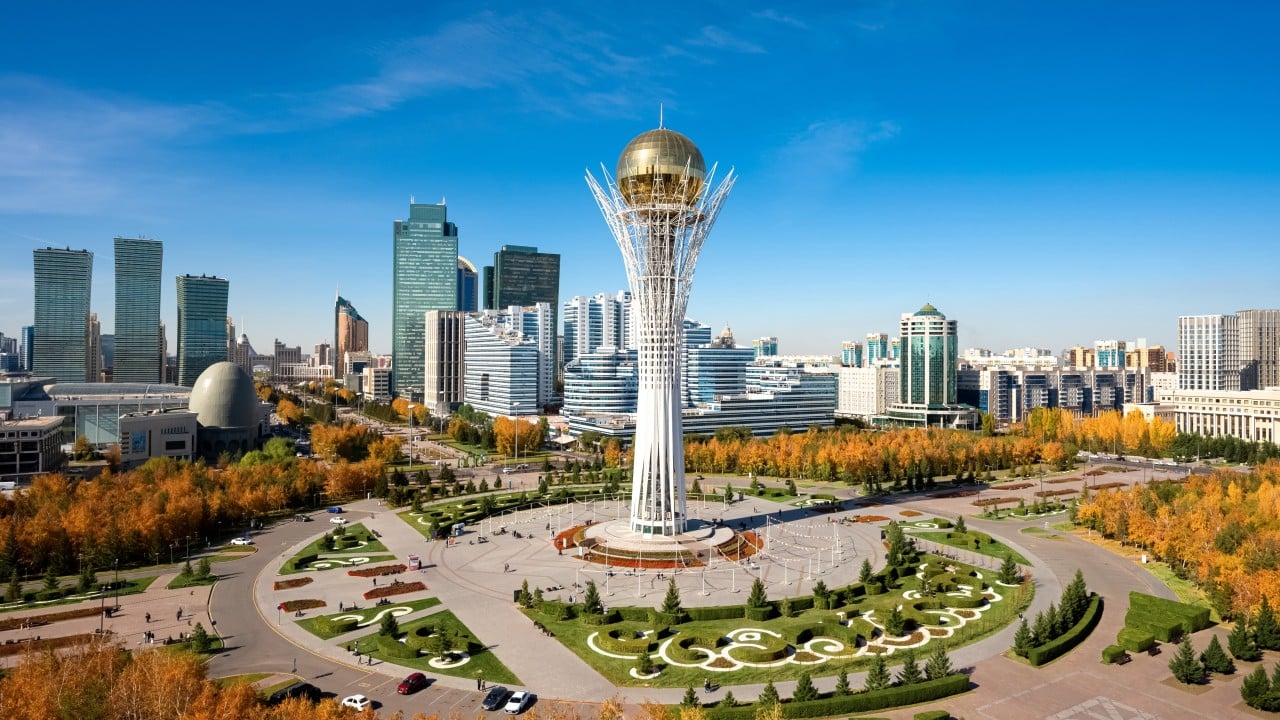
Hong Kong is re-engineering its financial sector to serve as the primary capital conduit for Central Asia, moving away from its exclusive reliance on traditional East Asian and Western capital flows. Chief Executive John Lee is leading a high-profile delegation of 60 corporate leaders and mainland Chinese entrepreneurs to Kazakhstan and Uzbekistan, a direct move to secure multi-billion dollar listings, logistics concessions, and infrastructure financing deals. This shift answers a critical structural challenge: as Western capital participation in Hong Kong public markets fluctuates, the city must find fresh corporate issuers and sovereign wealth to clear through its exchanges.
Central Asia, driven by an infrastructure boom and massive supply chain restructuring, requires sophisticated capital market access that domestic bourses cannot provide.
The Middle Corridor Liquidity Crunch
The primary driver for this sudden alignment is a major shift in global trade routes. The ongoing conflict in Ukraine has restricted the traditional northern rail corridors running through Russia, forcing global logistics firms to utilize the Trans-Caspian International Transport Route, widely known as the Middle Corridor.
This land-and-sea network connects China to Europe via Kazakhstan, the Caspian Sea, Azerbaijan, and Georgia. Maritime shipping from Chinese ports to Europe takes roughly two months. Moving goods via the Middle Corridor takes 14 days.
This dramatic speed advantage has triggered a massive capital requirement across Central Asian states. Kazakhstan’s national railway company, Kazakhstan Temir Zholy (KTZ), has spent 15 billion dollars modernizing its rail lines and plans to deploy an additional 15 billion dollars by 2030.
To fund this expansion and manage its existing 8.3 billion dollars in balance sheet debt, KTZ is preparing for an international initial public offering. The Astana International Exchange lacks the deep liquidity pools required to absorb an issue of this magnitude. Consequently, Kazakh sovereign wealth fund Samruk-Kyzyria is eyeing the Hong Kong Stock Exchange for a dual-listing or primary international offering.
For Hong Kong, securing KTZ would create a template for other state-backed enterprises across Eurasia. Uzbekistan, a double-landlocked nation with a rapidly expanding manufacturing base, is seeking similar cross-border financial avenues. The country is diversifying out of primary commodities into light industries, requiring substantial equipment financing and automated warehouse management technology.
Why Common Law is Moving East
The financial relationship relies on a structural compatibility that goes beyond simple trade tallies. Kazakhstan has spent years building the Astana International Financial Centre, an economic zone explicitly structured around English common law and international arbitration standards.
Hong Kong commercial law experts and legal firms see an immediate entry point here. The city can offer specialized debt issuance, project evaluation, and dispute resolution services that match the legal framework Central Asian entities are adopting to attract global investors.
Central Asian Trade Flows through Hong Kong (Share of Region Total)
┌──────────────────────────────────────┐
│ Kazakhstan                    59.7%  │
├──────────────────────────────────────┤
│ Uzbekistan                    13.2%  │
├──────────────────────────────────────┤
│ Remaining Republics           27.1%  │
└──────────────────────────────────────┘
This structural match helps overcome the basic geographic reality: Hong Kong does not share a border with these states. Instead, it offers an offshore renminbi clearing ecosystem that allows Central Asian miners, logistics operators, and sovereigns to trade directly with mainland China without absorbing US dollar conversion costs or facing Western clearing houses.
The average daily turnover of Hong Kong's RMB Real-Time Gross Settlement System hit over 3.1 trillion yuan, providing an unparalleled liquidity pool for Eurasian commodity exporters who want to hold or clear Chinese currency.
Friction Points and the Sovereign Wealth Problem
The strategy faces significant practical hurdles. Hong Kong retail and institutional investors know very little about Central Asian corporate governance.
A decade ago, attempts to list international mining companies on the local exchange stalled due to low trading volumes, unfamiliarity with foreign regulatory regimes, and poor secondary market liquidity. Local brokerages will need to rapidly build out research desks capable of evaluating asset risks in regions where political transitions can abruptly alter regulatory environments.
Sanction compliance presents another operational challenge. Central Asian economies maintain tight, historic trade linkages with Russia. Uzbekistan and Kazakhstan both count Russia and China as their top two trading partners.
Hong Kong banks, bound by strict international anti-money laundering frameworks and eager to preserve their access to the global US dollar clearing system, will have to run rigorous compliance audits on every Central Asian entity seeking a local listing or credit line. A single misstep could expose local financial infrastructure to secondary sanctions.
The Shift to Private Equity and Fixed Income
While public equity listings garner headlines, the immediate capital movement is happening in private equity and fixed income. Kazakhstan has accumulated significant sovereign wealth via oil and mineral exports. They need sophisticated asset management vehicles to diversify these holdings out of European and American treasury bonds.
Hong Kong asset managers are pitching specialized family office structures and limited partnership funds to Central Asian high-net-worth individuals and state funds. These structures offer direct access to the tech-heavy Greater Bay Area economy, allowing Eurasian capital to invest in automation, green energy infrastructure, and agricultural technology companies based in Shenzhen and Guangzhou.
The financial pivot is not a sudden charity mission. It is a calculated, pragmatic diversification strategy for an international financial center adapting to a fragmented global economy. Hong Kong is betting that by anchoring the financing of the Middle Corridor, it will secure its position as the indispensable financial gateway for the next generation of Eurasian multinational corporations.


