Power thrives in isolation. When that isolation is compounded by vast geographic expanses and profound cultural divides, accountability often vanishes entirely.
Former Catholic Bishop Christopher Saunders was sentenced to six years and six months in prison after a Western Australian district court jury convicted him of thirteen offenses, including sexual penetration without consent and multiple counts of unlawful and indecent assault against young Indigenous men. For decades, the remote Kimberley region functioned as an institutional fiefdom where oversight was virtually nonexistent. Saunders ruled over a diocese larger than many European nations, operating with a level of absolute authority that medieval lords might have envied.
The Mechanics of Isolation
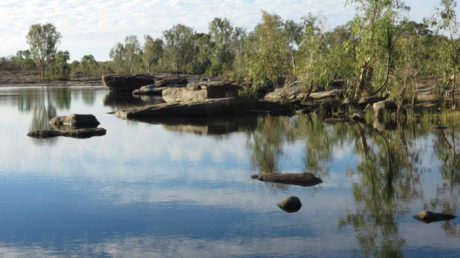
Geography is a weapon in the hands of an abuser. The Diocese of Broome covers an area stretching across northwestern Australia that dwarfs the state of Texas in spirit if not strictly by square mileage, yet serves a Catholic population of barely twelve thousand. Distances between settlements are measured in hundreds of kilometers of unforgiving dust and heat.
In these remote outposts, the church was not merely a spiritual institution; it was often the primary provider of infrastructure, social connection, and basic resources. Saunders exploited this total dependency. Court disclosures revealed a calculated pattern of grooming. He leveraged his immense status to target vulnerable Aboriginal youths and teenagers, supplying alcohol, cigarettes, money, and mobile phones. The victims were trapped in a dynamic where the local moral authority was simultaneously their benefactor and their predator.
One victim captured the chilling reality of this dynamic in a statement presented to the court, noting that he felt treated like a disposable plaything by a man he trusted to guide him toward a better life. That betrayal cuts deeper than any physical scar. It exposes how systemic power imbalances allow predators to weaponize charity.
The Institutional Blind Spot
The Australian legal system has spent the better part of two decades reckoning with ecclesiastical corruption. From the high-profile trials of late Cardinal George Pell to regional investigations, a grim pattern has emerged. Institutions built on hierarchical obedience struggle fundamentally with self-correction.
When allegations against Saunders first surfaced, the institutional response was agonizingly slow. Saunders stepped aside from active duties in 2020 only after public pressure mounted, and his resignation was accepted by Rome the following year. An internal church inquiry was initiated, then stalled, waiting for secular authorities to pry open doors that ecclesiastical officials preferred to keep locked.
This reliance on external police forces to police internal clerical crime remains a glaring systemic failure. Religious hierarchies possess vast investigative apparatuses, yet those resources are routinely deployed to manage public relations rather than uncover uncomfortable truths. If law enforcement agencies had not intervened, Saunders might have finished out his tenure cloaked in the untouchable immunity of the collar.
The Cost of Silence
The fallout from the Broome trial extends far beyond a single courtroom in Perth. It forces a confrontation with how marginalized communities are treated by institutional bodies that claim to serve them. Indigenous Australians have historically borne the brunt of institutional overreach and neglect. When a representative of a global religious power exploits young men from these very communities, it compounds centuries of generational trauma.
Church leaders have offered the obligatory expressions of sorrow. Statements about shattered trust and violated dignity flow easily from administrative offices in Sydney and Rome. Yet, hollow apologies do nothing to alter the structural conditions that allowed a regional bishop to act with impunity for years. True accountability requires dismantling the closed-loop systems that protect perpetrators at the expense of the vulnerable.
The sentence handed down to a seventy-six-year-old former prelate marks a legal milestone, but it is not a cure. The quiet towns of the Kimberley are left to pick up the pieces of lives disrupted by a predator wrapped in robes. Justice arrived, but it arrived late, dragged across the red dirt by the sheer persistence of victims who refused to stay invisible.
This video provides additional context regarding the historical abuse allegations and the subsequent legal proceedings involving the former Bishop of Broome.