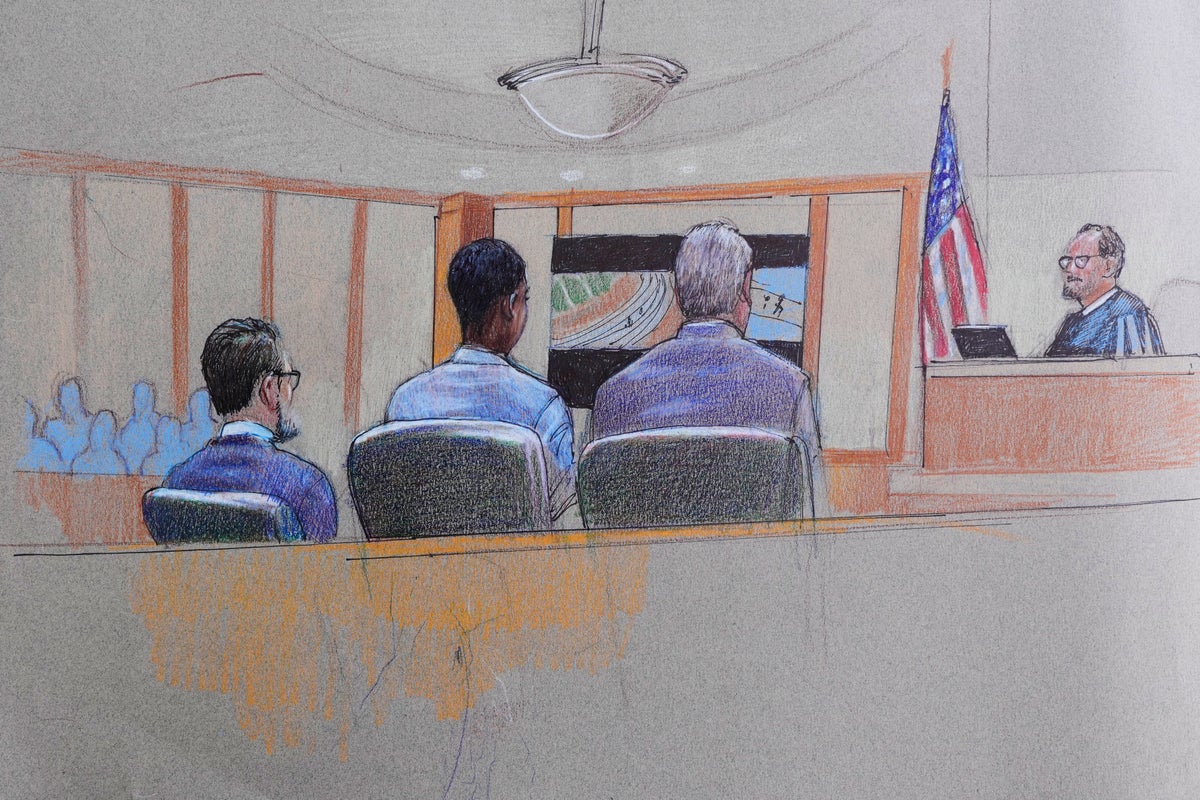
A federal judge in Manhattan has dismantled a sweeping administration directive that suspended immigrant visa processing for nationals across seventy-five nations.
In a sharp ruling from the Southern District of New York, United States District Judge Jeannette Vargas declared the policy patently unlawful, finding that Secretary of State Marco Rubio severely overstepped his statutory authority. The decision strikes directly at the heart of the White House's broader immigration containment strategy, exposing the legal vulnerabilities of using broad executive discretion to rewrite statutory immigration frameworks.
For months, families separated across international borders, advocacy organizations, and legal defense funds have scrambled to measure the fallout of a directive that halted permanent legal pathways for applicants from regions spanning Africa, South Asia, Latin America, and the Middle East. Friday’s verdict offers immediate relief on paper, yet it lays bare a deeper institutional tug-of-war over who ultimately controls the mechanics of legal entry into the United States.
The Anatomy of an Overreach
When the State Department rolled out the suspension earlier this year, officials framed the policy through the lens of economic protectionism. The core argument rested on a controversial interpretation of the public charge rule. Proponents insisted that applicants originating from the designated seventy-five countries presented an unacceptably high risk of leaning on domestic welfare systems.
Instead of evaluating applicants through the traditional, individualized review process mandated by Congress, the directive established a blunt instrument. Nationality alone became the disqualifying metric. Consular officers were instructed to turn away individuals seeking permanent residency simply because of where they were born, bypassing the detailed background checks and financial sponsorships normally weighed on a case-by-case basis.
Judge Vargas targeted this exact mechanism in her written opinion. Federal immigration law explicitly guards against discrimination based on nationality when issuing immigrant visas. Furthermore, the statute divides authority carefully, stripping the Secretary of State of direct power to dictate how individual consular officers adjudicate permanent residency petitions. By issuing a blanket geographic freeze, the administration attempted an executive end-run around congressional intent.
The Human Cost of Administrative Friction
Behind the dense legalese of federal court filings sit hundreds of thousands of stalled lives. The suspension caught applicants mid-stream. Spouses holding approved petitions, children waiting to join parents, and professionals sponsored by U.S. employers found their paperwork frozen indefinitely.
Consider a hypothetical scenario reflecting many real cases handled by plaintiffs in the lawsuit: A U.S. citizen living in Ohio spends two years sponsoring a spouse from an affected African nation. The petition clears every hurdle, background check, and financial clearance requirement. On the eve of the final consular interview, the policy takes effect. The application is shelved, not due to any fault of the applicant, but because a generalized directive categorized their birthplace as high-risk.
Legal aid attorneys who pressed the challenge note that this friction disrupted more than just travel plans. It drained family savings, forced difficult relocations abroad, and exposed deep anxieties about the stability of legal immigration pathways. While the court’s order vacates denials issued solely under the banned policy and orders the State Department to restore individualized reviews, administrative backlogs mean that clearing the resulting queue will take months, if not years.
The Strategy Behind the Scrutiny
This legal defeat is far from an isolated incident. It represents a recurring friction point between executive branch ambitions and judicial oversight. The administration has made no secret of its desire to slow down or outright restrict migration through any available regulatory lever, viewing aggressive screening as a national security imperative.
Yet, civil rights coalitions and immigrant advocacy groups have systematically mapped out a counter-strategy. Organizations like Democracy Forward, the Catholic Legal Immigration Network, and African Communities Together have leaned heavily on administrative law. Rather than arguing purely ideological points, these legal teams challenge executive actions on procedural grounds, arguing that federal agencies cannot ignore statutory guardrails simply because they disagree with congressional design.
The administration is widely expected to appeal the Manhattan federal court's decision, pushing the dispute toward the Second Circuit Court of Appeals. Legal analysts point out that while the immediate ruling stops the current iteration of the ban, the underlying tensions over executive authority in foreign relations and immigration enforcement remain unresolved.
For now, consular posts must return to the tedious, individualized adjudication required by the Immigration and Nationality Act. The federal bench has drawn a firm boundary against using broad administrative shorthand to bypass the rule of law, leaving the White House searching for alternative mechanisms to enforce its restrictionist vision without tripping over statutory wire.