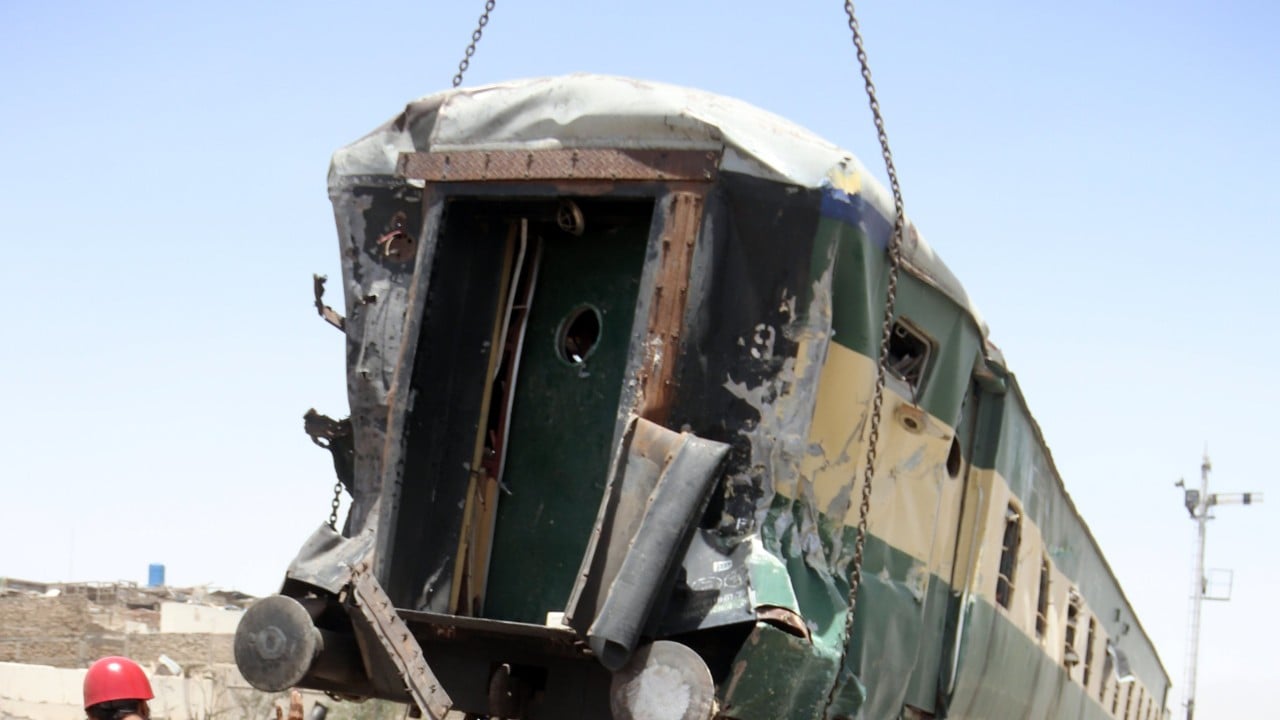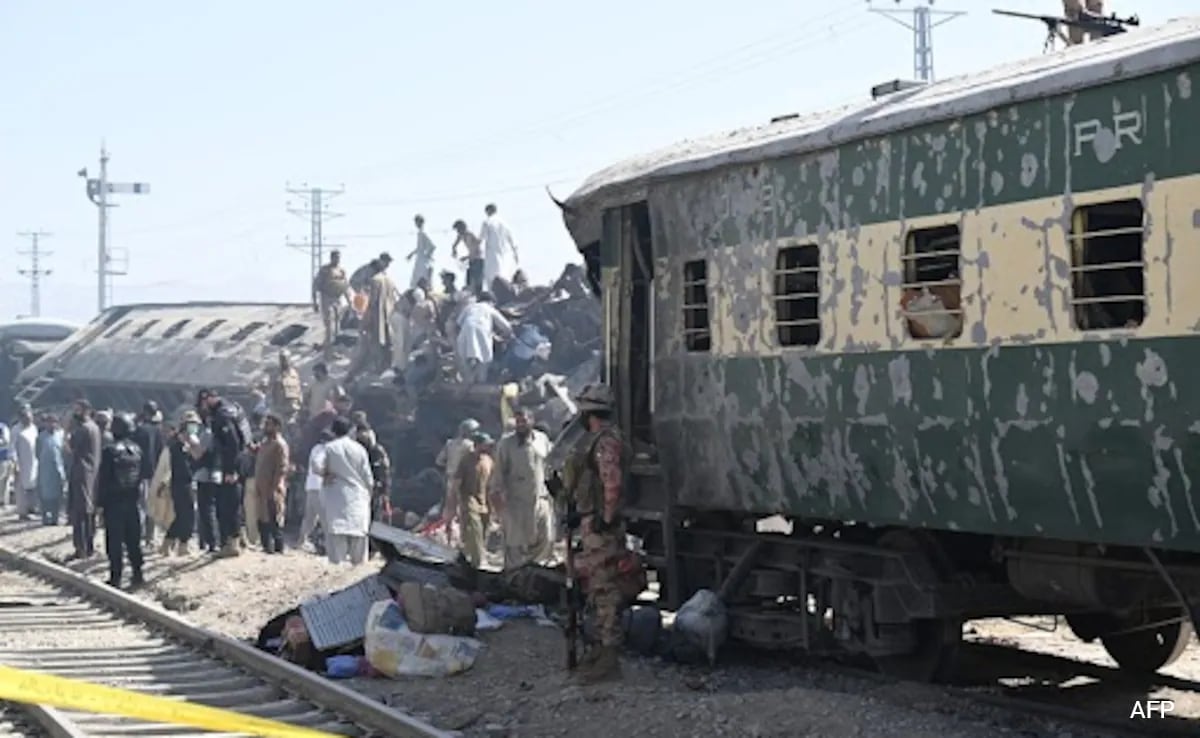
A devastating suicide vehicle attack targeting a troop-carrying train in Quetta, Balochistan, has killed at least 24 people and injured more than 100 others, exposing deep vulnerabilities in Pakistan's domestic security framework. The assault occurred near the Chaman Phatak railway station just after the train departed the high-security Quetta military cantonment. Packed with over 300 soldiers and their families heading home for the Eid holidays, the train became a moving target for an explosive-laden car that rammed directly into one of the carriages, ripping through steel and triggering a catastrophic fire.
The banned Baloch Liberation Army (BLA) quickly claimed responsibility, assigning the operation to its elite, self-sacrificing fidayeen unit, the Majeed Brigade. While initial government dispatches tried to paint this as an isolated act of cowardice, the cold reality is far more clinical. This was a highly synchronized ambush executed against a moving armored asset right under the nose of regional security commands.
The Quetta disaster highlights a profound systemic failure in intelligence and perimeter security. The fact that an insurgent could maneuver a vehicle-borne improvised explosive device (VBIED) into the immediate vicinity of a moving military transit corridor implies structural blindness.
The Shift to Heavy Infrastructure Sabotage
For decades, the insurgency in Balochistan followed a predictable pattern of low-intensity hit-and-run tactics, localized IEDs, and pipeline sabotage. That era is over. The Majeed Brigade has shifted toward high-yield, asymmetric warfare focusing on moving logistics, security convoys, and state infrastructure.
Targeting a passenger train carrying hundreds of soldiers is a calculated escalation designed to project maximum vulnerability. Trains are inherently difficult to secure over long stretches of desolate terrain, but hitting one near a vital urban checkpoint like Chaman Phatak points to a failure in local grid containment.
[Quetta Military Cantt] ---> (Train Departs with 300+ Personnel)
                                    |
                                    v
[Chaman Phatak Intersection] <--- [BLA Majeed Brigade VBIED]
                                    |
                                    v
                         (Impact & Derailment)
The mechanics of the strike reveal meticulous planning. The attackers knew the departure schedule from the military cantonment, the route, and the specific density of troop deployment within the carriages. Ramming a vehicle directly into a moving train requires precise timing and a breakdown in municipal traffic control surrounding the railway lines.
Why the Current Containment Strategy is Failing
Islamabad has long relied on static checkpoints, heavy paramilitary deployment, and localized sweep operations to maintain order in Balochistan. This strategy is proving obsolete against highly motivated, decentralized insurgent cells.
- Predictable Security Corridors: Relying on fixed railway lines and routine military holiday transits creates soft targets for patient adversaries.
- Asymmetric Resource Allocation: While the military monitors main highways and corporate extraction projects, secondary transit lines remain porous.
- Failure of Local Intelligence Gathers: Moving a vehicle packed with military-grade explosives through Quetta requires a logistics network that should have triggered counter-terrorism indicators.
The state’s response has historically been to double down on iron-fisted kinetic operations. However, kinetic force alone cannot secure thousands of miles of open railway track when the opposing force operates with suicidal intent. The intelligence apparatus is consistently reacting to tragedies rather than disrupting the supply chains that assemble these vehicle-borne bombs.
The Deeper Economic Undercurrents
To understand why young Baloch recruits are joining units like the Majeed Brigade, one must look beyond the immediate security architecture. Balochistan is Pakistan's largest province by landmass and its richest in terms of natural gas and mineral wealth, yet it remains the country's most impoverished region.
The local population has watched billions of dollars in infrastructure development stream into the province, primarily linked to the multi-billion-dollar China-Pakistan Economic Corridor (CPEC). Yet, very little of that capital trickles down to basic regional development, clean water, or employment for local youths. This stark economic alienation creates fertile ground for insurgent recruitment, transforming local grievances into radicalized militancy.
| Regional Metric | Balochistan Average | National Average |
|---|---|---|
| Poverty Rate | ~40-45% | ~24% |
| Infrastructure Investment Access | Centered on State/Foreign Enclaves | Distributed across urban hubs |
| Primary Insurgent Target Focus | State Transport & Resource Extraction | Political & Soft Civilian Targets |
The state views Balochistan through a purely geopolitical lens, treating it as a resource zone to be secured rather than a population to be integrated. Consequently, every new security checkpoint or heavy-handed sweep reinforces the insurgent narrative of an "occupying force."
The Intelligence Void
Fixing this crisis requires moving past hollow political condemnations and addressing the immediate structural failures. The military must decentralize its troop movements, shifting away from massive, predictable holiday train transports that offer massive casualty potential for attackers.
More critically, Pakistan's counter-terrorism agencies must overhaul their human intelligence networks within urban Balochistan. The assembly of a VBIED is not a silent affair. It requires a safe house, explosive procurement, vehicle modification, and a driver. If the state cannot intercept that pipeline before the vehicle reaches a railway signal, no amount of battlefield bravado will stop the next carriage from burning.