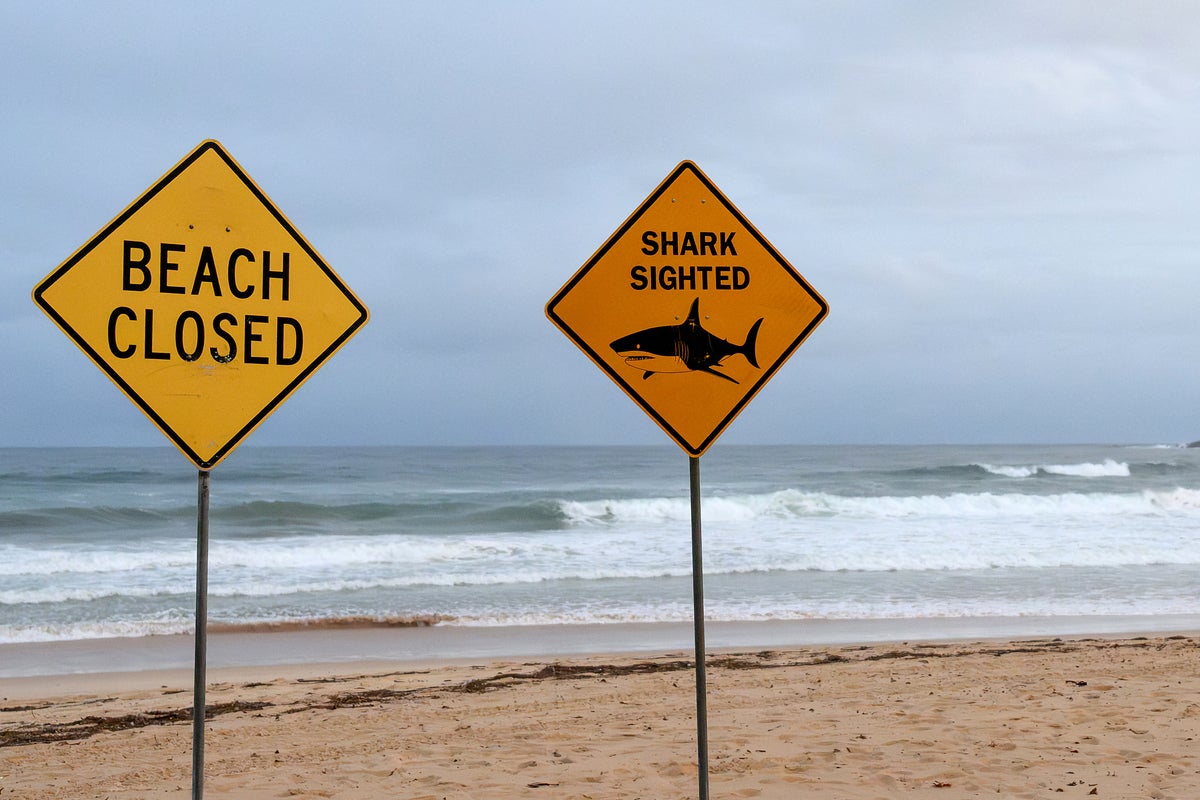
A 39-year-old spearfisherman died on Sunday after sustaining a critical head injury from a shark attack at Kennedy Shoal, a reef off the Queensland coast near Tully. The tragedy marks Australia’s second fatal shark encounter in just over a week, following the death of 38-year-old Steven Mattaboni off Rottnest Island in Western Australia on May 16. While standard news reports frame these back-to-back fatalities as tragic anomalies, an investigation into shifting marine ecosystems, changing human behavior, and outdated public safety policies reveals a far more systemic emergency unfolding along the coastline.
The immediate data shows a stark pattern. The victim at Kennedy Shoal was diving with three friends when he was targeted in the water, roughly 45 kilometers offshore along the Great Barrier Reef. Just eight days prior, Mattaboni was struck at the surface by a four-meter great white shark while spearfishing 80 meters from shore.
The common thread between these incidents goes beyond simple bad luck. Both men were engaged in spearfishing, a recreational activity that directly intersects with shifting predator behaviors in Australian waters.
The Acoustic Dinner Bell
Spearfishing has changed dramatically over the last decade. Historically a niche pursuit, the surge in high-quality consumer video gear and social media exposure has driven a massive influx of amateur divers into deep offshore waters.
Sharks are highly evolved sensory hunters. When a spearfisherman strikes a fish, the animal emits low-frequency acoustic distress vibrations that travel hundreds of meters through the water column. To a bull shark or a tiger shark, this signal is an unambiguous dinner bell.
Marine biologists refer to this phenomenon as depredation, where a predator learns to associate human activity with an easy meal. In Queensland's tropical waters, offshore charter operators and commercial fishers have warned for years that apex predators are becoming bolder, frequently stripping catches off lines before they reach the boat. When a diver enters that specific ecosystem with a bleeding, struggling fish, they are inserting themselves directly into a highly competitive feeding cycle.
The Myth of Total Net Protection
Public safety debates in Australia inevitably return to beach netting programs. Queensland and New South Wales have relied on traditional shark nets and drumlines since the mid-twentieth century to safeguard popular swimming zones.
The public falsely believes these barriers create an impenetrable wall between deep water and the sand. They do not. Traditional shark nets are merely short, submerged gillnets designed to catch and kill large sharks in the vicinity, reducing the local population over time. Sharks routinely swim over, under, and around them.
Furthermore, these traditional nets create a false sense of security while inflicting severe ecological damage. They catch non-target species like dolphins, turtles, and rays, prompting fierce resistance from conservation groups. As coastal states face mounting pressure to phase out these destructive barriers, the safety architecture relies increasingly on newer technology like SMART drumlines and drone surveillance.
The limitation of these modern tools is geographical proximity. Drones and coastal monitoring programs operate almost exclusively over the surf zone of metropolitan beaches. They offer zero protection to recreational divers, spearfishers, and boaters exploring offshore reefs like Kennedy Shoal, where Sunday's attack occurred.
Environmental Triggers on the Coast
Beyond the offshore risks, changing weather patterns are fundamentally altering how sharks interact with coastal waters. Earlier this year, dozens of beaches along Australia's eastern coast were closed after a series of non-fatal encounters occurred in rapid succession.
The catalyst was a period of intense, prolonged rainfall. Heavy storm runoff flushes organic matter, debris, and nutrients out of river systems and directly into ocean estuaries. This creates vast plumes of murky, low-visibility water near the shore.
Heavy Rainfall -> River Runoff -> Murky Coastal Water -> Reduced Visibility -> Higher Accidental Strike Risk
Bull sharks thrive in these turbid environments. They possess an exceptional ability to navigate low-salinity, low-visibility waters, using their acute lateral line systems to sense movement when their vision is compromised. When human swimmers enter these murky coastal zones after major storms, the probability of an accidental "mistaken identity" strike increases exponentially.
Balancing Conservation and Public Safety
The rising frequency of severe encounters exposes a ideological rift in Australian coastal management. On one side, conservation groups emphasize that Australia averages fewer than three shark-related fatalities per year out of millions of beach visitations. They argue that apex predators are vital for maintaining the health of reef systems and that entering the ocean comes with inherent natural risks.
On the other side, regional communities and tourism operators face immediate economic and psychological fallout whenever a high-profile attack occurs. A single headline can depress local coastal economies for months.
The path forward requires abandoning the binary debate between lethal eradication and total inaction. Relying on fixed, passive nets installed in 1962 is no longer a viable strategy for an ocean environment altered by climate shifts and increased human occupancy.
State governments must pivot funding away from political placation and toward targeted, real-time tracking networks. Expanding satellite-linked acoustic tagging arrays allows authorities to send immediate digital alerts to water users when a tagged predator approaches a specific zone. For offshore divers and spearfishers, safety will depend entirely on personal deterrent technology and a fundamental shift in behavioral protocols, such as using containment vessels that instantly mask the blood and electrical signals of harvested fish. The ocean is changing rapidly, and human safety strategies must evolve at the same pace to avoid further preventable losses.