The Mediterranean coastline is not a blank canvas waiting for a billionaire's signature. Yet, across the pristine expanses of the Vjosa-Narta delta in Albania, heavy machinery has begun tearing through protected wetlands to make way for a luxury development backed by American investor Jared Kushner. This flashpoint, which ignited mass citizen resistance now famously dubbed the Flamingo Revolution, exposes a darker underbelly of modern design culture. Prominent international architects who lent their prestige to draft these hyper-exclusive master plans are looking away, hiding behind corporate contracts while local ecosystems face irreversible erasure.
When the first bulldozers pierced the dunes of Zvërnec, they did not arrive in a vacuum. They were preceded by polished renderings, glossy portfolios, and conceptual blueprints designed by elite architectural firms eager to cash in on Prime Minister Edi Rama’s aggressive push for high-end tourism. These professionals claim they are simply executing a client's vision within legal frameworks amended specifically to bypass conservation laws. But that defense collapses under basic scrutiny. Designing a high-density resort complex inside a legally protected nature reserve—a critical habitat for thousands of flamingos, pelicans, and endangered sea turtles—is not an exercise in neutral spatial planning. It is an active choice to monetize ecological destruction.
The Anatomy of Professional Detachment
Architecture has long nursed a Messiah complex, convincing itself that structural creation is an inherently progressive act. When applied to fragile coastal deltas, however, that philosophy devolves into complicity. Prime Minister Rama, himself a former artist and painter, has expertly weaponized the architectural community to legitimize controversial land deals. By bringing world-renowned designers into the fold, the administration wraps commercial exploitation in the sophisticated language of urban renewal and economic progress.
The mechanics of this professional blind spot are straightforward. Large studios operate on international scales where local context is often reduced to topographical data points rather than living communities. When an elite firm accepts a commission for Sazan Island or the Narta Lagoon, the environmental impact assessments are treated as bureaucratic hurdles to clear rather than ethical boundaries.
- The Aesthetics of Distraction: Renderings presented to the public emphasize sleek lines, infinity pools, and low-impact materials while omitting the massive infrastructure expansion required to support thousands of luxury units.
- The Outsourcing of Conscience: Studios hide behind local subcontractors and national permitting authorities, arguing that if the state issues a building permit, the moral validity of the project is no longer their burden.
- The Precedent of Impunity: When designers validate the dismantling of protected areas for elite enclaves, they signal to global capital that any landscape on Earth is for sale if the fee is high enough.
The Real Cost of Silent Blueprints
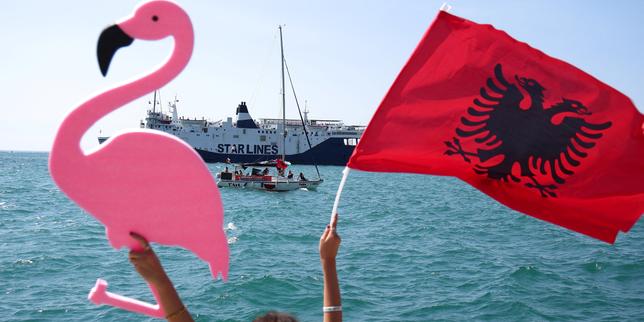
The backlash in Tirana streets transcends a standard environmental dispute. It is a reckoning over public sovereignty and professional ethics. Protesters carrying handmade foam flamingos are confronting a political class that treats national territory as private equity. Meanwhile, the architects who sketched the master plans remain conspicuously absent from the public square, collecting retainers while local activists face private security and pepper spray.
This dynamic reveals a profound structural decay within the design professions. Urbanists spend years theorizing climate resilience and sustainable urban futures at global biennales, only to board private flights to authoritarian-leaning states to design mega-resorts over nesting grounds. The hypocrisy is staggering, yet systemic. Industry bodies rarely censure members for working on projects that violate international conservation treaties, provided the invoices are paid on time.
The crisis in the Balkans serves as a harsh warning for the entire design sector. As ecological margins shrink globally, the defense of "just following the client's brief" will no longer shield creators from public accountability. When architecture divorces itself from ecological reality, it ceases to be a discipline of shelter and community, becoming instead a mercenary tool for the ultra-wealthy. The drafting tables of Europe's top firms helped build this crisis, and no amount of green-washed marketing can wash away the mud of the Narta delta.
The Flamingo Revolution grows against Rama and the Kushner project
This footage captures the scale of the ongoing demonstrations in Tirana as citizens push back against government-backed development in protected ecological zones.