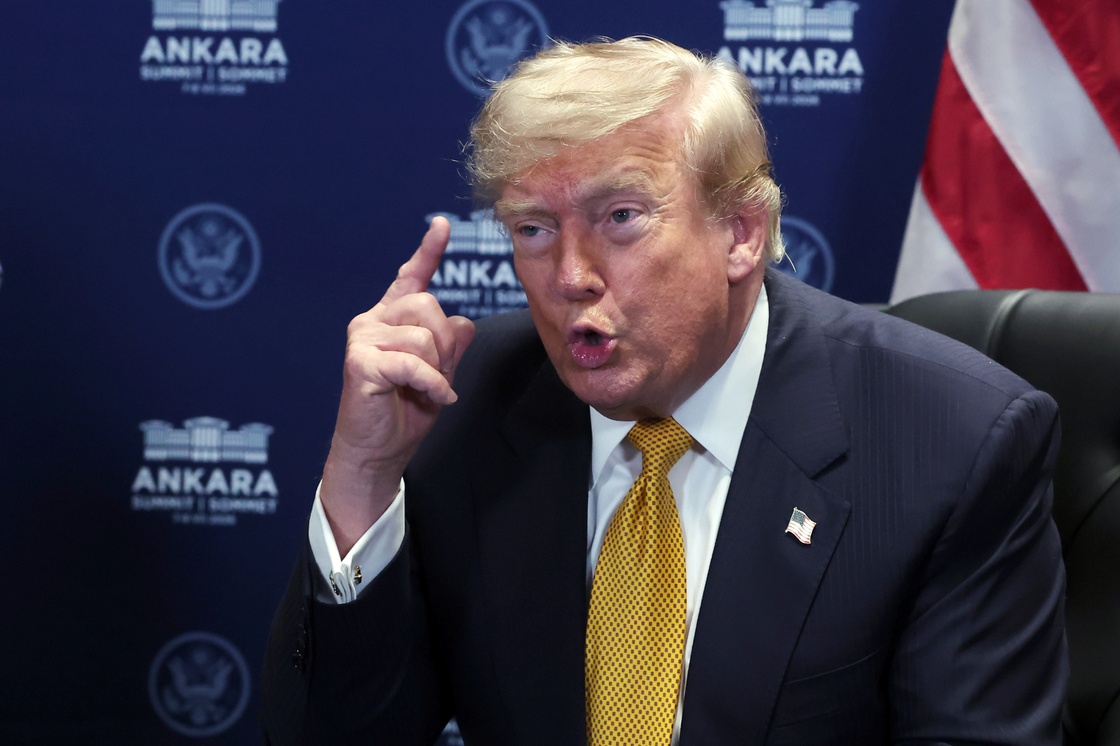
The fragile diplomatic architecture holding the Middle East together collapsed in a single morning at the Ankara NATO summit. When Donald Trump declared the weeks-old interim ceasefire with Tehran officially over, he did more than reignite a hot war in the Strait of Hormuz. He exposed a widening structural fracture within the Western alliance itself, turning his fury from Middle Eastern adversaries toward European capitals, specifically targeting Madrid with unprecedented threats of a total economic embargo.
The public justification centers on defense budgets and airspace permissions. Yet an examination of the underlying strategic realities reveals a deeper crisis of non-cooperation that threatens the global shipping lanes and the foundational legalities of international trade.
The Mirage of the June Truce
The interim accord signed on June 17 was structurally flawed from its inception. Designed as a temporary cooling-off period to negotiate a long-term peace deal by mid-August, the agreement assumed both Washington and Tehran would tolerate a highly volatile status quo. That assumption failed on July 7, when Iranian forces attacked three commercial vessels in the Strait of Hormuz, including the Saudi-flagged M/T Wedyan and the Liberian-flagged M/T Cyprus Prosperity.
Tehran's strategy has shifted from covert disruption to an assertive demand for sovereign control over the waterway. The Islamic Revolutionary Guard Corps insists on charging transit fees for passage through the strait, a position the United States rejects as illegal maritime extortion.
The response from Washington was immediate and heavy-handed. U.S. Central Command launched retaliatory strikes on more than 80 Iranian targets, including coastal radar installations, air defense networks, and dozens of small attack boats near Bandar Abbas. Simultaneously, the White House revoked the temporary sanctions waivers that had allowed Iran to legally export oil during the truce.
When questioned alongside NATO Secretary General Mark Rutte in Turkey, Trump dismissed further diplomacy with the Iranian leadership as a complete waste of time. He made it clear that Washington is returning to a policy of maximum military pressure.
Tehran retaliated by launching ballistic missiles and drones at American installations in Kuwait and Bahrain, confirming that the conflict has escalated far beyond a localized maritime skirmish.
Why Spain Became the Ultimate Target
The collapse of the ceasefire quickly triggered a secondary explosion within NATO. Trump openly lambasted European allies for refusing to back U.S. military operations against Iran, singling out Spanish Prime Minister Pedro Sánchez for severe economic retaliation. Trump instructed Treasury Secretary Scott Bessent to halt all commercial relations and visits with Spain, calling the country a terrible partner.
The immediate catalyst for this anger was Madrid's refusal to grant the U.S. Air Force permission to use Spanish military bases or airspace for missions connected to the Iran war. The Socialist-led coalition government in Spain ordered the relocation of 15 American aircraft, including critical refueling tankers, out of the joint naval and air bases at Rota and Morón in southern Spain.
Spanish Foreign Minister José Manuel Albares defended the decision by noting that the American offensive lacked a United Nations mandate and fell completely outside the scope of bilateral defense agreements.
Yet the base dispute is only the tipping point. Washington has grown increasingly resentful of Madrid's domestic and foreign policy alignment under Sánchez. Spain has consistently resisted pressure to meet the alliance's new, aggressive defense spending targets, which some factions want pushed as high as 5% of gross domestic product. While Madrid recently managed to lift its spending to 2%, it remains a laggard in the eyes of Washington hawks.
Furthermore, Spain's recent efforts to legally challenge American social media executives over toxic content and its refusal to allow ships carrying weapons to Israel to dock in its ports have created an ideological chasm between the two administrations.
The Legal and Economic Limits of Presidential Pomp
Threatening a trade shutdown is a potent rhetorical weapon, but executing a unilateral embargo against a single European Union member state is practically impossible under current international legal frameworks.
The European Shield
Spain does not negotiate its own trade terms. As a member of the European Union's customs union and common commercial policy, any targeted trade action against Madrid is legally an action against the entire 27-nation bloc. Brussels maintains strict regulations requiring a unified response to external economic coercion. If Washington attempts to block Spanish goods, the European Commission is legally bound to retaliate against American exports across the entire union.
Constitutional Barriers at Home
Domestically, the International Emergency Economic Powers Act grants the White House sweeping authority to regulate commerce during emergencies. However, the statute requires the president to formally demonstrate that Spain poses an unusual and extraordinary threat to the national security or economy of the United States. Trade experts and constitutional scholars agree that a disagreement over NATO defense targets or airspace access does not meet this high legal threshold.
The administration could attempt to use targeted tools, such as the anti-dumping tariffs deployed against Spanish black olives during Trump's first term under the 1930 Tariff Act. Those measures successfully degraded Spain's market share, but expanding such sector-specific tariffs into a total embargo would face immediate, successful challenges in federal courts and the World Trade Organization.
Market Realities vs Rhetorical Threats
Wall Street and international energy markets reacted sharply to the geopolitical theater. Brent crude prices jumped 5% immediately following the announcement, reflecting fears of a protracted blockage in the Strait of Hormuz. The Dow Jones Industrial Average dropped 500 points as industrial manufacturing and transport sectors assessed the risks of broader European trade friction.
Despite the aggressive rhetoric from the Ankara summit, institutional investors are largely treating the threat against Spain as political posturing rather than an imminent economic disruption. Private commerce between the two nations operates independent of executive temperaments. Spain actually runs a trade deficit with the United States, meaning American businesses sell more to Spain than they buy. A disruption would directly harm American exporters of liquefied natural gas, machinery, and agricultural products.
Major investment firms, including BlackRock, have maintained their positive outlooks on Spanish equities, citing strong domestic growth that outperforms much of Western Europe. The corporate sector recognizes that the joint military facilities at Rota and Morón are too strategically vital for the Pentagon to abandon, regardless of the diplomatic friction at the top.
The true danger lies not in a literal trade blockade of Western Europe, but in the total normalization of economic warfare against traditional allies. By using the threat of financial ruin to punish a sovereign nation for its defensive and diplomatic neutrality, Washington is accelerating the fragmentation of the global order. Allies are forced to choose between absolute strategic compliance or economic vulnerability, a reality that will inevitably push European capitals to seek greater strategic autonomy and alternative trade alliances outside the American sphere of influence.


