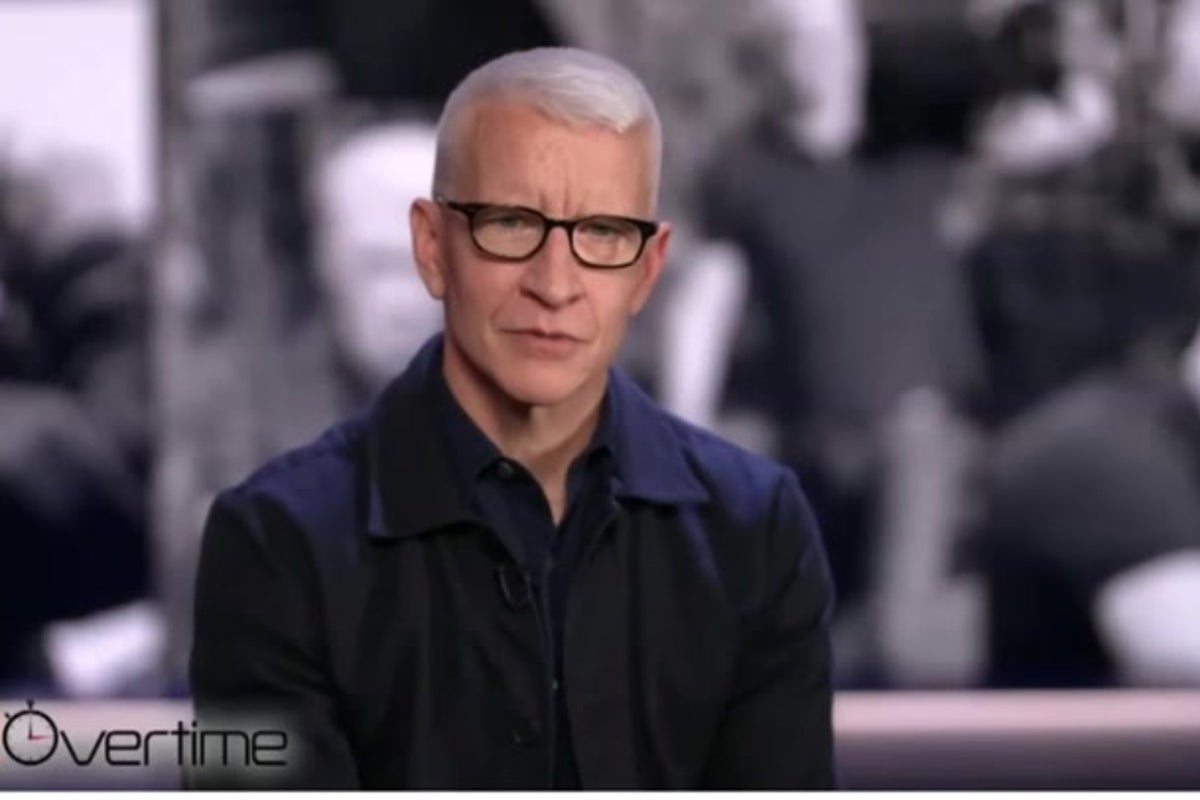
The ticking stopwatch that has anchored Sunday evenings for more than half a century just lost its most recognizable modern face, and the departure is a symptom of a much larger, ideological institutional battle. Anderson Cooper officially signed off from CBS’s 60 Minutes, concluding a two-decade run as a cornerstone contributor. While Cooper publicly framed his exit around family obligations and the exhausting realities of raising two young sons while anchoring a nightly CNN program, industry insiders point to a deeper structural friction. Cooper’s final broadcast included a pointed, defensive plea for the broadcast to maintain its institutional independence and historic standards. The underlying reality is that his exit follows a massive management overhaul at CBS News, orchestrated by Paramount Skydance and steered by controversial editor-in-chief Bari Weiss, who assumed control late last year. Cooper's departure is not merely a lifestyle choice. It represents a fundamental fracture over the editorial direction of America’s most lucrative television news product.
The Friction Behind the Farewell
The official narrative in television news is rarely the whole story. For twenty years, Cooper balanced the frantic, reactive posture of cable news with the methodical, deep-bore reporting required by the Sunday night newsmagazine. It was an arrangement that required sacrificing vacation time and flying to active combat zones or disaster areas between his nightly cable shifts.
The public explanation for the split is entirely reasonable. Cooper is fifty-eight, with children aged four and six. He recounted a chillingly relatable anecdote from a colleague about the final time a child willingly holds a parent's hand on the way to school, noting the agony of missing those milestones while reporting from halfway across the globe.
Behind the scenes, however, the environment at CBS News had turned frosty. Since Weiss took the editorial helm, the network has undergone a rapid, calculated restructuring. Sources close to the production indicate that Cooper, along with several high-profile departures from CBS Evening News and CBS Mornings, grew increasingly alienated by what has been described as a deliberate pivot toward a more rightward, populist editorial stance. Cooper was simply the biggest name with enough financial security and career leverage to walk away rather than adapt.
The Economics of the Sunday Crown Jewel
To understand why Cooper’s final plea matters, one must understand the unique economic machinery of 60 Minutes. It is not just a prestigious program; it is an incredibly efficient cash generator for CBS.
Traditional news broadcasts are cost centers. They exist to burnish a network’s reputation and fulfill public interest obligations, rarely turning a significant profit. 60 Minutes breaks that rule entirely. By securing the coveted 7:00 PM Sunday evening slot—frequently insulated by high-rated late-afternoon NFL broadcasts—the show commands premium advertising rates while maintaining a production budget that, while high for news, is a fraction of what a scripted Hollywood drama costs to produce.
The formula relies on absolute viewer trust. When Don Hewitt created the program in 1968, he bet that audiences would tune in for high-minded, adversarial investigative journalism if it was packaged as compelling narrative drama. That trust creates a unique demographic profile: an older, affluent, and fiercely loyal audience that advertisers crave.
When a corporate parent like Paramount Skydance installs an aggressive, ideological reformer to shake up the ranks, that formula is put at extreme risk. Editorial independence is a fragile commodity. If viewers begin to suspect that the legacy program is adjusting its coverage to serve a specific political agenda or to court a new flavor of cultural grievance, the institutional authority evaporates. Once that authority vanishes, the premium ad dollars follow.
A Precarious New Editorial Vision
The anxiety inside the Black Rock headquarters in New York is palpable. Cooper is not an isolated casualty; longtime correspondents like Sharyn Alfonsi are also eyeing the exits, creating an internal chilling effect among the remaining production staff.
The strategy behind the network’s overhaul appears to be an attempt to capture a segment of the American electorate that has thoroughly abandoned traditional mainstream media. The corporate calculus suggests that by repositioning CBS News as a counterweight to perceived coastal media biases, the network can tap into a fervent, under-served market.
This strategy faces a massive obstacle. 60 Minutes succeeded for generations precisely because it rejected the loud, polarized, hyper-partisan formats pioneered by cable networks. Its reputation was built on shoe-leather reporting: multiple cameras tracking an executive down a hallway, months spent auditing corporate tax documents, and quiet, agonizing interviews where the subject had nowhere to hide.
Replacing that standard with a curated diet of cultural grievance and ideological contrarianism may generate short-term internet engagement, but it fundamentally degrades the core product. Cooper’s parting words—stating that the independence of the show is critical and that he hopes the core of the program remains intact—showed that the internal resistance is losing the war.
The Myth of the Replaceable Anchor
There is a long-standing belief among network executives that the format of 60 Minutes is bigger than any single personality. When legends like Mike Wallace, Morley Safer, and Ed Bradley passed away or retired, the stopwatch kept ticking. The program survived by elevated scouting, bringing in top-tier talent who understood the unique rhythms of the broadcast.
The modern media ecosystem makes that transition much harder to execute. In 2006, when Cooper joined the rotation, a network news assignment was still considered the pinnacle of journalistic achievement. Today, the talent pipeline is broken. The finest investigative minds of the younger generation are not looking to climb the corporate ladder at legacy networks; they are building independent empires on digital platforms, writing books, or producing independent documentaries.
The correspondents remaining on the broadcast are elite professionals, but the bench is dangerously thin. If corporate leadership continues to alienate the old guard in pursuit of a political realignment, they risk inheriting a legendary brand stripped of the actual human capital that made it valuable in the first place.
The Real Danger of Institutional Erosion
The tragedy of this transition is that it occurs at a moment when traditional investigative journalism is facing an existential crisis. The internet has democratized information while thoroughly destroying the advertising-based business models that funded long-form reporting. Very few institutions retain the financial muscle required to spend six months tracking a single story.
60 Minutes was one of those rare exceptions. Its financial success shielded its journalists from the immediate pressures of the 24-hour click cycle. If that shield is dismantled by corporate overreach or editorial meddling, the loss will be felt far beyond the CBS balance sheets.
Cooper’s exit marks the conclusion of an era where a journalist could successfully straddle the worlds of immediate, live cable commentary and deliberate, historical documentation. By forcing a choice, the new management at CBS has signaled that the old boundaries are gone. The stopwatch is still ticking on Sunday nights, but the machinery inside it has been fundamentally altered.