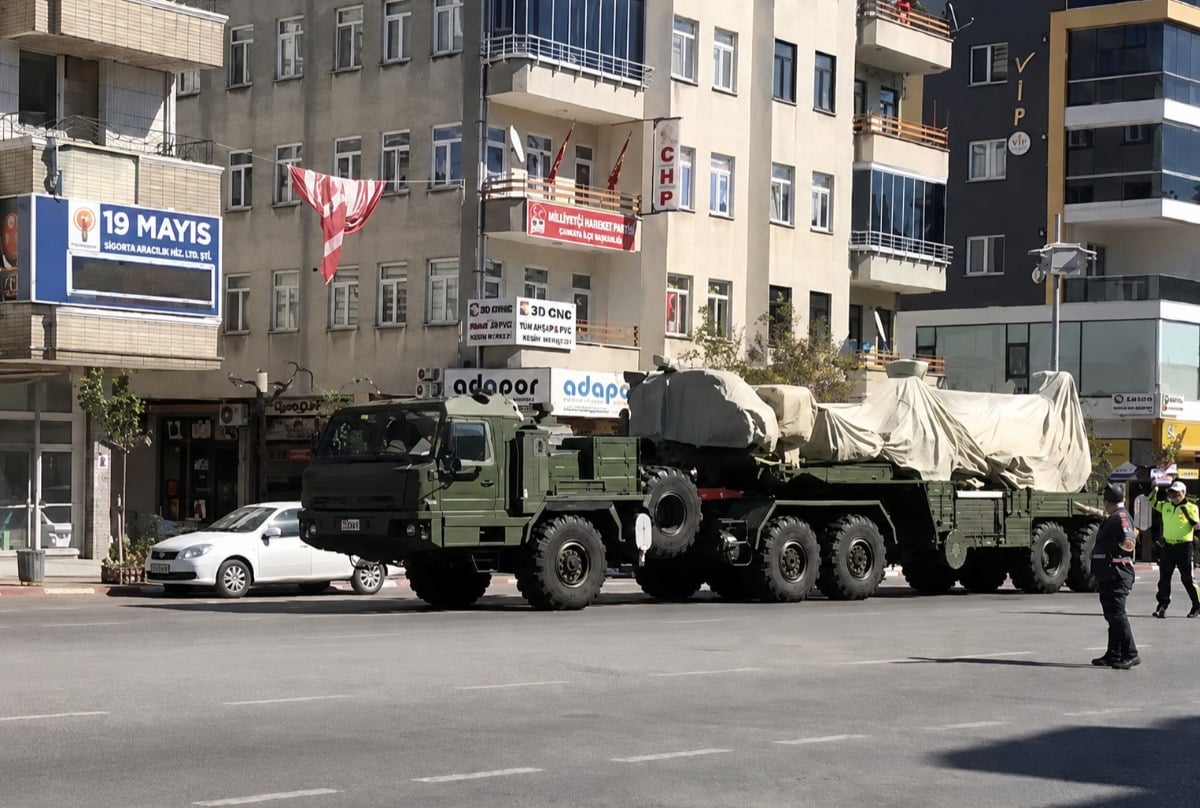
Türkiye has finalized a high-stakes deal to sell its multi-billion-dollar Russian S-400 air defense systems to a Gulf state, executing a dramatic geopolitical pivot designed to break a years-long military deadlock with Washington. According to internal intelligence sources and diplomatic reports surfacing from Ankara on July 10, 2026, the middle-of-the-night agreement clears the primary obstacle keeping Türkiye from rejoining the American F-35 fighter jet program and securing critical Western aerospace technology. By offloading the hardware, Ankara hopes to immediately shake off punitive American sanctions that have crippled its domestic defense ambitions for over half a decade.
The move represents a staggering reversal for Turkish President Recep Tayyip Erdogan, who previously insisted that the Russian acquisition was a closed matter of national sovereignty.
A Two Billion Dollar White Elephant
Ankara paid $2.5 billion for the Russian Triumf system in 2017, taking physical delivery of the batteries in 2019. It was a decision that blew up Türkiye’s relationship with NATO. The political cost was immediate. Washington booted Türkiye from the F-35 Joint Strike Fighter program, frozen-out Turkish defense firms from lucrative manufacturing contracts, and slapped the country with Countering America’s Adversaries Through Sanctions Act (CAATSA) restrictions.
For years, the S-400 batteries sat effectively idle in storage crates. They were operational but unintegrated, unable to plug into NATO’s early warning radar network without risking the exposure of Western stealth data to Moscow. Türkiye had spent billions on a weapon it could not deploy without triggering total isolation from its western allies.
The strategy shifted when the geopolitical tides turned in Washington. Back-channel diplomacy accelerated through late 2025 and into the summer of 2026, with American officials signaling a willingness to wipe the slate clean if the Russian hardware vanished from Turkish soil.
The Three Demands from Washington
The White House laid down explicit, unyielding conditions for a defense reset. First, Türkiye had to entirely relinquish ownership of the S-400 systems. Second, the batteries had to be verified as completely non-operational under Turkish command. Finally, Ankara had to provide firm guarantees that it would not engage in future strategic military procurement with Moscow.
To bypass congressional gridlock, American legal teams utilized a provision requiring a presidential notification letter to certifying that Türkiye no longer possesses the banned hardware.
The benefits for Ankara are massive. Ending the CAATSA sanctions unlocks more than just the F-35 stealth platform. It secures the immediate supply of American engine components required to keep Türkiye’s indigenous fifth-generation fighter program, the KAAN, from stalling on the assembly line. Turkish defense planners viewed this trade as a necessary sacrifice to save the future of their domestic aerospace industry.
Why the Gulf is Buying Moscow Hardware
The likely destinations for the hardware are Qatar or the United Arab Emirates. Both Gulf states have watched regional missile and drone threats escalate dramatically over the past year, exposing vulnerabilities in their existing defensive umbrellas.
A specific catalyst occurred in late 2025 during regional skirmishes, when U.S.-supplied Patriot interceptor missiles deployed in the region failed to engage specific incoming threats due to automated target-identification software rules. Gulf capitals realized they needed alternative, non-Western radar loops and missile layers that do not come with Washington’s integrated software geofences.
Buying Türkiye’s S-400 units gives a Gulf recipient immediate access to a long-range system capable of tracking stealth targets and ballistic threats. They get the hardware without waiting in Russia’s years-long backlog, which has been severely delayed by Moscow’s own domestic consumption.
The Kremlin Hesitation
Moving Russian military hardware to a third party is not a simple transaction. It requires Moscow’s explicit end-user permission, a reality that triggered tense, late-night tripartite negotiations between Ankara, Washington, and Moscow.
The Kremlin faces a complex dilemma. On one hand, seeing its premier air defense system transferred to a Gulf state expands the operational footprint of Russian military technology in an economically vital region. On the other hand, Moscow knows this deal directly serves to reintegrate Türkiye into the NATO defense fold and re-arm Ankara with American stealth jets.
The logistics remain messy. A Gulf buyer cannot simply turn the key. Operating the S-400 requires highly specialized maintenance pipelines, software updates, and missile resupplies that only Russia can provide. If Moscow refuses to offer long-term technical support to the new buyer, the multi-billion-dollar batteries risk becoming expensive scrap metal within a few years.
The Regional Backlash Begins
The deal has already sparked intense friction among neighboring states. Israeli officials have voiced strong opposition in Washington, arguing that restoring Türkiye’s access to the F-35 alters the military equilibrium in the Eastern Mediterranean. Simultaneously, Athens has raised alarms, pointing to existing legal restrictions and demanding assurances that any renewed Turkish air power will not threaten Greek airspace.
Ankara’s gambit proves that in modern warfare, hardware is ultimately disposable; Western industrial integration is what wins. Türkiye spent billions to learn that a standalone Russian missile system is a poor substitute for a seat at the table where fifth-generation aerospace networks are built.