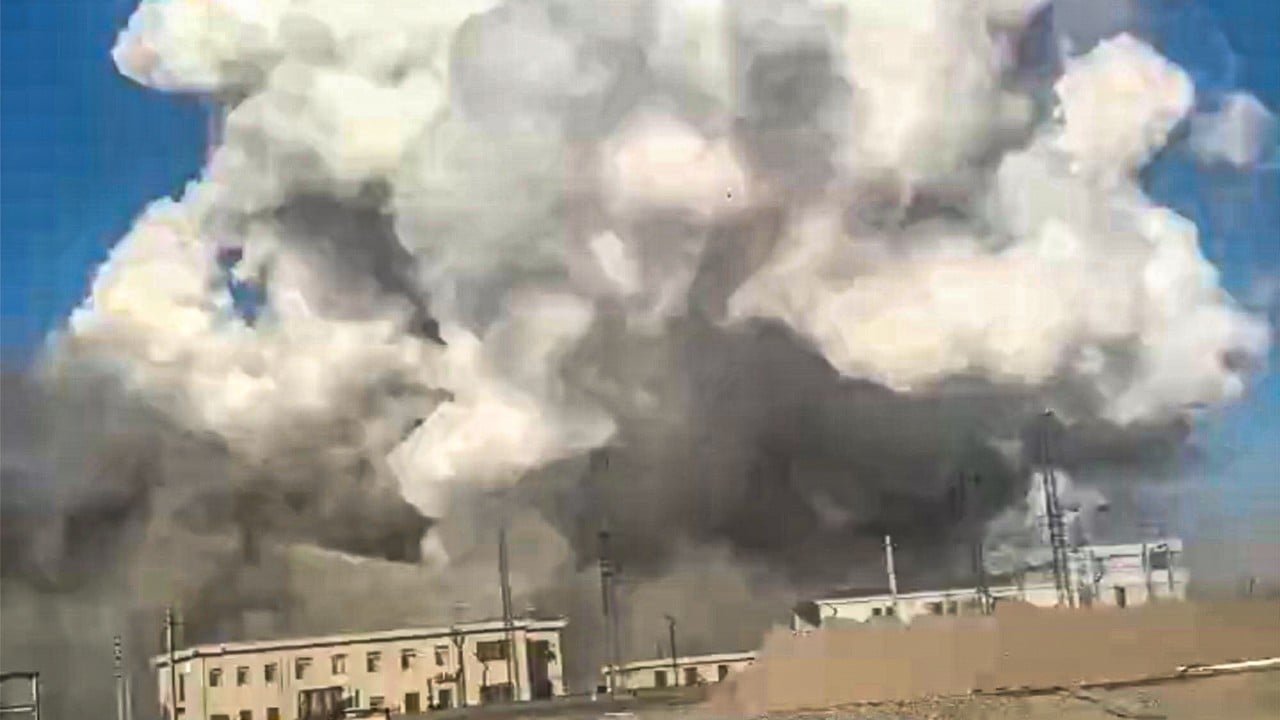
Ten people died and eighty-four others suffered injuries because a steam storage pressure vessel corroded from the inside out. When safety oversight completely collapses, catastrophes happen.
The Inner Mongolian emergency management department released a detailed investigation report regarding the violent explosion at the Baotou Steel Group plant. Debris flew across a five-kilometer radius, scattering fragments that landed on local rail tracks and paralyzed transit. Seven plant employees now face criminal arrest. Another six individuals are heading straight to judicial authorities for separate investigations.
Sixty-two people total face various forms of accountability. This includes heavy administrative penalties, Communist Party disciplinary measures, and organizational sanctions distributed across multiple corporate and regulatory tiers.
What Actually Caused the Baotou Explosion
The disaster wasn't a sudden, unforeseeable act of nature. It was entirely preventable.
Investigators pinned the root cause on severe structural corrosion along the inner wall of a pressure vessel. But bad metal was only part of the problem. The official findings point to a cascading failure of human responsibility.
- Design flaws and manufacturing defects built right into the equipment.
- Daily maintenance routines that were practically non-existent.
- Safety management described by officials as completely chaotic.
- Completely botched on-site emergency responses when things started going wrong.
When you let basic maintenance slide in a heavy industrial setting, you are playing Russian roulette with workers' lives. The facility in Baotou manufactures specialized composite steel products containing rare earth metals like lanthanum and cerium. These materials build everything from national railway networks to military hardware. Yet the internal safety culture failed to match the critical nature of the output.
The Regulatory Blind Spots
You cannot separate a plant-level failure from the regulatory bodies meant to police it. The investigation didn't just target the factory floor. It went straight up the bureaucratic ladder.
Authorities in Baotou city and the Kundulun district caught massive heat for looking the other way. Regulators failed to carry out routine checks with any real teeth. Market regulation bureaus, emergency management departments, and state-owned assets regulators all missed red flags that should have shut down production months prior.
Four separate corporate entities received direct administrative sanctions. Meanwhile, local governments had to submit formal, written self-criticisms to higher-level authorities. Writing an apology letter doesn't bring back the dead. It highlights how reactive the system remains. Oversight usually only wakes up after a body count piles up.
Moving Beyond Paper Compliance
Industrial towns across northern China rely heavily on massive state-owned enterprises like Baotou Steel. These companies drive local economies. They employ thousands. Because of that economic weight, safety protocols sometimes take a backseat to production quotas.
If factories only inspect equipment to satisfy paperwork audits, explosions will keep happening. True industrial safety requires aggressive, unannounced checks, independent engineering audits, and zero tolerance for corroded pressure machinery.
The prosecutors in Kundulun district approved these arrests to send a chilling message to plant managers everywhere. Neglecting maintenance is a crime, not an administrative oversight. Until corporate leadership treats structural integrity with absolute urgency, plant workers will continue to bear the cost of institutional negligence.