The television in the corner of the crowded Tehran café hums with the static of a world constantly on the brink. Outside, the afternoon heat ripples over the pavement, but inside, a dozen pairs of eyes are fixed on the screen. A declaration has just been made thousands of miles away in Washington. Words travel fast across oceans. They carry the weight of sanctions, the shadow of conflict, and the fragile hope of ordinary people trying to buy groceries.
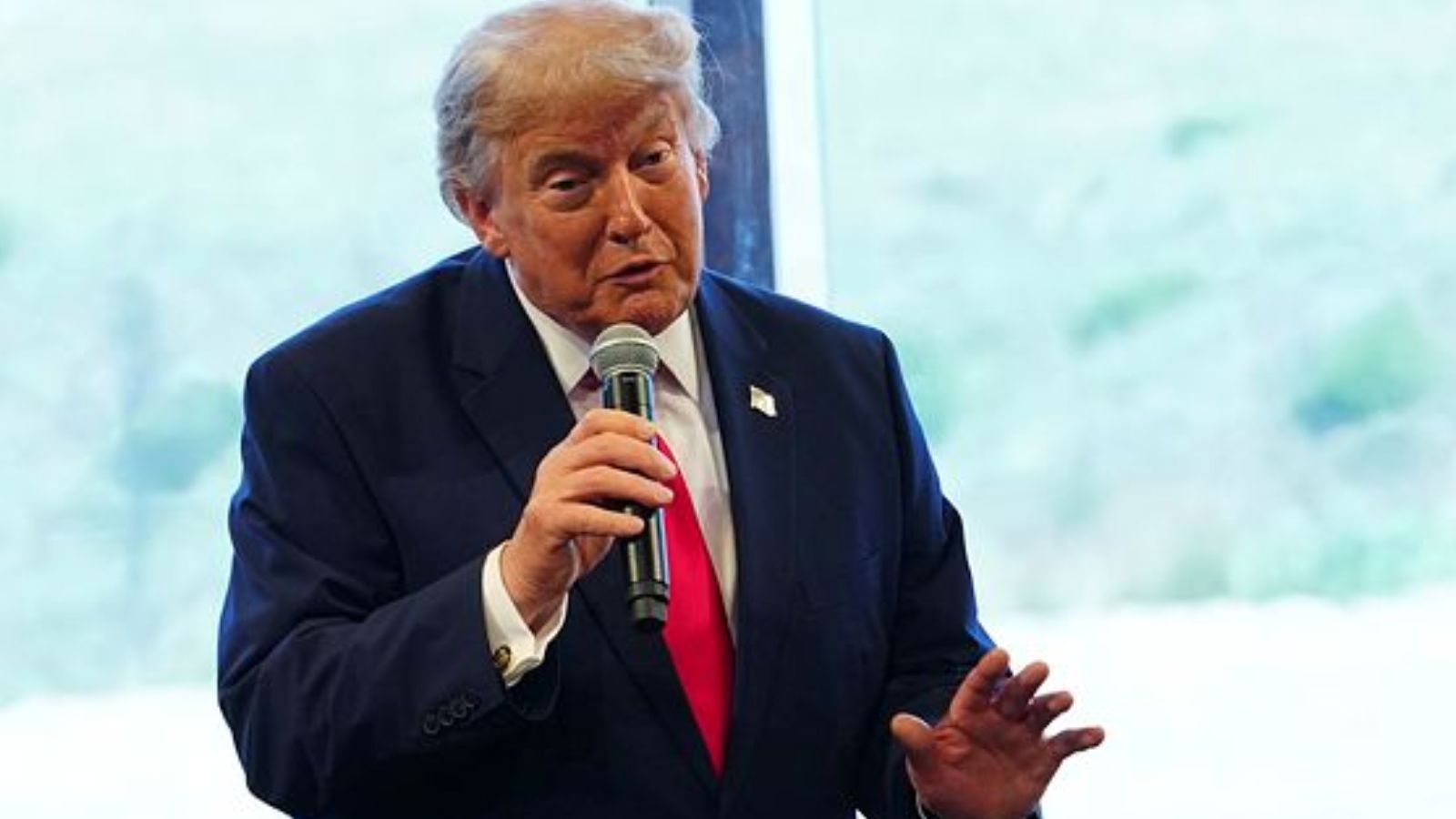
Donald Trump announces that Iran has capitulated. He states, with absolute certainty, that the Islamic Republic has agreed to every demand laid before them.
For a brief, breathless second, the room holds its collective breath. If it is true, the crushing weight of economic isolation might lift. If it is true, the cost of medicine might drop, and the specter of a sudden, devastating strike might recede into the background of daily life. But the relief does not last. It curdles quickly into skepticism. In diplomacy, a public victory speech rarely aligns with the quiet reality of the negotiating table.
This is the anatomy of a geopolitical illusion.
To understand the sheer distance between a televised claim and a signed treaty, look at the view from the ground. Consider a hypothetical shopkeeper named Reza. For years, Reza has watched the value of his currency evaporate like morning mist. When a foreign leader claims a total breakthrough, Reza does not celebrate. He waits. He knows that true agreements are not born in a burst of rhetoric. They are forged in the painstaking, agonizingly slow work of verification.
The announcement claimed a total surrender of ambition. The public was told that Iran had walked away from its nuclear aspirations, agreed to halt its ballistic missile program, and promised to sever ties with regional proxies. It sounded complete. It sounded final.
The reality is far more tangled.
Diplomacy is not a boxing match where one fighter throws a knockout punch and the other stays down. It is a grueling chess game played in total darkness, where every move is calculated to preserve survival, not surrender. While the podium in Washington radiated triumph, the corridors of power in Tehran remained stubbornly defiant. Official statements from the Iranian leadership did not echo the narrative of submission. Instead, they spoke of resistance, of mutual respect, and of conditions that had clearly not been met.
The core problem is simple. Trust cannot be manufactured for a press briefing.
Imagine a bridge built out of paper. It looks solid from a distance. It might even support the weight of a single step. But the moment the wind rises or the rain starts to fall, the structure dissolves. That is what a declaration without a mechanism looks like. For any agreement to hold, there must be a framework for verification. International inspectors must have access. Centrifuges must be physically dismantled or sealed. Accounts must be audited. None of these details were present in the grand announcement.
Without verification, words are just noise.
The stakes are not abstract numbers on a spreadsheet or theoretical strategies discussed in think tanks. They are deeply human. When a superpower and a regional power engage in this kind of high-stakes theater, the ripples are felt by families who have nothing to do with government policy. The anxiety is palpable. Will the borders close? Will the supply chains snap? Will the young men be called to serve?
Every time a premature victory is declared, it raises expectations only to smash them against the wall of reality. This cycle does not create stability. It creates a volatile cocktail of anger and disillusionment.
Consider what happens next when the dust settles and the cameras turn away. The hard questions remain unanswered. Why would a regime that has endured decades of isolation suddenly give up its primary leverage without a visible concession in return? What happens to the sanctions that have crippled the Iranian economy? Will they vanish overnight, or will they remain as a tool of continuous pressure?
The truth is rarely found in the extremes. Iran did not suddenly become a submissive partner, nor did the American administration achieve a effortless miracle. The reality is likely a messy, ongoing conversation where both sides are trying to claim the upper hand to satisfy their domestic audiences. For a political leader, appearing strong is often more urgent than achieving a lasting peace.
But the people living in the shadow of this conflict cannot live on appearances. They need substance.
The café in Tehran grows loud again. The patrons turn back to their tea and their backgammon boards. The initial shock of the headline has worn off, replaced by the familiar, hardened resilience of a population used to being pawned in games of global strategy. They have seen agreements come and go. They have heard promises made in English and refuted in Persian.
True diplomacy requires patience, nuance, and a willingness to acknowledge the dignity of the adversary. It cannot be rushed for a news cycle. Until the ink is dry on a document that both sides actually acknowledge, the world remains exactly where it was before the announcement.
Waiting. Hoping. Watching the screen for a truth that never quite arrives.