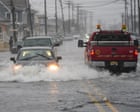
Severe nor'easter events acting upon densely populated coastal environments produce predictable systemic strain, characterized by the convergence of high-amplitude storm surges, elevated astronomical tides, and inland drainage saturation. When a major coastal storm impacts the Northeast corridor, leaving over 130,000 residents without power and inundating low-lying infrastructure, the primary failure mechanism is rarely a single meteorological anomaly. Instead, it represents a compound systems failure where grid architecture, municipal drainage capacity, and coastal geography interact under extreme physical stress. Analyzing this event requires mapping the vulnerabilities across three structural domains: electrical grid resilience, hydrological runoff mechanics, and tidal surge dynamics.
The Structural Mechanics of Coastal Storm Surges
Coastal inundation during a severe nor’easter is governed by the vector sum of wind stress, atmospheric pressure reduction, and astronomical tide height. Low-pressure systems operating over shallow continental shelves displace massive water volumes toward the coastline. When these meteorological forces coincide with spring tides or perigean high tides, the vertical water column exceeds standard flood-defense engineering thresholds.
The physical impact on coastal infrastructure is a function of hydrostatic pressure, hydrodynamic velocity, and debris-load momentum.
- Hydrostatic Force: Standing water exerts lateral pressure against structural foundations, bulkheads, and basement walls. Below ground level, saturated soils increase hydrostatic uplift, threatening the integrity of underground utility vaults and subterranean transit systems.
- Hydrodynamic Force: Moving water currents generate drag and kinetic energy proportional to the square of velocity. Coastal zones experiencing wave action face scouring effects that undermine roadbeds, bridge abutments, and sea-wall foundations.
- Saline Incursion: Floodwaters laden with marine sodium chloride penetrate electrical switching stations, transformer pads, and backup generation systems, accelerating galvanic corrosion and causing immediate short circuits.
Municipalities rely on hardened shorelines, dunes, and seawalls to mitigate these forces. However, these defenses operate on historical flood frequency distributions that fail to reflect contemporary sea-level baselines and intensified storm frequency. Consequently, when a nor'easter breaches coastal barriers, water flows into natural topographic depressions, creating isolated basins that retain water long after the meteorological storm front has passed.
Electrical Grid Vulnerability and the Cascading Failure Function
Power outages exceeding 130,000 customers during a coastal storm highlight the fragility of decentralized distribution networks when exposed to regional environmental hazards. Grid failure follows a deterministic cascade rather than a random distribution of events.
The primary vectors of electrical interruption include:
- Vegetation Interference: High-velocity wind gusts interacting with saturated root systems precipitate tree failures onto overhead distribution lines. Overhead lines remain the single largest point of vulnerability in suburban and semi-urban environments.
- Substation Submergence: Transmission and distribution substations are frequently sited on low-lying flat terrain near waterways for logistical and historical reasons. When storm surges overtop substation boundaries, floodwaters reach busbars and transformers, triggering automatic protection lockouts or catastrophic equipment explosions.
- Accessibility Bottlenecks: Downed trees and flooded roadways prevent maintenance crews from reaching primary fault locations, extending the Mean Time to Repair (MTTR) and compounding economic disruption.
The cost function of grid downtime scales non-linearly. The initial hours of an outage disrupt residential comfort and local commerce. As outages extend past 24 hours, wastewater treatment facilities without redundant emergency generation experience operational failures, leading to environmental contamination and secondary public health hazards. Traffic signal synchronization collapses across municipal grids, triggering gridlock that impedes emergency response vehicles and utility repair crews alike.
Hydrological Runoff and Drainage Deficits
While storm surges attack from the seaward side, heavy precipitation generates massive inland runoff that collides with rising coastal water levels. This dynamic creates a severe hydraulic bottleneck.
Under normal operating conditions, gravity-fed storm sewers drain surface water into tidal estuaries and bays. During a high-tide storm surge, the receiving water bodies exceed the elevation of the outfall pipes. This induces backflow, forcing coastal floodwaters backward up the municipal drainage network and out through street-level catch basins.
Urbanization exacerbates this phenomenon through the proliferation of impervious surfaces—asphalt, concrete, and roofing materials—which eliminate natural soil infiltration. Runoff coefficients approach unity, meaning nearly 100% of rainfall converts immediately to surface flow. Drainage infrastructure designed to handle historical precipitation intensity metrics proves inadequate when confronted with concentrated cloudbursts embedded within nor'easter rainbands.
To break this cycle of systemic vulnerability, regional planning must shift from reactive post-disaster repair to preventative hydraulic redesign. This requires decoupling critical electrical substations from flood-prone plains through elevation or subterranean hardening, establishing distributed microgrids to localize power loss, and expanding retention basins designed around updated hydrological projection models rather than historical averages.