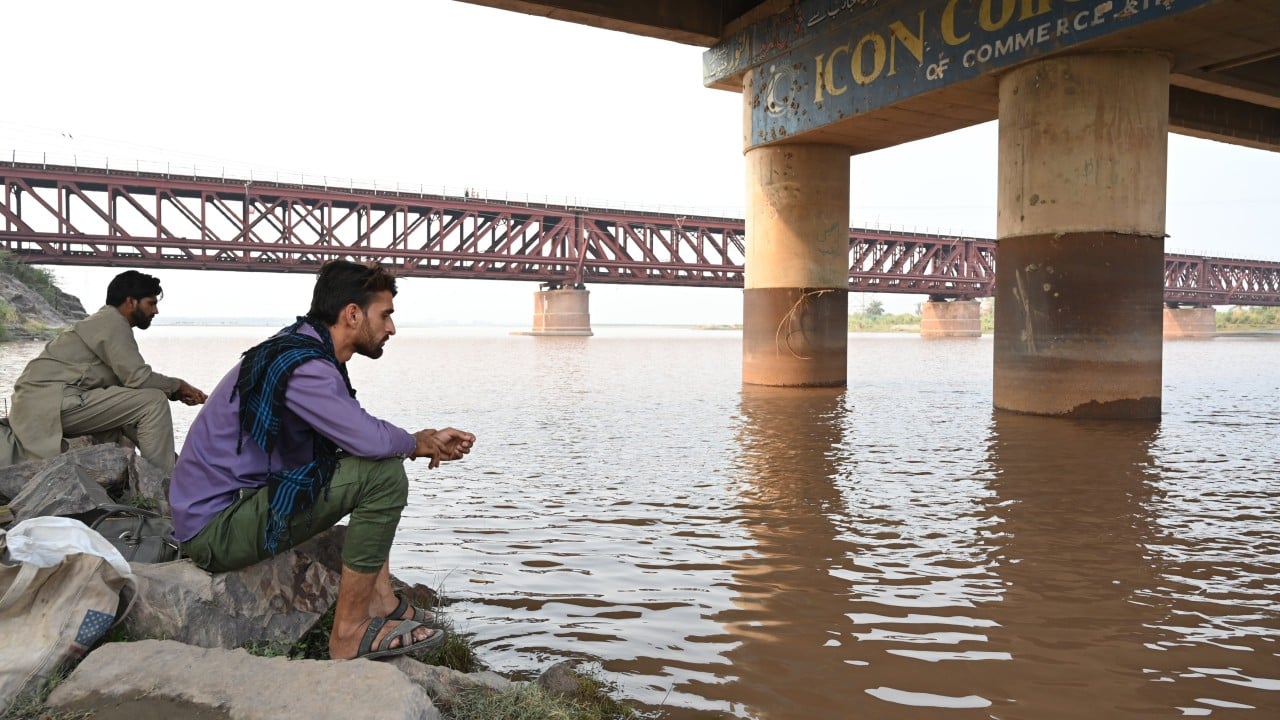
The headlines are shouting about legal defiance, international court rejections, and diplomatic middle fingers waved across the Punjab border. New Delhi tells a neutral expert panel and a court of arbitration in The Hague where to go, refusing to participate in parallel proceedings over the Kishenganga and Ratle hydroelectric projects. The lazy consensus in every major newsroom says this is a dangerous escalation of hydro-politics, a breakdown of multilateral order, and the slow-motion ignition of a literal thirst war in South Asia.
That narrative is comfortable. It is lazy. And it is entirely wrong.
Focusing on whether India recognizes a European-backed arbitration court misses the structural reality of the Indus Waters Treaty. The treaty was never a sacred parchment of eternal peace. It was an accounting exercise drafted in 1960 by the World Bank to split puddles while ignoring climate physics, population explosions, and agricultural reality. Both New Delhi and Islamabad are currently squabbling over the plumbing while the entire house burns down around them.
Let us dismantle the panic.
The Myth Of The Stolen River
Every few months, commentators dust off the same tired panic porn: India will weaponize the western rivers, turn off Pakistan's tap, and turn the breadbasket of Punjab into a dust bowl.
Look at the mechanics of the Indus Waters Treaty. It is an allocation treaty, not a storage treaty. Pakistan gets the western rivers—the Indus, Jhelum, and Chenab. India gets the eastern rivers—the Ravi, Beas, and Sutlej. India is permitted run-of-the-river hydro projects on the western rivers, meaning it can generate electricity without significantly altering the flow or impounding massive amounts of water.
When New Delhi demands modifications to the treaty to account for changed circumstances, Islamabad panics and runs to international tribunals. When those tribunals take cases, India boycotts them on procedural grounds, arguing that a neutral expert and a court of arbitration cannot simultaneously adjudicate the same dispute without creating legal chaos.
Here is what the talking heads miss: India physically cannot turn off Pakistan's water even if it wanted to. The geography does not allow for massive strategic storage on those western rivers within Indian-controlled territory. The terrain is unstable, seismic activity is high, and the sheer volume of snowmelt and monsoon discharge dwarfs any storage capacity India could conceivably build in the Himalayas.
The legal battle over spillways and pondage limits is not a prelude to hydro-terrorism. It is bureaucratic trench warfare. It is two states using legalistic stalling tactics to protect domestic political constituencies while avoiding the real conversation.
The Real Threat Is Hydro-Logical, Not Geopolitical
While lawyers argue over treaty interpretation in air-conditioned rooms in Europe, the actual basin is dying of entirely mundane, non-malicious causes.
I have watched agricultural bureaucracies across South Asia blow millions on politically convenient surface-water megaprojects while ignoring the silent catastrophe unfolding beneath their feet. The existential threat to Pakistan is not an Indian dam upstream. It is the reckless, unregulated extraction of groundwater.
Both nations are guilty of farming the desert. By heavily subsidizing power for agricultural tube wells, governments in Islamabad and New Delhi have incentivized farmers to suck aquifers dry at rates that defy basic math. The Indus Basin aquifer is one of the most overstressed groundwater reservoirs on planet Earth.
When deep tube wells pull fossil water from thousands of feet down, soil salinity spikes, crop yields eventually crater, and the land turns to hardpan. No international court ruling on a run-of-the-river hydroelectric plant in Jammu and Kashmir changes this trajectory by a single millimeter.
Pretending that India's defiance of The Hague is the primary danger allows politicians on both sides to externalize blame. It is much easier to point an angry finger across the border and rant about sovereignty than it is to tell millions of farmers that flood irrigation is finished and power subsidies must end.
Why Parallel Proceedings Are A Joke
The structural flaw in the current dispute lies in the architecture of the treaty itself. Drafted six decades ago, it assumes a neat division of labor between "neutral experts" who handle technical questions and "courts of arbitration" that handle legal disputes.
In reality, technical and legal questions in modern hydrology are inseparable. When does a design modification constitute illegal storage? A civil engineer will give you one answer based on cubic meters; a jurist will give you another based on treaty clauses written when vacuum tubes were cutting-edge technology.
India's refusal to engage with the court of arbitration is often framed as lawless aggression. Let us look at it through a lens of administrative realism. If you enter a legal process that you believe violates the explicit step-by-step dispute resolution mechanism outlined in the original treaty—moving straight to arbitration without exhausting the neutral expert tier—participating validates a flawed jurisdiction.
Of course, India's stance has a heavy dose of realpolitik. New Delhi wants bilateralism because it holds the asymmetric advantage. Islamabad wants internationalization because it wants external pressure applied to a regional rival. This is standard diplomatic wrestling. Neither side cares about the purity of international law; they care about leverage.
The Uncomfortable Truth About Water Sharing
If we want to fix water security in the Indus basin, we have to abandon three deeply cherished illusions.
First, stop treating the 1960 treaty as an untouchable holy text. Climate change has fundamentally altered Himalayan hydrology. Glacial retreat is accelerating. Seasonal flow patterns that the treaty's architects took as permanent constants are shifting wildly. A treaty designed for a predictable twentieth-century climate regime is structurally obsolete in the twenty-first century.
Second, stop pretending that international courts can enforce environmental survival. Arbitration panels can rule on spillway crest elevations, but they cannot force millions of smallholders to adopt drip irrigation, nor can they stop municipal authorities from dumping raw sewage into the very rivers they rely on for drinking water.
Third, acknowledge that water scarcity in this region is self-inflicted through terrible pricing policies. When water is treated as a free or virtually free resource, it is wasted on a catastrophic scale.
The next time you read a breathless analysis about India thumbing its nose at international law over a disputed dam, remember what is actually happening. It is a high-stakes distraction play. The lawyers get their billable hours, the diplomats get their communiqués to draft, and the rivers keep flowing south toward a depleted sea, ignored by everyone except the people who have no choice but to watch their wells run dry.
Stop watching the courts. Start watching the aquifers. That is where the war for the Indus will actually be lost.


