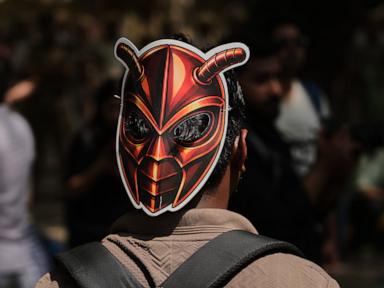
What happens when you call millions of anxious, unemployed young graduates "cockroaches" during an official courtroom hearing? If you are India's Chief Justice Surya Kant, you accidentally spark the fastest-growing political movement the country has seen in a decade.
It started on May 16, 2026. A 30-year-old public relations student in Boston named Abhijeet Dipke saw the judge's remarks, got angry, and launched a parody online account called the Cockroach Janta Party (CJP). The tagline was simple: "Voice of the Lazy & Unemployed." The eligibility criteria? You had to be unemployed, chronically online, and able to rant professionally.
Everyone thought it was a temporary internet gag. Then the Instagram page hit 3 million followers in three days. By the end of May, it blew past 22 million followers, leaving the ruling Bharatiya Janata Party (BJP) and its legendary digital machinery eating dust. Today, June 6, 2026, the movement faces its ultimate test. Thousands of self-proclaimed cockroaches are swarming the hot tarmac of Jantar Mantar in New Delhi. They are demanding the immediate resignation of Union Education Minister Dharmendra Pradhan.
This isn't just about a bad courtroom analogy anymore. It's an explosive, real-world manifestation of rage from a generation that feels entirely discarded by the system.
The Breaking Point of a Generation
You can't understand the rapid rise of the CJP without looking at the absolute mess that is India's current education and employment market. For months, students have been hitting walls. The National Eligibility cum Entrance Test (NEET) for medical aspirants faced severe paper leak allegations, jeopardizing the hard work of nearly 2.3 million students. Simultaneously, controversies plagued the Central Board of Secondary Education (CBSE) marking system, the Common University Entrance Test (CUET), and the Staff Selection Commission (SSC) exams.
When the primary systems designed to grant you a future are broken, corruption isn't an abstract political talking point. It is a theft of your life.
The traditional political playbook in India relies heavily on religious polarization and identity politics. The CJP completely subverts this by focusing strictly on youth material realities. The movement’s manifesto—partly designed using artificial intelligence tools to satirize political gravity—demands actionable reforms:
- A 20-year ban on politicians switching parties for monetary gains.
- A complete ban on post-retirement government rewards for judges.
- A legal "Right to Employment" providing stable jobs or concrete unemployment allowances.
- A mandatory 50% reservation for women in Parliament and the union cabinet.
By adopting the cockroach as a badge of honor, Indian Gen Z turned a heavy-handed insult into a symbol of ultimate survival. Cockroaches don't die easily. They survive radiation, they survive boots, and apparently, they can crawl all over a defensive political establishment.
Moving From Memes to the Hot Pavement
The biggest critique leveled against the CJP by older politicians and skeptics was that internet clout doesn't equal real-world votes or boots on the ground. It's easy to tap a follow button on Instagram; it's much harder to face Delhi police barricades in 40-degree heat.
That transition is happening right now. Dipke landed at the Delhi airport early this morning from the United States, defying public death threats and systemic attempts to suppress his movement. The state's panic has been visible for weeks. The Indian government quietly ordered the suspension of the CJP’s X account within its first week of existence, using national security arguments to stifle satire.
Instead of backing down, the group organized. They appointed investigative journalist Saurav Das as chief spokesperson, alongside researcher Vijeta Dahiya and former consultant Ashutosh Ranka, creating a structured front.
Their itinerary for today’s Jantar Mantar protest is a fascinating study in modern, media-savvy civil disobedience. The group released a strict list of guidelines that mixes revolutionary intent with practical, crowd-sourced safety.
They instructed protestors to arrive at Parliament Street Police Station carrying two specific items: the Indian National Flag (Tiranga) and a textbook. The book represents the fundamental right to education. The flag ensures that state-aligned television networks cannot easily brand the peaceful young protestors as anti-national assets.
The movement's tactical manual reveals an acute understanding of how modern state pushback works:
"Record everything. If you see miscreants attempting to start a riot, document them and report them to the police immediately. Do not engage with trolls or professional provocateurs. Bring flowers, and instead of throwing them, hand them to the police officers to thank them for protecting the youth's future. And eat before you arrive—revolution requires breakfast."
👉 See also: The Long Shadow of the 26th MEU
They even reminded attendees to apply sunscreen and stay hydrated. It’s a hyper-pragmatic approach to street activism born out of the internet age.
What Traditional Politics Gets Wrong About Digital Movements
The ruling establishment is visibly unnerved because they don't know how to fight an opponent that refuses to play by the old rules. If you attack an opposition party, you use corporate media resources to dig up financial scandals. How do you scandalize a decentralized group that proudly calls itself lazy, unemployed, and leaderless?
When senior opposition figures like Shashi Tharoor, Mahua Moitra, and Mamata Banerjee rushed to endorse the CJP, the movement kept its distance. They didn't merge into the traditional opposition block. They kept the focus squarely on structural issues: the shambles of public education, the astronomical cost of private coaching, and the lack of salaried jobs for qualified graduates.
This echoes the youth-led uprisings we've seen tear through South Asia over the last few years—from Sri Lanka to Bangladesh. When the youth population comprises more than a quarter of your country, ignoring their economic desperation while calling them parasites is a dangerous gamble.
How to Join or Track the Movement Safely
If you're a student or a young professional looking to engage with this evolving movement without getting caught up in chaos, you need a smart approach.
First, keep your eyes on the primary documentation. Don't rely on polarized news broadcasts. Follow independent digital journalists who are streaming directly from Jantar Mantar to see the actual scale of the crowd.
Second, if you're attending physical gatherings, prioritize group safety. Travel in packs, keep your phone fully charged, and maintain a strict policy of non-violence. The fastest way for the state to crush a youth movement is to capitalize on a single moment of provoked violence to justify a blanket crackdown. Keep it peaceful, keep it documented, and keep the focus on the education system's accountability. The tiny internet joke has officially entered the streets, and the political ecosystem will have to adapt to the swarm.
.jpg)