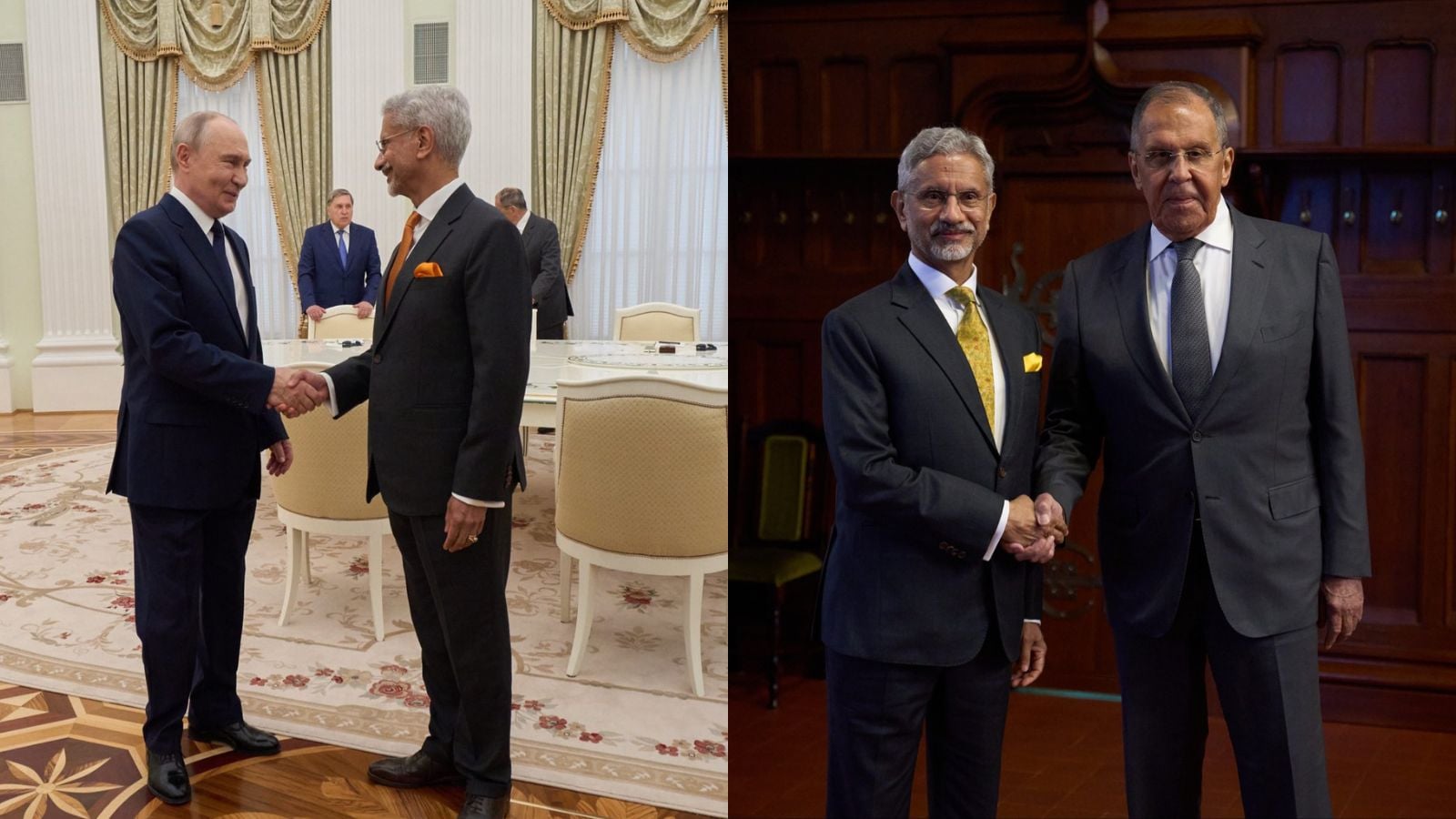
Every mainstream pundit covering External Affairs Minister S. Jaishankar’s latest diplomatic push in Moscow is missing the entire plot. Headlines across financial dailies wring their hands over a fifty billion dollar trade imbalance. Commentators treat this massive deficit like a financial emergency, a leaking hull in New Delhi's economic ship that requires urgent patching through forced import substitution or hurried export drives.
This panic is born from textbook mercantilist illiteracy. For an alternative view, consider: this related article.
I have watched bureaucrats and desk-bound analysts obsess over bilateral trade balancing for decades, and every single time, they fail to understand how modern macroeconomic power actually accumulates. A trade deficit with a sanctioned commodity superpower isn't a vulnerability. It is a calculated arbitrage.
The Arithmetic of Discounted Survival
Let us clear up the core misconception right away. People look at a bilateral trade ledger as if it were a household budget where every dollar spent must match every dollar earned with the same trading partner. That is a child's view of global commerce. Further reporting on this matter has been shared by Financial Times.
India buys cheap Russian crude oil and discounted fertilizers. This keeps domestic inflation anchored, protects the fiscal deficit, and prevents retail fuel prices from triggering electoral shocks. In return, Russia accumulates Indian rupees that it struggles to deploy because Western sanctions have crippled standard global payment clearing mechanisms.
That accumulation of rupees in Moscow is not India's problem to solve. It is a liquidity trap for the seller, not a debt trap for the buyer.
When you buy a discounted asset, the transaction leaves a deficit on paper. But the real gain happens downstream. By securing crude at steep discounts through 2022, 2023, 2024, and beyond, Indian refiners turned themselves into processing hubs for global markets, capturing massive refining margins while domestic energy costs remained insulated from European-style shocks.
If New Delhi forced a balanced trade ledger by artificially buying fifty billion dollars worth of high-priced Russian manufactured goods that Indian industry does not need, the country would instantly destroy the very cost advantage that powers its manufacturing and export competitiveness.
Why Bilateral Balance Sheets Are Dead
The obsession with bilateral trade equality belongs in the nineteenth century. Global trade doesn't happen in isolated bilateral loops. It operates through multilateral clearing.
Imagine a scenario where India balances its trade sheet with every single country it imported from. Domestic industry would grind to a halt within quarters. You buy oil where it is cheapest and most secure. You sell software and services where demand is highest. You let currency surpluses and deficits wash out across global clearing houses over time.
Russia needs a reliable non-Western sink for its primary commodities. India needs predictable energy inputs to sustain a seven percent growth rate while the rest of the major economies flirt with stagnation. The fifty billion dollar gap is simply the price of admission for that arrangement.
Moscow holds rupees. What can they do with them? They buy Indian pharmaceuticals, agricultural goods, and machinery, or they invest those rupees back into Indian sovereign debt and infrastructure projects. The money circulates back into the domestic economy anyway. The trade gap is a revolving door disguised as a chasm.
Dismantling The Export Push Fallacy
The mainstream editorial board prescription for this deficit is always the same: "India must aggressively boost non-oil exports to Russia."
This sounds pragmatic on a Sunday talk show, but it collapses under market reality. Russia's industrial base is currently locked into wartime production and military procurement. Consumer goods demand is constrained by logistics, insurance hurdles, and Western secondary sanctions compliance. Indian mid-sized exporters attempting to rush into that vacuum face nightmarish compliance risks and currency repatriation friction.
Why risk your entire Western export portfolio—where billions of dollars in IT, pharma, and engineering goods are sold—just to chase a difficult ruble-denominated market in Moscow to satisfy an arbitrary accountant's definition of trade balance?
Pragmatic foreign policy dictates asymmetric optimization. Let the trade gap widen. Let the surplus sit in nostro accounts. Every billion dollars of imbalance in this specific context represents wealth retained at home through cheaper energy inputs rather than transferred abroad to pay for inflated commodity benchmarks.
The Real Risk No One Is Discussing
While the financial media hyperventilates over the trade gap, they are completely ignoring the actual threat facing India's economic insulation strategy: secondary logistics and insurance bottlenecks.
The constraint on trade with Moscow is never the lack of bilateral balancing agreements or high-level ministerial communiqués. The bottleneck is maritime logistics, tanker fleet availability, and western insurance cartels squeezing maritime compliance.
When insurance rates fluctuate or port clearances tighten due to expanding sanctions enforcement, the cost of delivery creeps up. That is where the margin gets squeezed. Not in the ledger entry showing who bought more physical tons of goods than the other.
Jaishankar’s visit secured diplomatic continuity and fertilizer supply lines ahead of domestic agricultural cycles. That is the real metric of success. Urea and diammonium phosphate security directly dictates food price stability for over a billion people.
Stop treating a commodity discount as a balance sheet failure.
The fifty billion dollar trade gap is proof that India is buying cheap and selling smart while the West pays a massive structural premium for its own ideological purity.
Let them keep preaching about balance. We will keep stacking the margins.