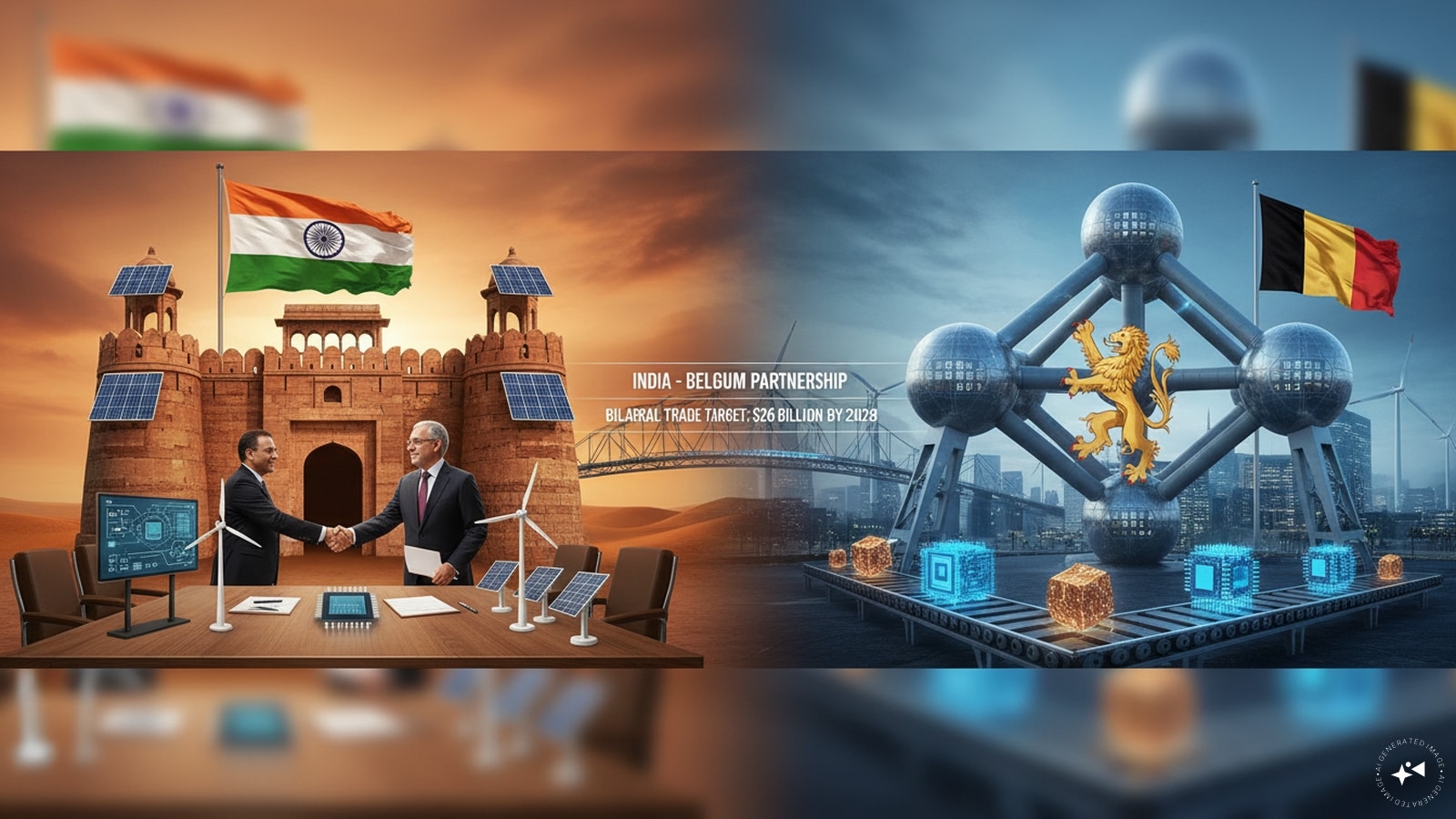
Every time two politicians stand behind matching mahogany podiums and announce a grand plan to double bilateral commerce, seasoned market watchers should check their wallets.
The lazy consensus making the rounds suggests that New Delhi and Brussels locking arms to push trade past the thirteen-billion-dollar mark via joint defense pacts, semiconductor handshakes, and clean energy declarations is a masterclass in strategic foresight. Analysts are cheering from the sidelines, calling it a major win for diversification.
They are missing the entire plot.
Doubling trade numbers over five years sounds great on a press release, but it mistakes bureaucratic optimism for macroeconomic reality. Trade volume is a lagging indicator, not a policy input. You cannot simply legislate a two-fold expansion through memorandums of understanding while structural bottlenecks, logistical friction, and historical anomalies continue to dictate the terms of engagement.
The Diamond Crutch We Refuse to Break
Let us address the elephant in the Antwerp-tinted room. Diamonds currently account for nearly thirty percent of all commercial exchanges between India and Belgium. Antwerp remains a massive global clearinghouse, and Surat does the dirty work of cutting and polishing.
When politicians talk about diversifying trade away from traditional commodities into high-tech fields like advanced defense electronics and silicon microchips, they treat the existing baseline as a healthy foundation. It is not. It is a monoculture.
Imagine a scenario where lab-grown stones continue to eat natural diamond margins alive, consumer preferences shift permanently toward ethically transparent alternatives, and global luxury spending cools down. The entire baseline of that thirteen-billion-dollar figure wobbles. You cannot build a high-tech superstructure on top of a volatile luxury stone market and expect it to withstand economic turbulence.
Defense Co-Production Meets Bureaucratic Gravity
The new defense framework promises co-development, joint production, and shared military hardware. Sounds impressive on paper. I have watched corporations burn millions trying to force international defense joint ventures through sheer diplomatic willpower, only to watch them die a slow death in procurement purgatory.
Defense technology transfer is not like shipping software updates. It involves complex export controls, stringent intellectual property protection, and entrenched domestic defense lobbies that hate losing domestic manufacturing contracts. Belgium possesses niche capabilities in maritime counter-measures and electro-optical systems, while India wants massive domestic scale under self-reliance mandates.
These two goals frequently collide. European defense firms want to protect proprietary technology margins. Indian state-run entities and private primes want tech absorption without eternal dependency on foreign maintenance loops. Signing a Letter of Intent does not magically align procurement cycles that run on decade-long timelines.
The Semiconductor Illusion
Then comes the semiconductor push, highlighted by plans to link Belgium's imec research powerhouse with India's fledgling chip ecosystem.
Let us define terms immediately. Imec is a premier nanoelectronics research hub, not a commercial foundry mass-producing wafers. Connecting a research institute to a massive consumer market is like introducing an elite theoretical physicist to a construction crew and expecting skyscrapers to appear overnight.
India's semiconductor ambitions require massive capital expenditure, reliable multi-gigawatt power supplies, ultra-pure water pipelines, and chemical supply chains that take twenty years to mature. Belgium brings brilliant research architecture, but zero volume manufacturing capacity. Pinning trade growth hopes on complementary semiconductor synergies ignores the brutal physics of silicon fabrication. You cannot ship research papers across a customs border and call it a billion-dollar export category.
The Real Question Worth Asking
People keep asking: How fast can the Investment Fast-Track Mechanism clear red tape for Belgian firms entering the subcontinent?
Wrong question.
The question you should be asking is whether European capital actually wants to deploy into emerging manufacturing sectors when stringent carbon border adjustments, regulatory compliance burdens, and high domestic interest rates are draining liquidity back home.
If you want trade to double, stop relying on government-to-government forums and start fixing the logistical friction points at the ports. Until cargo dwell times drop permanently and regulatory predictability matches domestic rhetoric, these high-profile summits remain expensive photo opportunities.
Ignore the press releases. Watch the customs data, track actual foreign direct investment inflows that bypass state-backed funds, and look for real tech transfer that doesn't require an annual ministerial conference to stay alive.
Stop celebrating the target. Start examining the structural decay beneath it.