The corporate titans who boarded a flight to Beijing expected a high-stakes showdown. Instead, they got a staged performance of mutual flattery.
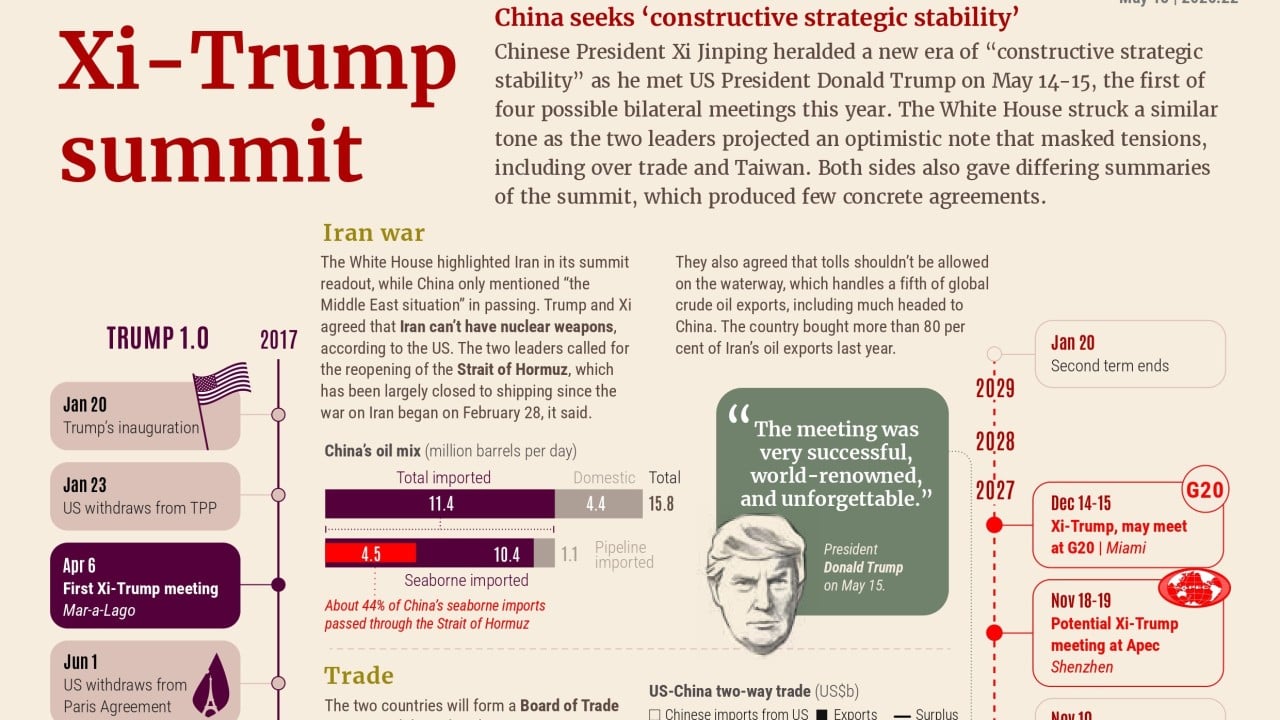
U.S. President Donald Trump and Chinese President Xi Jinping wrapped up their 43-hour summit at the Zhongnanhai Garden with a superficial trade truce that leaves the structural warfare between the world’s two largest economies entirely unchanged. While press releases from Washington and Beijing tout a "constructive, strategically stable relationship," the reality on the ground is far less grand. Xi Jinping gave up no structural ground, and Donald Trump accepted a basket of short-term purchase commitments to claim an immediate political victory.
For the American chief executives flanking the president—representing empires from Apple and Nvidia to BlackRock and Goldman Sachs—the Beijing summit offered a brief moment of comfort. Stock markets ticked upward on the news that China will temporarily drop its chokehold on critical rare earth exports and resume buying massive quantities of American soybeans. Yet, an examination of the underlying mechanisms reveals that this agreement is not a resolution. It is a temporary pause. The fundamental friction between Washington's tariff-driven isolationism and Beijing's industrial overcapacity has merely been delayed until after the 2026 midterm elections.
The Mechanics of a Calculated Retreat
To understand why this summit occurred now, one must look at the structural pressures hitting both capitals. Neither leader was operating from a position of absolute strength.
Donald Trump arrived in Beijing facing severe domestic economic headwinds. His aggressive tariff strategy faced a major roadblock when the U.S. Supreme Court invalidated Proclamation 11012, crippling his broad use of emergency powers to levy sweeping duties. While his administration quickly substituted a temporary 10% bridge tariff across the board, the legal defeat signaled that the executive branch could no longer govern international commerce by raw decree. U.S. trade volumes with China had already plummeted by more than 25%, and American inflation was threatening to spike ahead of critical congressional elections. Trump needed a victory that could be summarized in a headline.
Xi Jinping, conversely, is managing a domestic economy suffering from systemic deflation, a real estate collapse, and slowing consumer demand. China’s factories are producing far more goods than its internal market can absorb, forcing Beijing to aggressively export its way out of trouble. While China managed to boast an overall $1.1 trillion global trade surplus by shifting its exports toward non-U.S. markets in Asia and Latin America, losing access to wealthy American consumers entirely would devastate its industrial coastal provinces.
Xi's objective was simple: buy time.
By treating Trump to the pomp of a 21-gun salute at Tiananmen Square and walking him through the lush, exclusive paths of Zhongnanhai, Xi played to the American president’s well-documented preference for personal diplomacy. Xi offered just enough transactional concessions to allow Trump to declare a win, while giving up absolutely nothing regarding China's state-subsidized industrial model.
The Illusion of the Purchase Ledger
The center of the White House's triumphant announcement is a multi-year agricultural and resource agreement. The specific details reveal a familiar pattern:
The 2026 Trade Truce Terms
| Country | Concession Granted | Strategic Duration |
|---|---|---|
| United States | 10 percentage point reduction in reciprocal tariffs; extension of key product exclusions. | Valid through November 2026. |
| China | Suspension of rare earth export controls; 25 MMT annual soybean purchase floor; lifting of semiconductor retaliation. | Valid through 2028 (Agricultural floor). |
On paper, the agricultural floor looks impressive. Guaranteeing American farmers a multi-year demand floor for 25 million metric tons of soybeans provides immediate economic relief to the American agricultural belt.
The suspension of Chinese export controls on medium and heavy rare earth elements—such as dysprosium, yttrium, and samarium—is also a welcome development for Western hardware manufacturers. When Beijing restricted these minerals, it triggered a worldwide scramble, threatening supply lines for everything from defense systems to microchips.
However, veterans of international trade policy know this playbook well. This agreement closely mirrors the failed Phase One trade deal, which relied on rigid purchase targets that Beijing systematically missed once global market conditions shifted.
The modern global economy does not operate on state-mandated shopping lists. If Chinese crushing mills find cheaper agricultural options in Brazil, or if American tech firms successfully diversify their mineral processing to Australia or Africa, these state-enforced quotas will fall apart.
Furthermore, the tariff relief granted by Washington is notably temporary. Extending the tariff exclusions through November 2026 aligns perfectly with the U.S. electoral calendar. It gives American businesses temporary cost visibility, but ensures that the threat of renewed trade hostilities will return the moment the ballots are counted.
The Silence on the Factory Floor
The true failure of the Beijing summit lies in what the two leaders refused to discuss. By focusing entirely on commodities like soybeans and oil, the transition toward a "business-first relationship" completely ignores the core economic conflict: Chinese industrial overcapacity in high-value sectors.
The U.S. Trade Representative is still conducting a sweeping investigation into Chinese state subsidies flowing into electronic equipment, green energy technology, and automobiles. China’s electric vehicle giants, led by BYD, have transformed into global manufacturing powerhouses. Trump had previously hinted at a willingness to let Chinese carmakers sell vehicles within the United States if they built factories on American soil. However, fierce pushback from domestic automakers and bipartisan congressional leaders ahead of the summit successfully forced that option off the table.
Because the summit avoided these structural issues, the underlying dynamic remains highly unstable. China will continue to subsidize its advanced manufacturing sectors. The United States will continue to view those subsidized goods as an existential threat to its domestic workforce. A temporary 10% reduction in specific reciprocal tariffs does nothing to change the reality that both nations are locked in a deep technological conflict.
The Geopolitical Cost of Chasing Deals
While the economic achievements of the summit are fragile, the geopolitical concessions made to secure them are concrete. To obtain a signature on a trade document, the American delegation allowed Beijing to dictate the terms of regional security.
Nowhere was this more apparent than on the issue of Taiwan. During their private discussions, Xi Jinping drew an unyielding line, explicitly warning that mishandling the island's sovereignty would lead directly to military conflict. Instead of projecting absolute deterrence, Trump chose to use American security commitments as a transactional bargaining chip.
In his post-summit interviews, Trump admitted he was reconsidering a multibillion-dollar arms sale to Taipei, openly calling the defense package a "very good negotiating chip." This statement sent shockwaves through the Indo-Pacific region. By treating arms sales to a democratic partner as an item on a balance sheet to be traded for agricultural purchases, Washington has introduced deep strategic ambiguity into the region.
Beijing views this uncertainty as an extraordinary victory. For Xi, projecting stability to his domestic audience while showing that American security guarantees are up for negotiation is worth far more than the cost of buying a few million tons of American grain.
The same transactional approach weakened the American stance on Middle Eastern security. While Trump publicly claimed that Xi had offered to "be of help" in restraining Iran's nuclear ambitions, the official statements from Beijing tell a completely different story. China simply reiterated its standard rhetorical support for open sea lanes in the Strait of Hormuz, refusing to commit to any concrete diplomatic or economic pressure on Tehran. Xi knows that China's long-term energy security depends on its partnerships with Gulf producers and Iran. He has no intention of abandoning those relationships to fulfill a vague promise made during a transient summit.
The Board of Trade Reality
The most tangible institutional outcome of the summit is a proposal to create a formalized, bilateral "Board of Trade" to manage future economic friction. This represents a major shift away from the rules-based international order governed by the World Trade Organization, moving instead toward an era of managed, state-directed capitalism.
This new framework ensures that global commerce will no longer be dictated by free-market efficiency, but by continuous political negotiations. For multinational corporations, the lesson is clear: corporate survival now depends entirely on political access. The CEOs who traveled to Beijing understood this reality perfectly. They were not there to champion free trade; they were there to protect their specific supply chains from sudden executive actions.
The truce signed in Beijing will likely keep the peace for the remainder of the year. Factories will continue to ship components, container ships will cross the Pacific, and politicians on both sides will praise their own statesmanship.
Do not be deceived by the calm.
The fundamental contradictions between a state-directed economic system determined to export its way to dominance and a populist American administration committed to decoupling have not been resolved. The structural triggers for the next economic conflict remain fully live, waiting only for the temporary political calculations of 2026 to expire.